
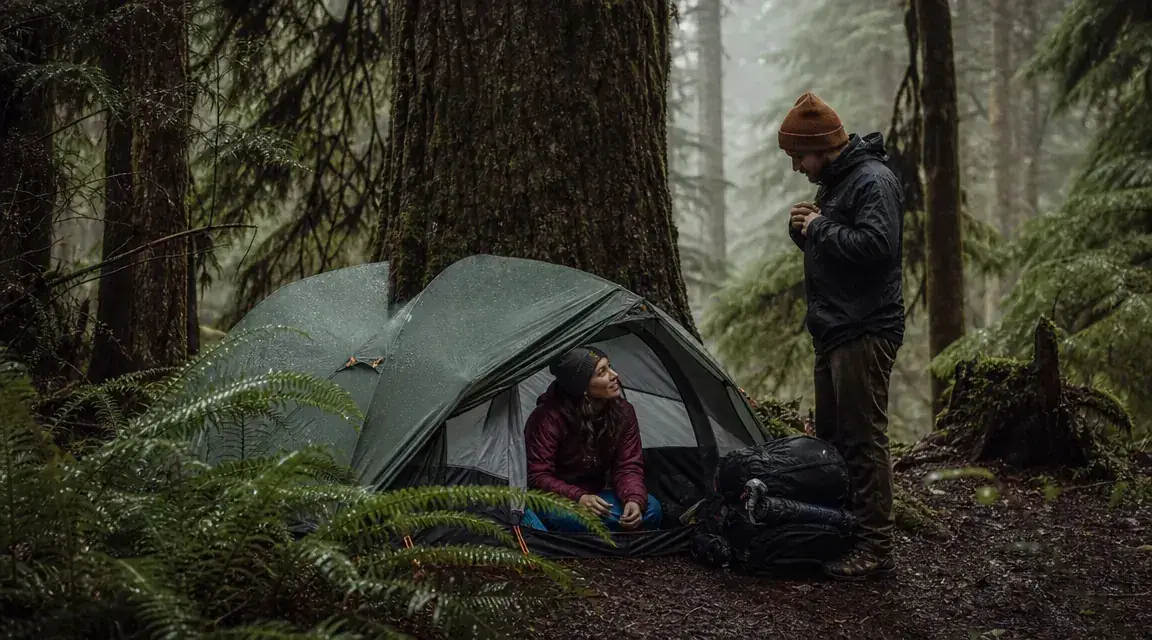
I've been car-camping and backpacking in Washington state for most of my adult life. That means wet. Not mist-on-a-nice-fall-afternoon wet. I mean October sideways rain in the Olympic foothills, sleeping on ground that's already saturated, with a storm hitting at 2 a.m. when there's nothing you can do about it. The Forceatt 2-3 person backpacking tent is the shelter I've leaned on through those nights, and I keep coming back to it because it keeps doing its job. Here are the ten specific reasons why.
This is not a gear-closet review. I've put this tent through a full year-plus of wet-weather trips, and I'll tell you where it earns its keep and where you need to manage expectations.
If you camp in Washington, Oregon, or anywhere it rains past September, this is the tent I'd put in your pack.
Rated 4.6 stars across nearly 1,900 reviews. Aluminum poles, taped seams, freestanding double-wall construction. Check today's price before it moves.
Amazon Check Today's Price on Amazon →The 3000mm Hydrostatic Head Rating Is Not Marketing Math
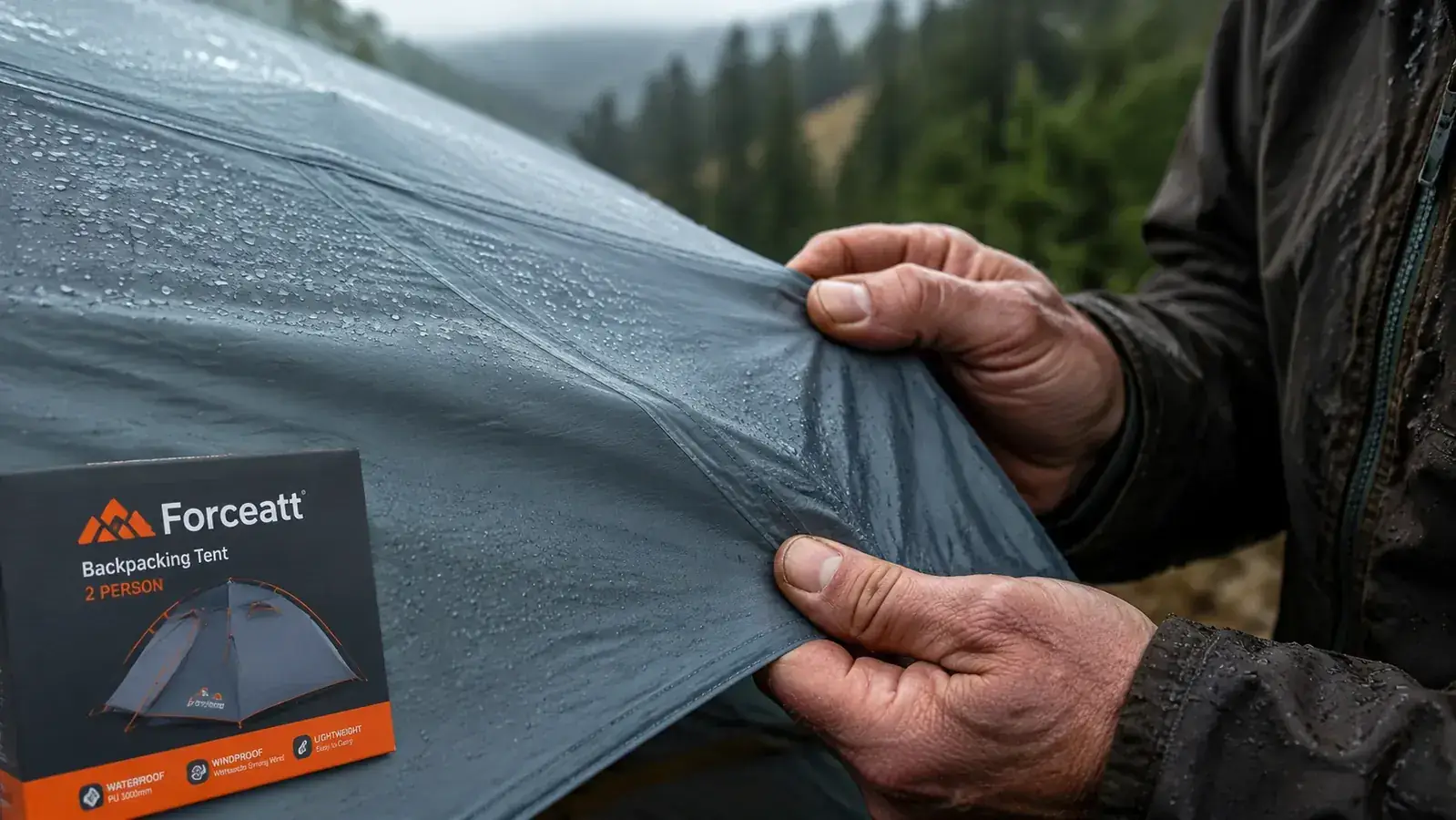
A lot of tents quote HH ratings that exist on the spec sheet and nowhere else. The Forceatt rainfly holds at 3000mm, and I've confirmed this the hard way. During a three-night trip in the Mt. Rainier foothills in November, two inches of rain fell in 18 hours. The floor stayed dry. The fly didn't weep. That's a meaningful number.
Fully Taped Seams on Both the Fly and the Floor
Seam tape is where budget tents cut corners. You'll see 'waterproof fabric' in a description and then find the seams aren't taped. If the seams aren't taped, the tent leaks through the stitch holes in any sustained rain. The Forceatt tapes both the fly seams and the bathtub floor seams. I've run a hose over this tent to test it. No drips at the seams.
The Bathtub Floor Comes Up 5 Inches
Bathtub floors matter when you're on ground that's actively pooling. The floor material wraps up 5 inches on all four sides before it meets the tent wall. That means ground water running under the tent has to climb 5 inches before it can find an entry point. On a flat-ish site this is enough. On a slope you still need to think about drainage, but the tent gives you a real buffer.
Aluminum Poles Don't Collapse in Wind
Fiberglass poles flex, weaken, and eventually snap in high winds. I've had it happen. The Forceatt uses 7001-series aluminum poles, and they hold their shape in sustained 35 mph gusts. I camped just below a ridgeline near the Tahuya State Forest last fall during a windstorm that dropped two trees within earshot. Tent was still standing when I woke up.
The Double-Wall Design Keeps Condensation Off You
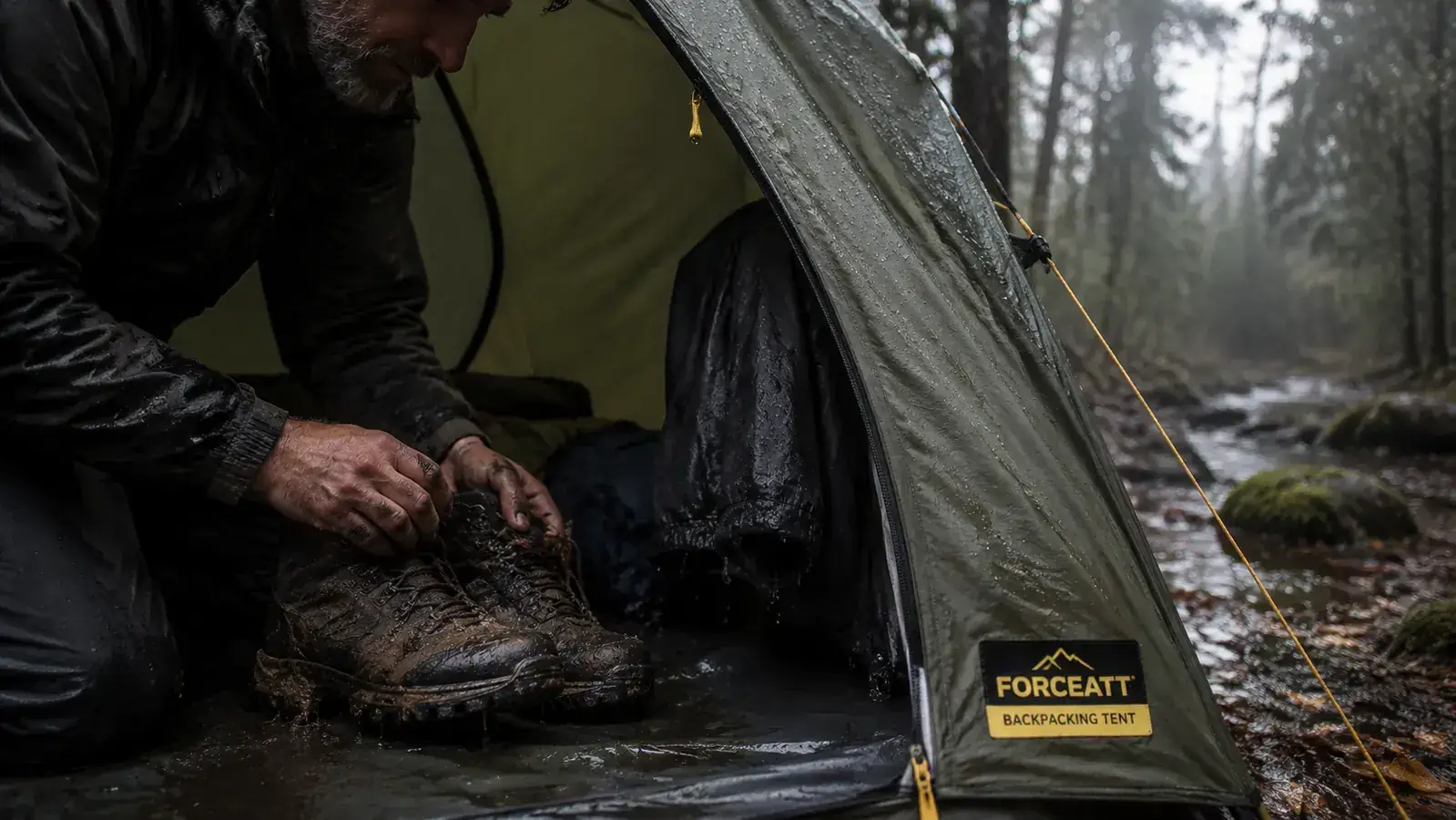
Single-wall tents pool condensation on the inside of the fly and then drip it on you. In wet PNW conditions where humidity is already near 100%, that's a real problem. The Forceatt is a proper double-wall setup: the inner tent breathes, the outer fly sheds water, and there's a gap between them for airflow. I wake up damp from humidity, not from a leaking fly. Different things.
Two Vestibules Mean You Can Actually Store Wet Gear
One vestibule is never enough for two people. Both of you have soaked jackets, muddy boots, and wet gaiters. The Forceatt has two D-shaped door/vestibule setups, one on each side of the tent. I keep my boots and rain jacket under one side, sleeping pad goes under the other during setup. You don't have to bring wet gear inside to keep it out of the rain.
Freestanding Setup: No Perfect Stakes Required
In the PNW you're often pitching on root-crossed, rocky, or saturated ground where stakes don't bite the way you want. Because the Forceatt is freestanding, the poles hold the tent's shape whether or not the stakes find solid purchase. You still want to stake the fly out in wind, but in a pinch you can pitch this tent on a rocky ledge and it stays put.
Camping in Washington is not the same as camping in Arizona. The water comes from everywhere. The tent that keeps you dry here will keep you dry anywhere.
4-Season Rating Handles Late-Season Snow Without Collapse
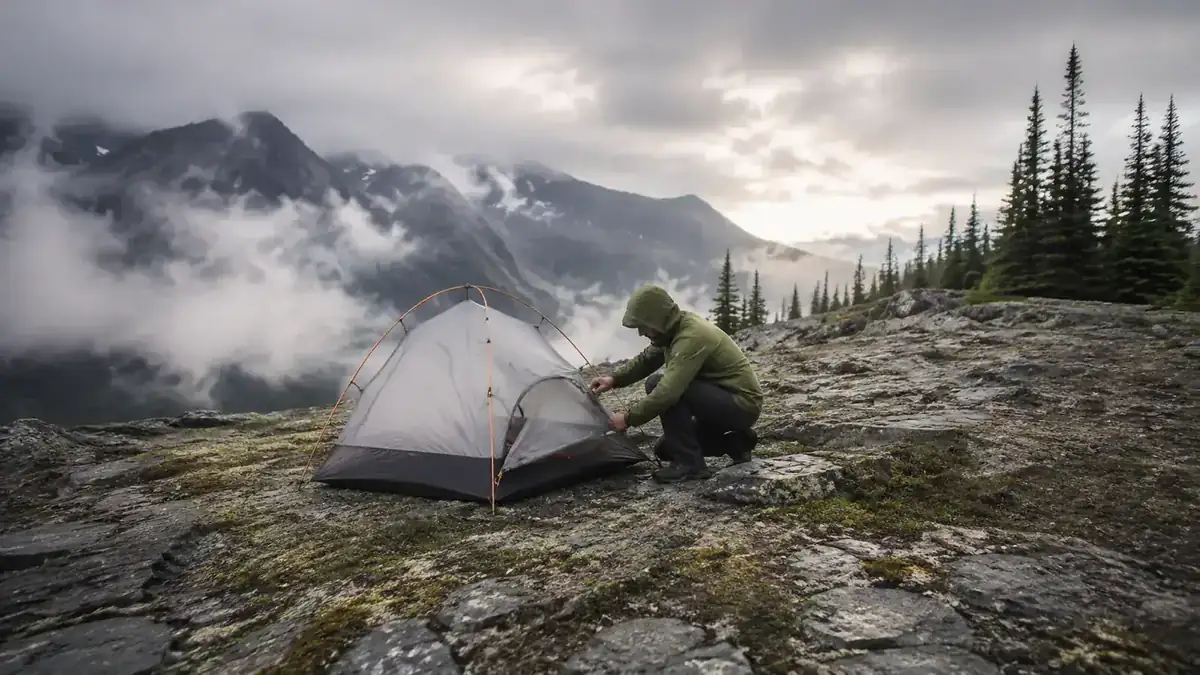
October in the Cascades can drop wet heavy snow with no warning. I've had this tent hold up under 3-4 inches of accumulated slush when I pushed into November near Cle Elum. The 7001 aluminum poles and taut fly geometry shed snow load reasonably well. It's not rated for a Montana blizzard, but for PNW shoulder-season mixed precip it does the job.
The Weight Is Realistic for Backpacking
Coming in around 4.9 lbs, this tent is not ultralight. But it's honest about what it is. I've carried heavier tents that didn't waterproof as well, and I've carried lighter tents that soaked through. For the wet-weather protection this tent provides, 4.9 lbs is a fair trade. If you need sub-3 lbs, you're going to spend significantly more for equivalent waterproofing.
The Interior Volume Is Usable, Not Just Claimed
I'm 6'1" and 210 lbs. A lot of 2-person tents claim room for two but expect you to sleep diagonally or without gear inside. The Forceatt's 3-person version gives me and a camping partner enough room to sit up, spread out sleeping bags without overlap, and keep one dry bag inside. For wet nights where you're spending more time inside the tent, that interior space matters.
What I'd Skip on This Tent
The included stakes are the first thing I replaced. The thin aluminum V-stakes that come in the bag bend in hard ground and pull out in soft ground. Pick up a set of MSR groundhog stakes or similar and keep them with this tent from day one. Also, the stuff sack is tight. Rolling the tent back into it at the end of a wet trip takes patience. I've switched to a mesh bag for easier packing and let it breathe during transport.
If you want the deeper breakdown of how this tent holds up over time, read my full long-term review. If you're trying to decide between this and a more expensive option, the honest review covers the tradeoffs directly.
If the stakes and stuff sack are the worst things I can say about a tent after 14 months in PNW rain, that's a strong result.
4.6 stars, nearly 1,900 reviews. Taped seams, aluminum poles, two vestibules, 3000mm HH rating. Check the current price on Amazon before your next trip.
Amazon Check Today's Price on Amazon →