
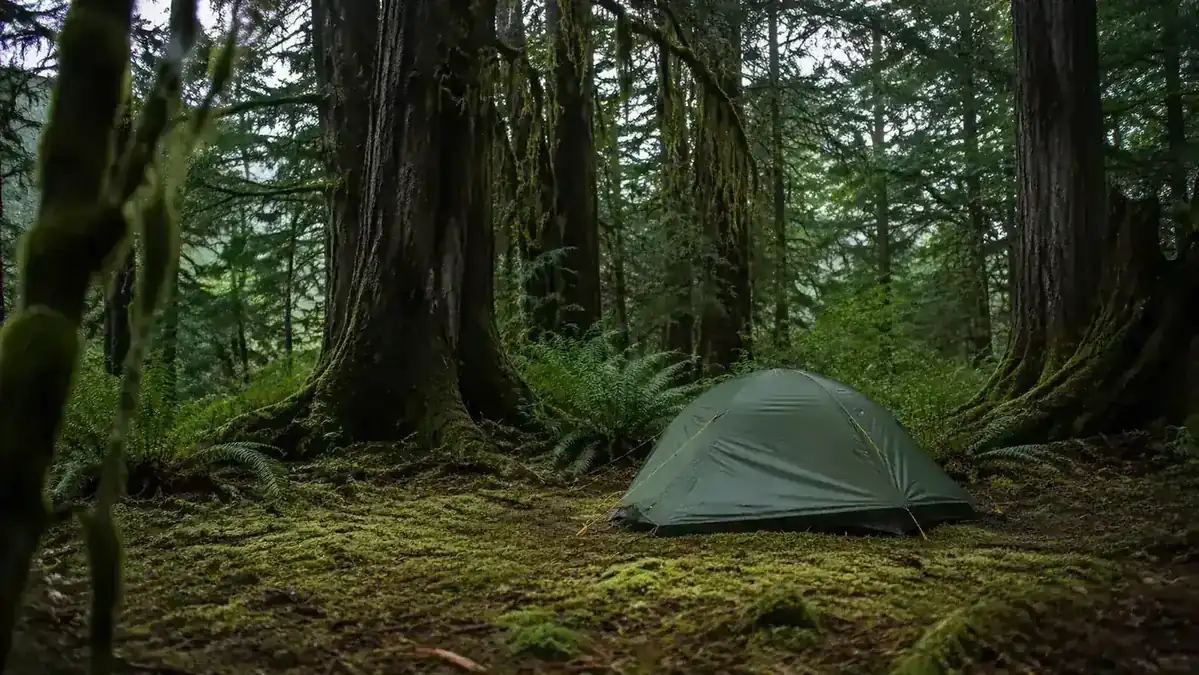
The forecast for the first weekend in October said 70 percent chance of rain Friday night, 90 percent Saturday, and a cold front pushing through Saturday into Sunday. I had three nights planned solo in the Norse Peak Wilderness east of Rainier, starting at the Crystal Mountain trailhead. I had checked the weather four times that week. Each time I closed the tab, I almost sent a text to myself that said "reschedule."
What stopped me was the tent sitting in the corner of my garage. I had bought the Forceatt two-person backpacking tent about six weeks earlier after reading through what felt like every budget tent thread on the internet. It had arrived, I had set it up in the backyard once, and I had decided it felt solid enough. But I had never taken it out in real rain. That was the part that nagged at me. You don't actually know what a tent can do until a storm hits it.
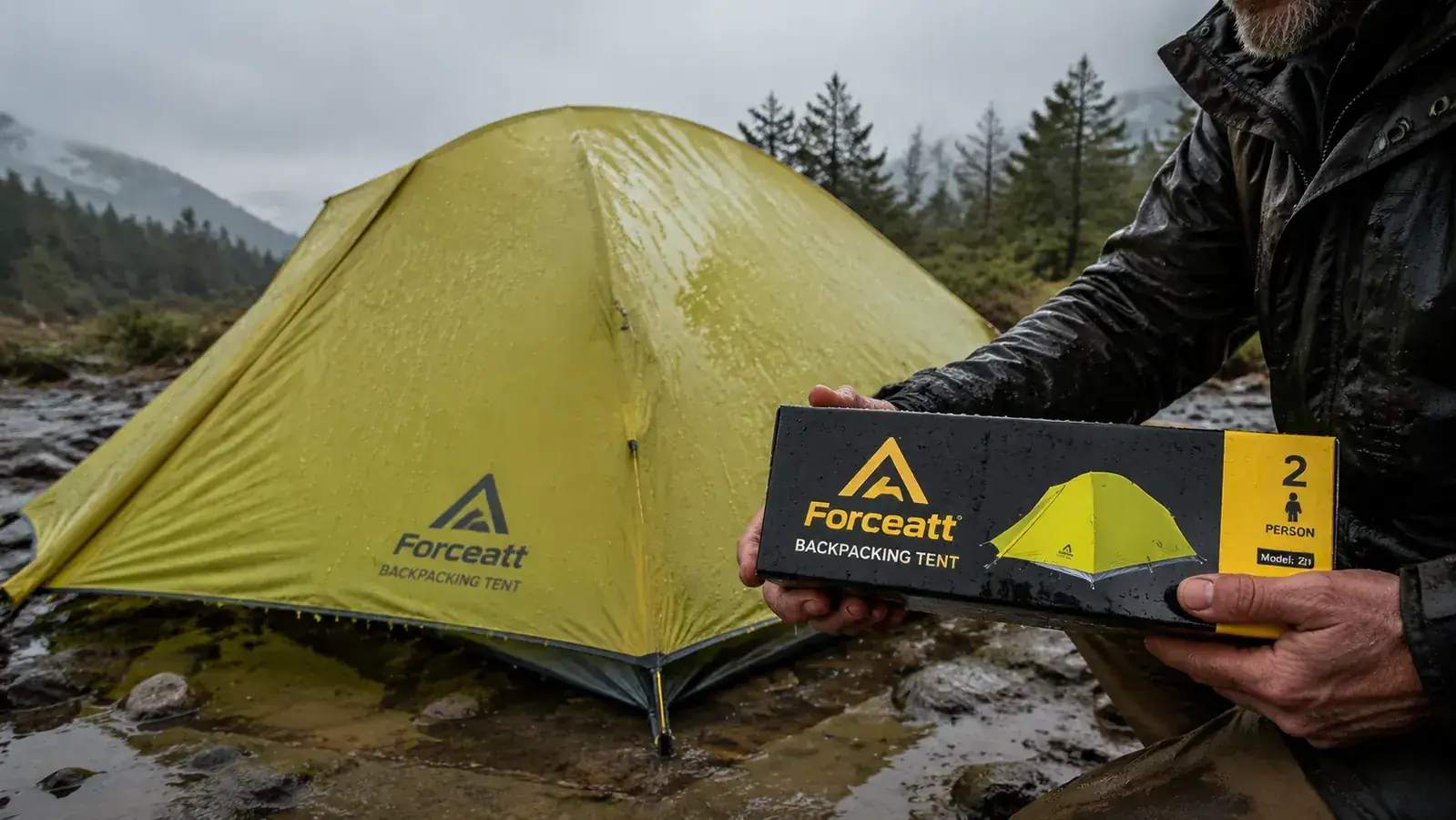
I went anyway. I packed up Thursday night, drove out Highway 410 Friday morning before the rain arrived, and was on the trail by nine. The sky was already the color of old concrete by the time I left the car.
I pushed about seven miles in and made camp at a flat spot above a creek I've since gone back to twice. The site had natural wind shelter from a ridge to the northwest, which turned out to matter a lot. I got the Forceatt up in about twenty minutes, which is slower than I am with it now but fine for a first outing. I staked the fly out tight and cooked dinner while it was still dry enough to sit outside.
The rain started around nine that night. I was already in the tent, lying on top of my sleeping bag with a book, and I heard it come in from the west. First the sound in the trees, then the patter on the fly, then the steady white-noise sound of a real Pacific Northwest downpour. I reached up and touched the inner wall of the tent with one finger, waiting for the damp. Nothing. The seams held. The floor held. The fly was doing what it was supposed to do.
I reached up and touched the inner wall with one finger, waiting for the damp. Nothing. The seams held. The floor held. The fly was doing its job.
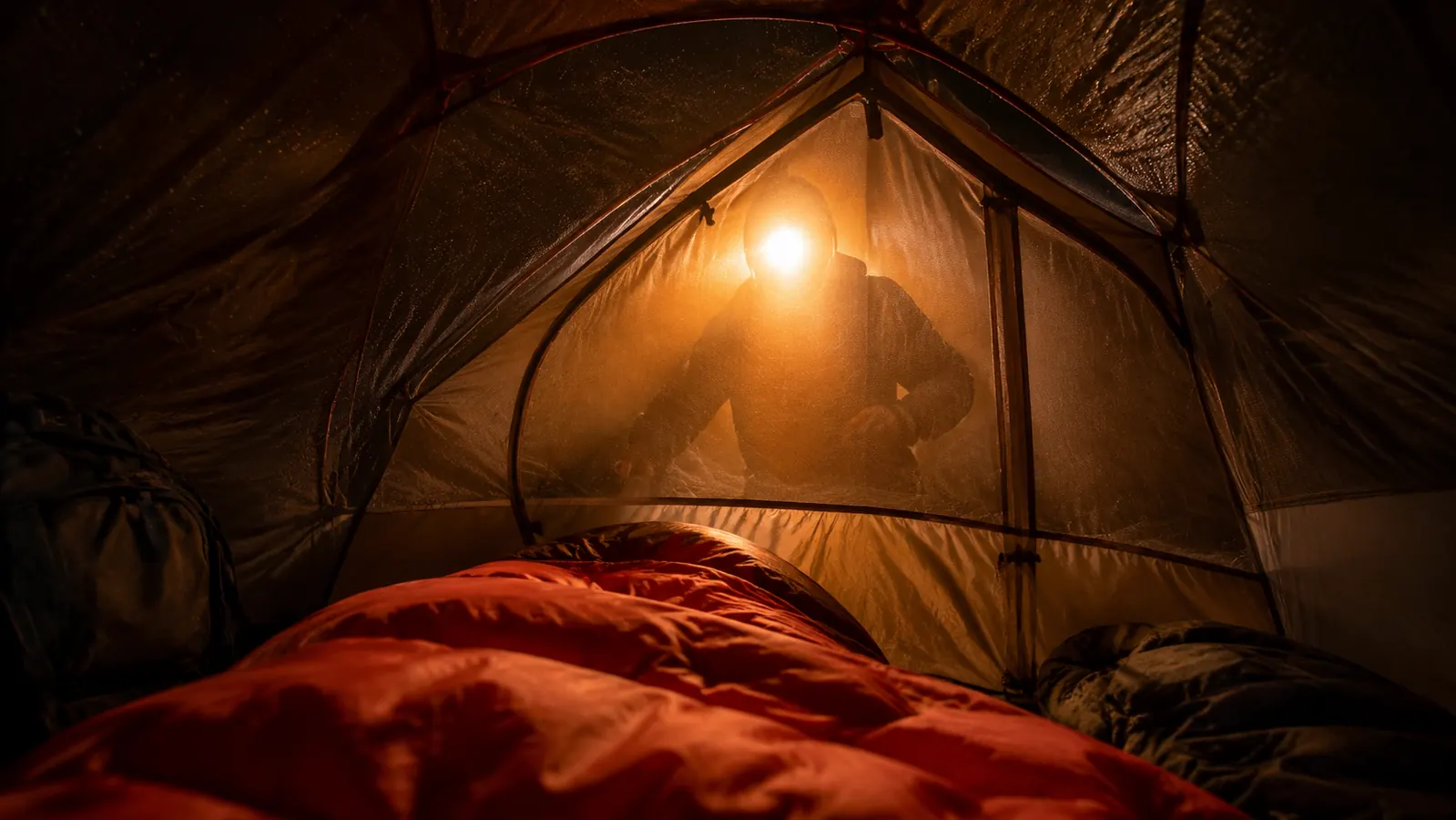
I will be honest with you: I was surprised. I had paid under seventy-five dollars for this tent. I had told myself it was probably fine, but some part of me had packed an extra dry bag for my sleeping bag just in case. That dry bag stayed empty all three nights.
The tent that got me through my first solo storm in the Cascades
The Forceatt 2-3 person backpacking tent is rated for 3-4 seasons and has held up through wet PNW weather that would flatten a cheaper shelter. If you are planning a solo trip or want a reliable backup tent for your bug-out kit, check the current price before your next trip.
Amazon Check Today's Price on Amazon →Saturday was the harder day. The cold front came through in the afternoon with gusts that bent the poles noticeably. I had gone out for a day hike in the morning and returned to find the tent exactly where I left it, all stakes still in the ground. One corner of the fly had worked loose from a stake, my fault for not cinching it tighter on the windward side. I reset it, added a second stake at an angle for the guyline, and it stayed put through Saturday night.
The thing I noticed most about that tent over those three days was how it handled condensation. The inner wall is mesh, and the fly sits about two inches above it all the way around. On cold mornings, there was some condensation on the fly but the inside of the tent stayed dry. I had read about double-wall design before, but that trip was the first time I actually understood why it matters. Without the airspace between the two layers, you wake up in a cold, damp sleeping bag. That is a miserable way to start a day at elevation.
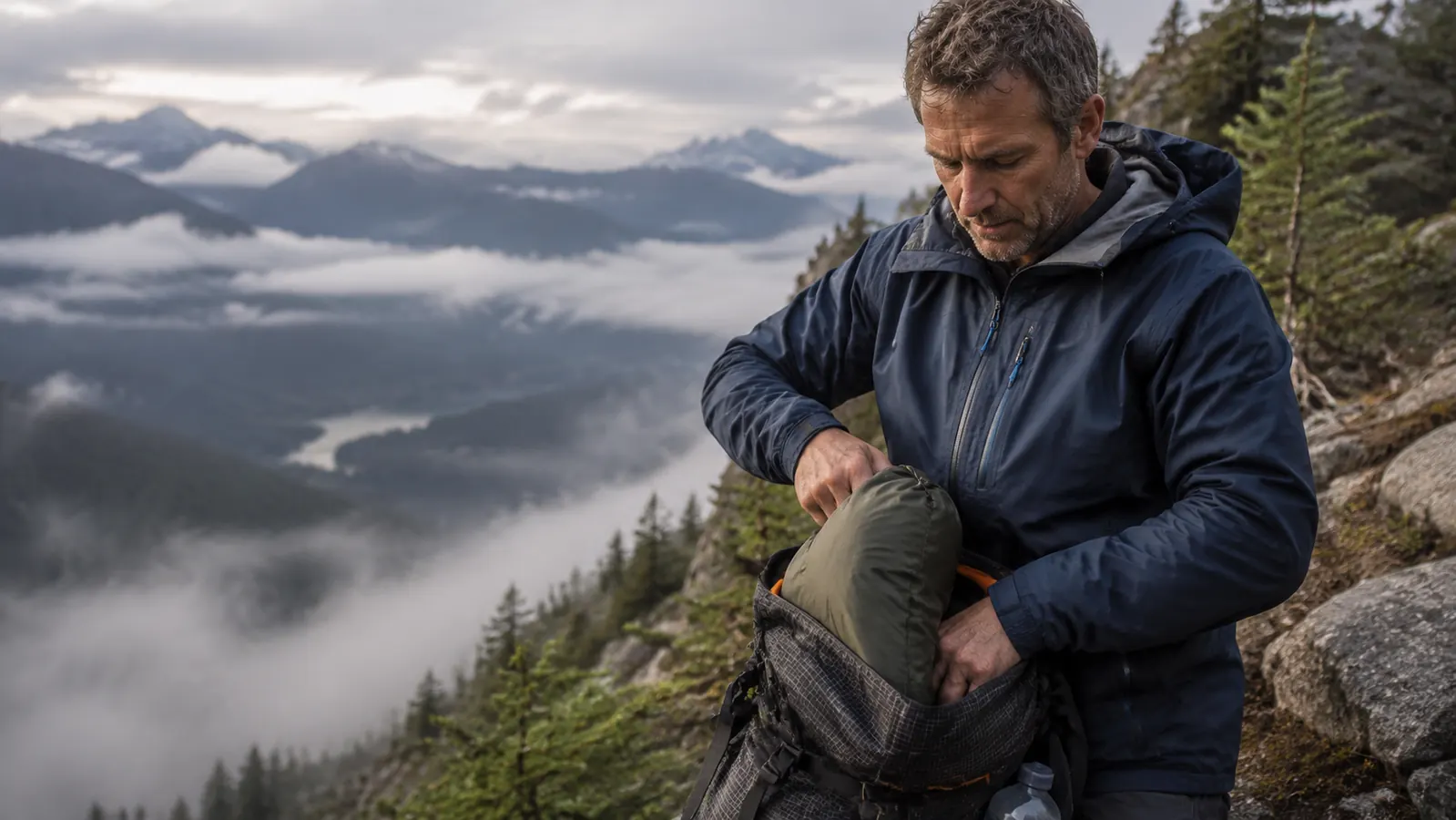
I broke camp Sunday morning in a light drizzle. The tent packed down without a fight, everything fit back into the stuff sack, and I was on the trail by seven-thirty. The weight was fine in my pack, just under five pounds for the tent alone, which is not ultralight but it is not punishing either. For a three-season or even a shoulder-season kit, the tradeoff works.
There are things I would flag if you are thinking about this tent. The pole assembly is straightforward but the clips on the inner canopy take a few tries to figure out the first time. The stakes that come with it are aluminum and light, but I replaced mine with titanium shepherd's hooks after that trip because I wanted something that would not bend in rocky Cascades soil. And the zipper on the main door runs smooth so far, but I have read a few reviews where people had problems with it after a season or two. I treat mine with zipper wax once a year and have not had an issue yet.
What I'd Tell You If We Were Sitting at My Kitchen Table
If you are looking at this tent and wondering whether it is actually good enough for real weather, here is the honest version. It is not the lightest tent you can buy. It is not the most packable. There are tents that cost twice as much that are better in all those categories. But for the money, the Forceatt did something more important for me: it made my first solo overnight feel doable instead of risky. I trusted it. That is worth something you cannot put in a spec sheet.
If you are just getting into backpacking or building a serious bug-out shelter on a budget, this is one of the few sub-hundred-dollar tents I would actually recommend without a pile of caveats. It is not perfect, but neither is the weather in the Cascades, and this tent handles both just fine. I have since taken it out on eight more nights, including a February trip in the Okanogan that got down to 19 degrees, and it has not let me down yet.
Still using this same tent two seasons later
After that Norse Peak trip, the Forceatt became my go-to shelter for anything below 8,000 feet in the Cascades. Four-season rated, aluminum poles, and a rainfly that actually works. Worth checking today's price if you are gearing up for a solo trip or building a reliable bug-out kit.
Amazon Check Today's Price on Amazon →