
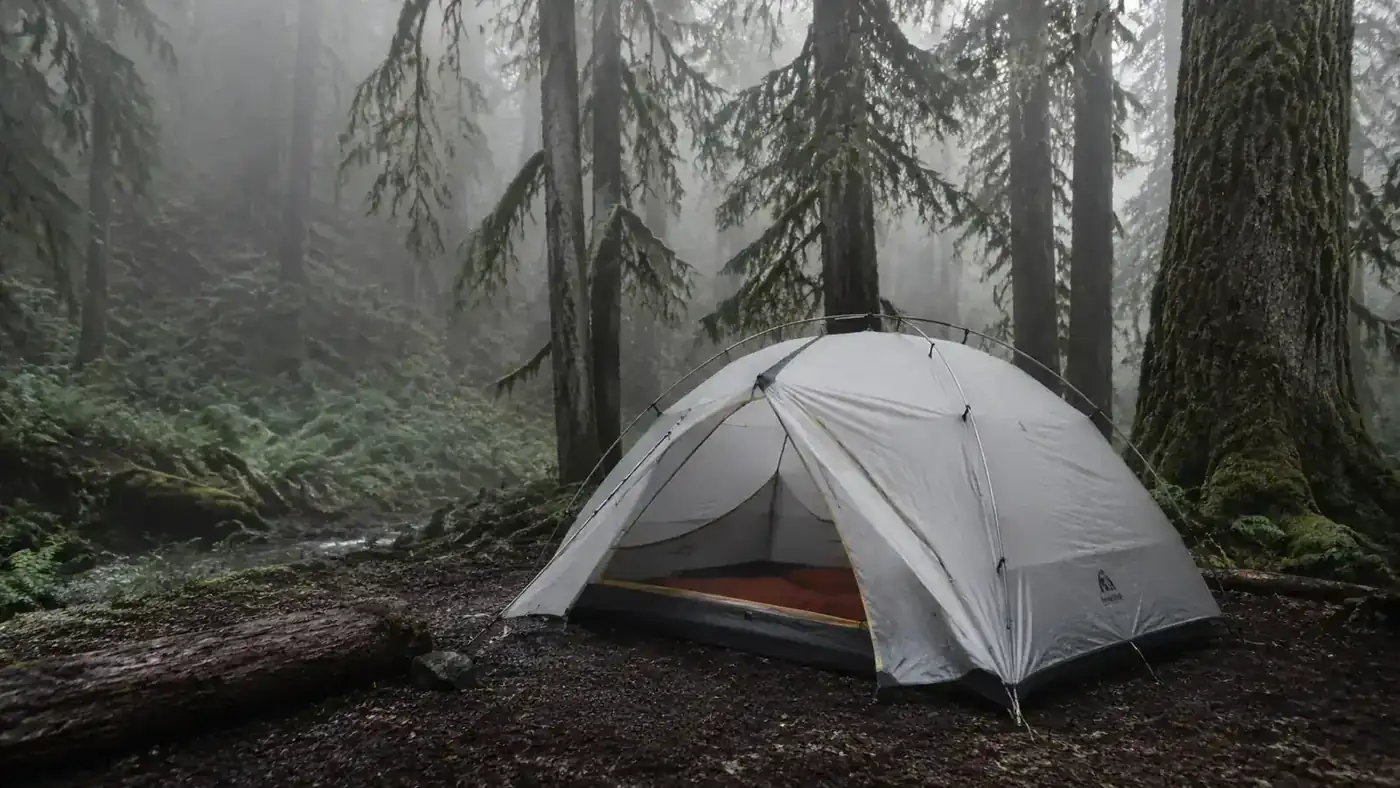
I bought the Forceatt tent in February of last year after my old three-season shelter finally gave up the fight on a soggy overnight near Leavenworth. A seam let go, the floor went spongy, and I spent the last four hours wrapped in a sleeping bag liner watching water pool around my gear. Not a great night. I was done patching and re-sealing and patching again. I wanted something new, reasonably light, and priced low enough that if it failed I wasn't out a week's pay. The Forceatt at the current price fit that description. Since then I've put 32 nights on it across trips in the Cascades, one weekend on the Olympic Peninsula, and a couple of late-season outings where the temperature dropped below freezing. Here's what I actually know about this tent after 14 months of regular use.
The short version: it's not a lifetime tent. It doesn't pretend to be. But it handles PNW weather better than most tents in its price range have any business doing, and it's held up under conditions that would have destroyed cheaper options in a single trip.
The Quick Verdict
A genuinely capable wet-weather tent at a budget price. Real waterproofing, reasonable weight, honest tradeoffs. Not for high-alpine conditions or ultralight obsessives, but a solid workhorse for PNW car-campers and entry-level backpackers.
Amazon Check Today's Price →If you camp in the Pacific Northwest and want a tent that won't flood at 1am, this is the one I keep coming back to.
Forceatt 2-3 Person Backpacking Tent, aluminum poles, rated to 3000mm hydrostatic head. Check whether it's in stock before your next trip.
Amazon Check Today's Price on Amazon →How I've Used It
My first real test was three nights at a site off the Icicle Creek drainage in April. Daytime temps were around 48 degrees, nights dropping to 32, and we got persistent drizzle for about 18 of the 72 hours. I set the tent up solo in under 15 minutes, which was a good sign. The color-coded pole clips made it obvious even in fading light. Rainfly staked out, seams already factory-taped. I woke up dry the first two mornings and slightly damp the third, though I traced that to condensation rather than water intrusion from the fly.
Since then I've taken it out in every month except June, which is the one month in Washington where you might go three consecutive days without rain and feel vaguely suspicious about it. The toughest test was a two-night trip near Monte Cristo in late October. The forecast said light rain. It delivered sideways sleet for about six hours starting around midnight. Wind out of the northwest, gusting hard enough to rattle the poles. The tent flexed, the fly popped and snapped, and in the morning everything inside was dry. That earned it some real trust.
I'm a 6-foot, 200-pound guy. I've slept in this tent solo and with a friend. Solo it's genuinely comfortable, with room for a 65-liter pack inside the vestibule. Two adults is snug but workable. I would not call the 3-person capacity accurate in any real-world sense.
What the Specs Actually Mean in the Field
The tent uses 210T polyester for the fly and floor, both rated to 3000mm hydrostatic head. For comparison, most budget tents you see at department stores run 1000-1500mm. The floor is thicker than the fly at 150D versus 75D, which is the right call since it takes the most abuse. In 14 months I've had zero seam failures and zero floor soaking. The seam tape has stayed put even after the tent was packed wet and sat in my garage for a few days, which I'm not proud of but it happened.
The poles are aluminum, not fiberglass. That matters more than the spec sheet suggests. Fiberglass poles on cheaper tents splinter and crack in cold weather. I've had that happen with other tents at around 25 degrees. The Forceatt poles have stayed straight and haven't shown any flex fatigue. They're not as stiff as DAC poles on a $300 tent, but they're adequate. The whole pole set weighs in at about 13 oz.
Packed weight is listed as 5.5 lbs. My scale says 5 lbs 14 oz with the poles, stakes, and stuff sack. That's honest-enough marketing. It's not an ultralight tent. For a solo trip where I'm trying to keep base weight under 25 lbs, I sometimes leave it behind and go with a cuben-fiber shelter instead. For a two-person trip where the weight gets split, or any car-camping trip, the weight is fine.
Ventilation and Condensation
This is the area where a lot of budget tents fall short, and the Forceatt does better than I expected. The double-wall design with a vented inner body and separate fly creates an airspace that moves moisture out reasonably well. There are two low vents near the base and two high vents at the top of the fly, and the design actually moves air when wind is present. In still, cold air with two people sleeping inside, you'll get condensation on the inner tent wall. That's physics, not a design flaw. What matters is whether that moisture drips onto your gear. With the fly staked out properly and those vents open, I haven't had a drip problem.
The inner tent uses a no-see-um mesh at the top section, which is great for summer but means more condensation transfer in cold weather. If you're camping in temperatures below 40 degrees, stake the fly all the way out and leave the vents cracked even if it feels counterintuitive. Closing everything up to stay warm is what causes the dripping.
The toughest test was late October near Monte Cristo, sideways sleet for six hours. In the morning everything inside was dry. That earned it some real trust.
Setup, Packdown, and the Zipper Question
Solo setup takes me about 12 to 15 minutes from unpacking to staked and fully pitched. The pole architecture is a freestanding design with two crossing main poles and a small brow pole at the door. Color-coded clips mean you're not guessing which pole goes where in low light. I can pitch this tent in the dark without a headlamp now, not because I'm some expert, but because the process is consistent enough that muscle memory took over after about five outings.
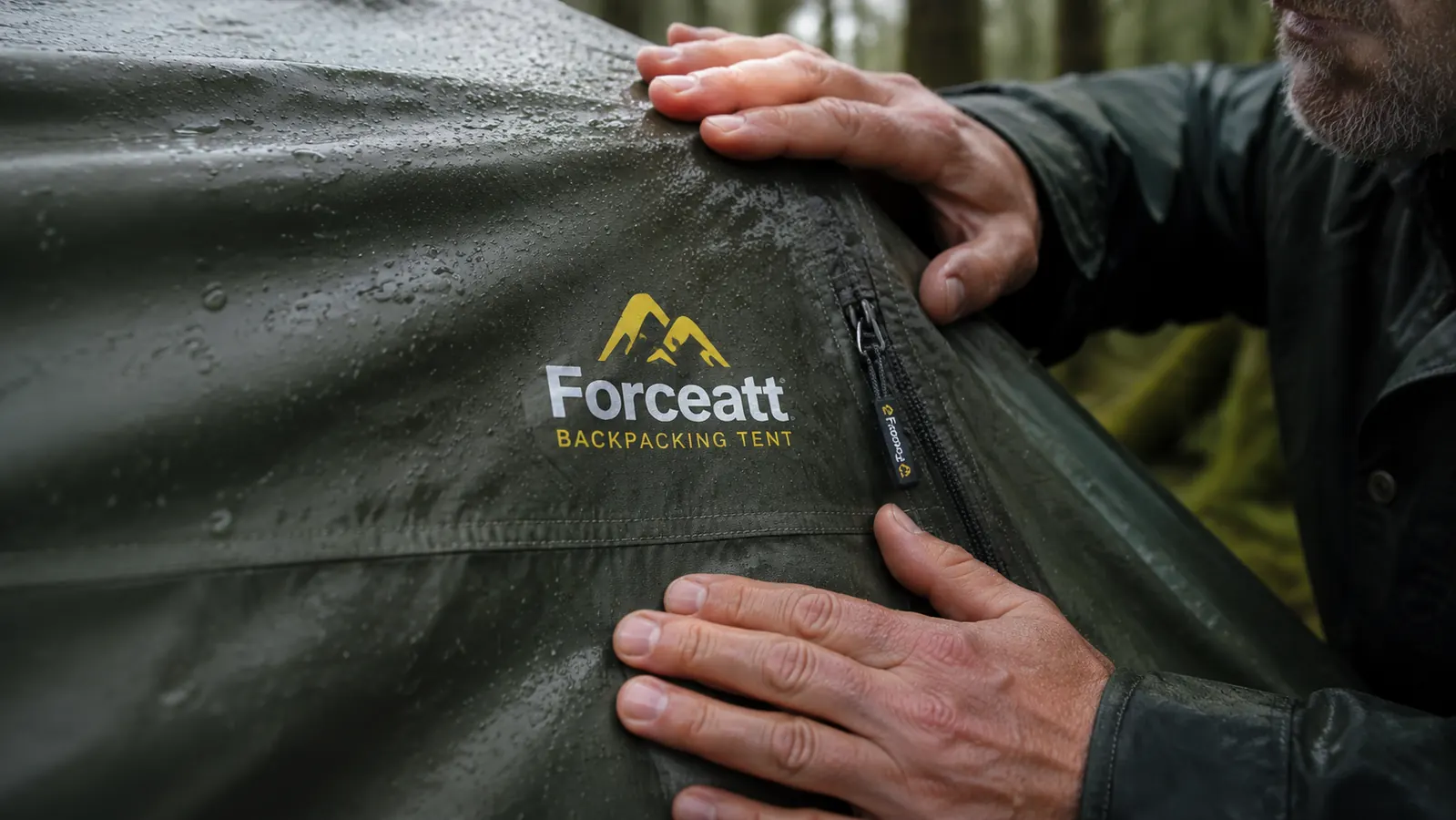
The zippers have been one of the better surprises. Budget tent zippers are often the first thing to fail, either through the slider separating from the coil or the coil itself catching the mesh. The Forceatt zippers have stayed smooth through 32 nights of use, one fumbled repair attempt where I forced a zipper while gritty hands were involved, and repeated packings in wet and dry conditions. I give them maybe another 20 nights before I'd start to worry, but they've outlasted my expectations.
The stuff sack is tight. Getting the tent back in it after a wet packdown takes two tries and some language. I've switched to a compression stuff sack of my own, which knocked about two minutes off my breakdown time. Minor issue, worth knowing.
Where It Falls Short
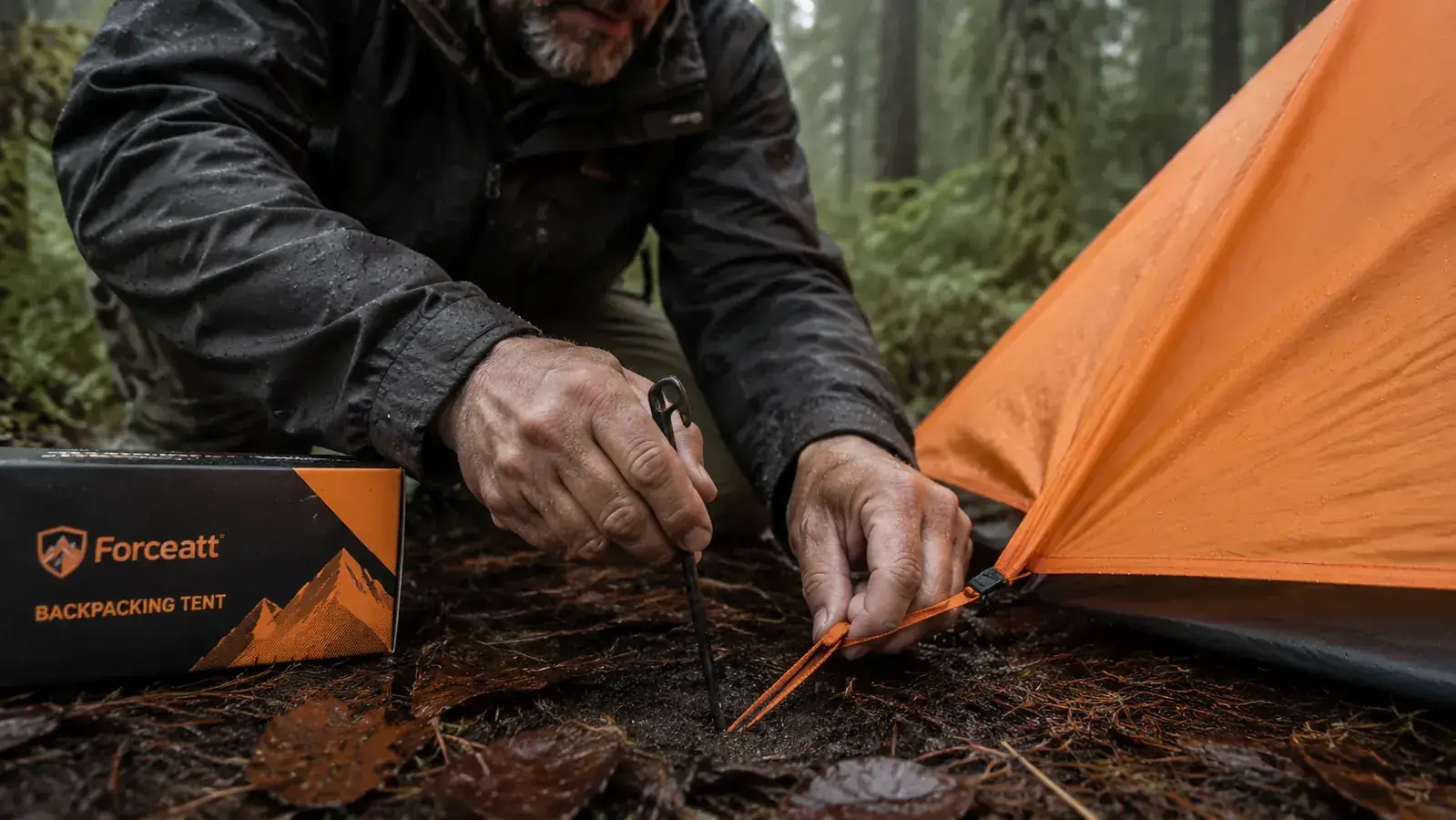
The included stakes are nearly useless. They're thin wire pins that bend on contact with compacted dirt and pull out in any sustained wind. I replaced all six with a set of MSR groundhog mini stakes on the first trip and never used the stock ones again. Budget around $15 for better stakes and factor that into the total cost.
The vestibule is functional but small. There's enough room for one pair of boots and a daypack, but if you're two people with two large packs, you're making choices. The door zipper opens fully to one side, which is fine for one person but awkward for two people trying to exit at the same time in the middle of the night.
I also wouldn't use this tent above treeline in sustained high winds. In the Monte Cristo trip I mentioned, we were sheltered by a ridgeline. On an exposed alpine camp, I'd want more pole rigidity and a lower-profile design. The Forceatt is a forest tent and a shoulder-season tent. Take it into exposed above-treeline conditions in a real windstorm and you're pushing its limits.
What I Liked
- 3000mm waterproof rating on fly and floor actually holds up in sustained PNW rain
- Aluminum poles have not bent or cracked through 14 months and below-freezing temps
- Factory seam tape has stayed intact even after wet packdowns and storage
- Color-coded pole clips make solo setup fast and repeatable
- Ventilation design moves condensation out well when fly is properly staked
- Zippers have held up well past the point where budget tent zippers normally start to fail
Where It Falls Short
- Included stakes are wire pins that bend on contact with hard soil, replace immediately
- 3-person capacity is marketing fiction, it sleeps two adults comfortably
- Vestibule is too small for two full packs
- Not rated for sustained high alpine winds, stay below treeline in bad weather
- Stuff sack is tight and frustrating for wet packdowns
- At 5 lbs 14 oz, not suitable for ultralight builds
Who This Is For
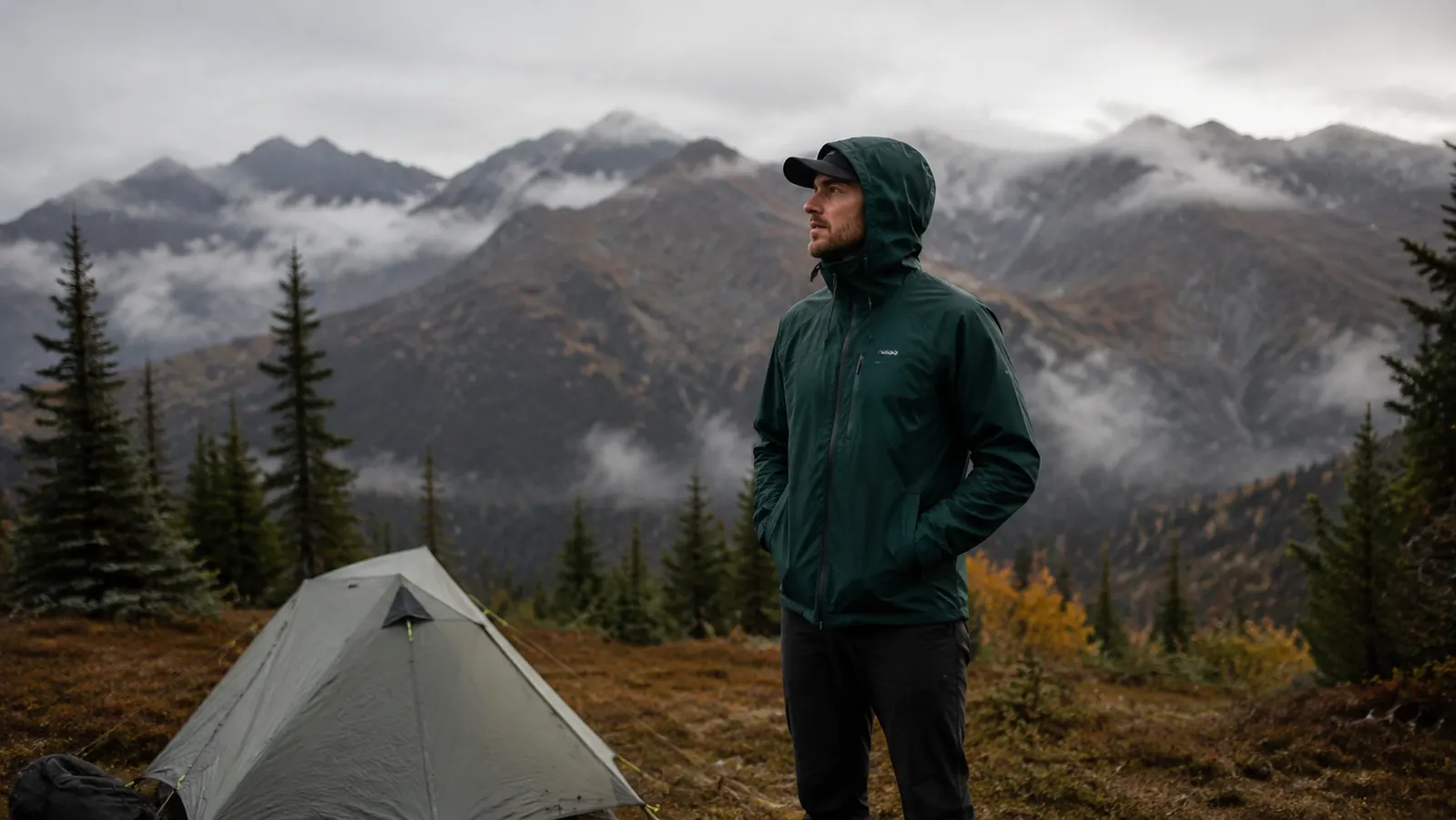
This tent makes the most sense for someone who camps regularly in wet weather but isn't going full ultralight. If you're a PNW hiker doing weekend trips and car camping, someone building a base kit on a limited budget, or a solo backpacker who needs real waterproofing without spending $300+, the Forceatt earns its place. I'd also recommend it as a dedicated second tent for couples who want a backup or a different footprint for solo versus partner trips. For preparedness-focused buyers putting together a bug-out bag or vehicle kit, it's a solid choice: packable, weatherproof, and not irreplaceable if it gets damaged.
Who Should Skip It
If you're doing high-altitude alpine routes, technical scrambles, or extended backcountry trips where the tent is your only shelter and weight is a genuine constraint, look elsewhere. Tents like the Big Agnes Copper Spur or the MSR Hubba Hubba NX offer better weight-to-strength ratios and more weather resistance in exposed conditions. Yes, they cost three to five times more. That price gap represents real engineering differences that matter above treeline in a whiteout. The Forceatt is a forest tent and a fair-weather-plus-rain tent. That's not a knock, it's just a scope definition. If you want a comparison between the two, I've written that out in detail over at the Forceatt vs MSR Hubba Hubba head-to-head.
I'd also skip it if your primary use is three-season family camping with three adults. Two is comfortable. Three is not. The listing calls it a 2-3 person tent; in practice it sleeps two. If you need to regularly shelter three people, look at a 4-person rating at minimum. For more on the specific features that make this tent work in wet weather, see the 10 reasons I trust it in PNW rain.
After 14 months and 32 nights, this is still the tent I reach for when the forecast shows a 70% chance of rain.
The Forceatt tent has a 4.6-star rating across nearly 1,900 Amazon reviews. It has earned that. Check the current price and availability before your next trip.
Amazon Check Today's Price on Amazon →