
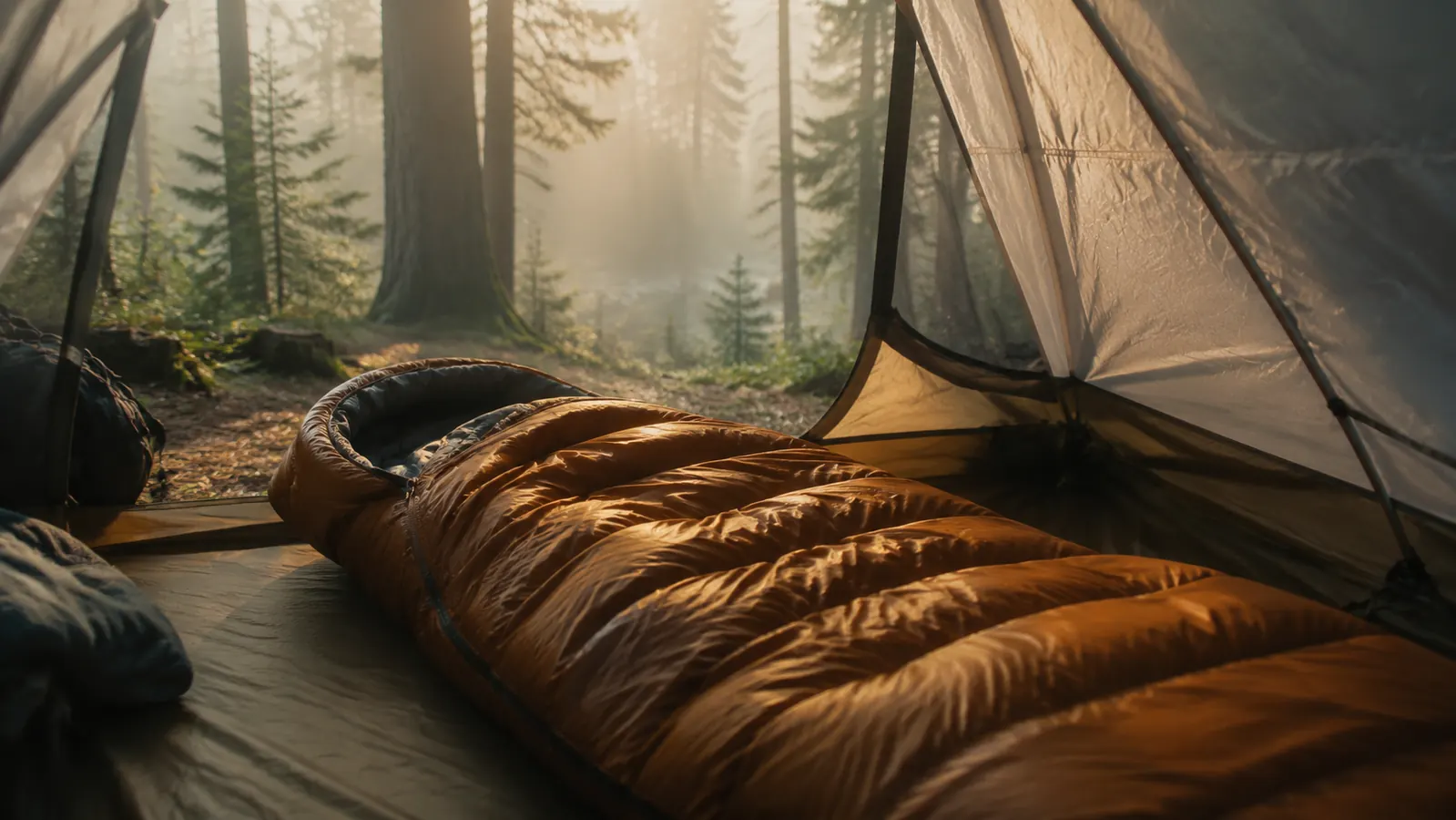
Two Novembers ago I pulled into the Icicle Creek trailhead at 5 a.m., 29 degrees on the dash thermometer, and discovered I'd forgotten my sleeping bag liner at home. What I had in the pack was the TETON Sports Tracker +5F I'd bought a few weeks earlier for exactly this kind of trip. That night at 4,800 feet I slept in the bag alone with no liner, no down booties, just two wool sock layers. I didn't freeze. I didn't sleep great, but I didn't freeze. That trip started two years of deliberate testing, and this review covers everything I've learned since.
The TETON Sports Tracker is a mummy-style synthetic sleeping bag rated to +5F. It weighs 5 lbs 11 oz for the regular/right-zip version I have, stuffs to roughly the size of a basketball, and currently sells at a price that puts it squarely in budget-synthetic territory. I'm 6 feet even, 185 lbs, and I run cold in Washington state fall and winter conditions. That context matters for this review.
The Quick Verdict
A genuinely warm synthetic bag for car camping and base camp use. Too heavy for ultralight backpacking, but it's honest about its temperature rating and it holds up over time.
Amazon Check Today's Price →Still figuring out if this bag fits your weather? Check today's price and size options on Amazon.
The TETON Tracker comes in multiple sizes and zip orientations. Worth checking what's in stock before you need it for a trip.
Amazon Check Today's Price on Amazon →How I've Used This Bag Over Two Years
I keep a trip log in a small Rite in the Rain notebook, mostly weather notes and gear observations. Pulling those back, I've taken the TETON Tracker out 23 times over two Pacific Northwest winters and into spring 2026. Those trips include car camping at Twisp River, backpacking in the Enchantments permit zone, two nights at a hunting camp near Rimrock Lake in late October, one family trip at Deception Pass where it got down to 34F with high humidity, and a handful of overnights close to home in the Issaquah Alps where the trails are always wet by November.
The bag has been compressed and expanded 23-plus times. It's been rained on through a tent wall (more on that below), washed four times in my front-loader on gentle cycle, and has lived in a large cotton storage sack in my gear closet between trips. I bought it to be a workhorse bag for non-ultralight outings and that's exactly the role it's settled into.
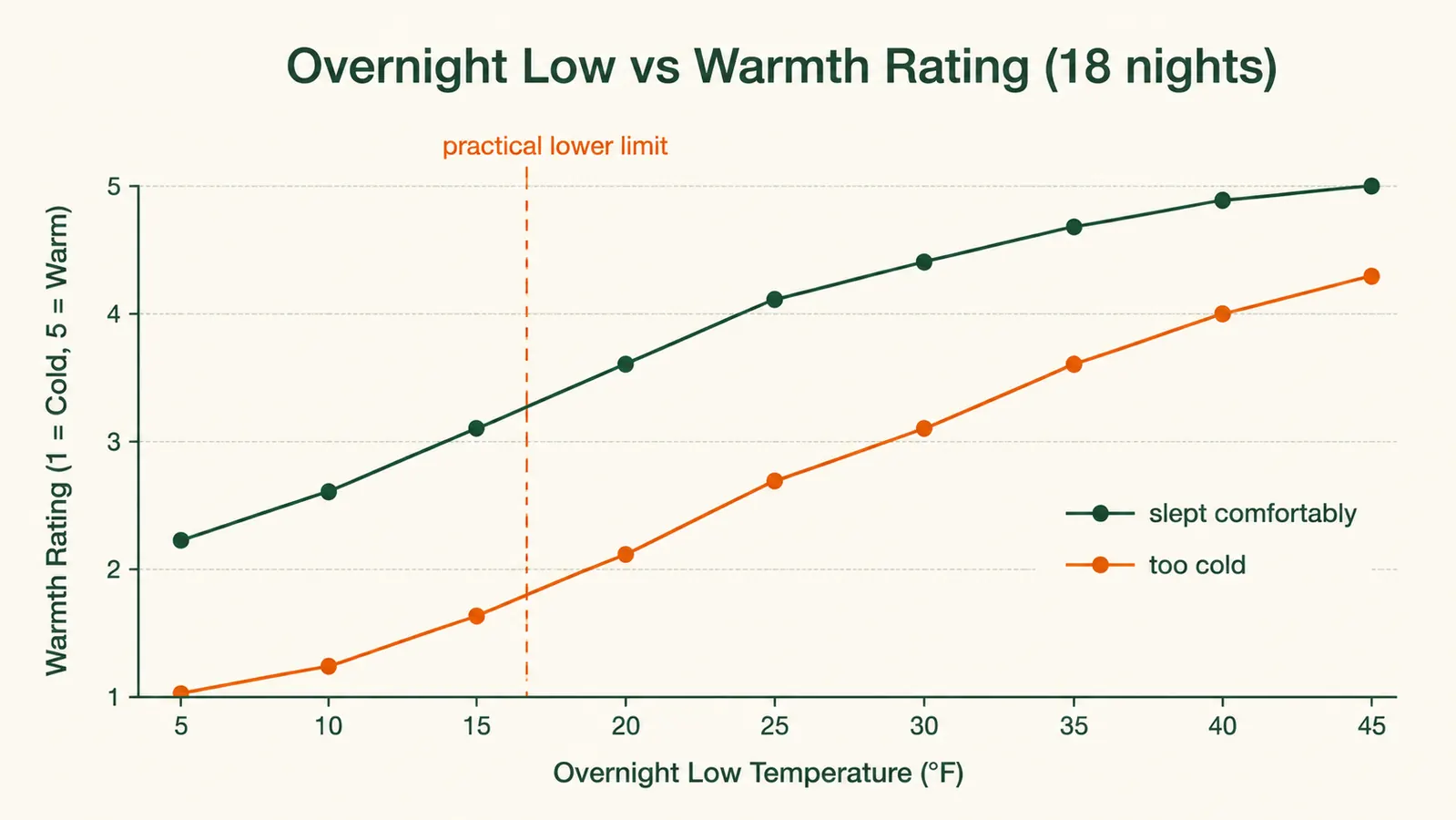
I used a thermometer inside the tent on 18 of those 23 nights. The coldest recorded temperature inside the tent was 11F, during that Icicle Creek trip. The warmest was 38F at Deception Pass. On every night above roughly 18F I was comfortable in base layers and wool socks. Below 18F, I added a fleece midlayer inside the bag and that brought the comfort ceiling down to about 10F with acceptable warmth.
Temperature Performance: What the Rating Actually Means
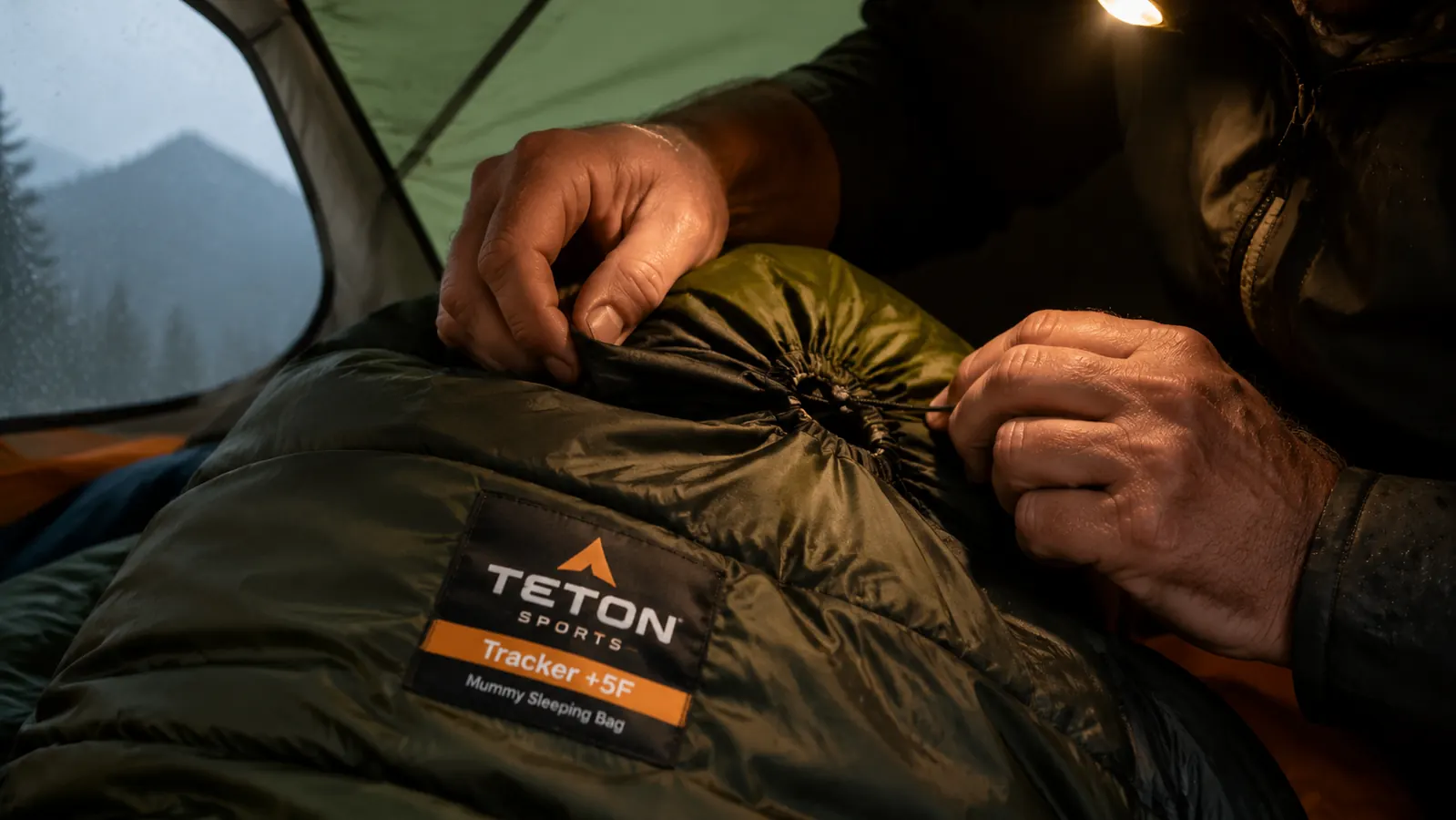
TETON rates the Tracker at +5F. That number matters, so let me be specific about what it means in practice. The EN/ISO sleeping bag rating standard breaks thermal performance into two values: the Comfort rating (the temperature at which an average woman can sleep comfortably) and the Lower Limit (the temperature at which an average man can sleep in a curled-up position). Most budget bags list only a single survival-floor number and call it the rating. TETON doesn't publish EN-tested comfort/lower-limit values for the Tracker, which is worth noting.
From my 18 nights of data, I'd put the realistic Comfort threshold around 20 to 25F for someone who runs average-to-cold. At 15F I was borderline. At 11F I added a layer and was okay, not great. So if you're planning a trip to a location that regularly hits single digits, this bag alone won't carry you there without extra insulation. If your coldest expected night is 20F or above, you'll sleep fine. That's a reasonable performance for a bag at this price.
One thing I noticed over the two years: the loft stayed consistent. Synthetic fill doesn't compress as permanently as down can after repeated stuffings, and after 23 trips the bag still lofts to what looks like its original thickness. That's the primary argument for synthetic fill in the Pacific Northwest: it insulates when wet, it's easier to dry in a tent vestibule, and the loft doesn't degrade from one damp trip the way an un-treated down bag can.
On every night above 18F I was comfortable in base layers and wool socks. That covers maybe 90 percent of the trips most Pacific Northwest campers will take October through April.
Shell Fabric, Zipper, and Hardware After Two Years
The shell is a 210T polyester taffeta on the exterior and a 190T polyester on the liner. Those are standard budget-synthetic specs, not premium. The exterior is slippery enough that it sheds light surface moisture from tent condensation, which has saved me a few times when water pooled at the base of my tent wall on a steep site. After two years and four washes, the shell looks worn but not failing. There's light pilling on the inner liner where my base layer rubs all night. Not a structural issue, just cosmetic.
The zipper is where I have the most criticism. It's a #5 coil zipper with a basic pull tab, and it has snagged on the draft tube twice in two years, once badly enough that I had to work it for five minutes in the dark at 2 a.m. at 17 degrees. That's not an experience I want to repeat. I've started lubricating the zipper with a beeswax bar before every trip, which has reduced snagging noticeably. But a bag at this price should have a more reliably smooth zipper out of the box.
The mummy hood is the standout hardware element. The two-drawcord system that lets you cinch the hood independently from the body is well-designed, actually functional, and something I've come to rely on. On cold nights I tighten the face opening to a narrow oval and that alone makes a meaningful difference in how warm the bag sleeps. Some budget bags have a single hood drawcord and it never tightens correctly. This one works.
Pack Weight and Compression: The Real Tradeoff
Five pounds eleven ounces is heavy for a sleeping bag by backpacking standards. A comparable synthetic bag from a premium brand at the same temperature rating will typically come in around 2 lbs 8 oz to 3 lbs 4 oz. A comparable down bag at the same rating might weigh 1 lb 12 oz. If you're counting grams on a multi-day trip, the TETON Tracker is going to cost you.
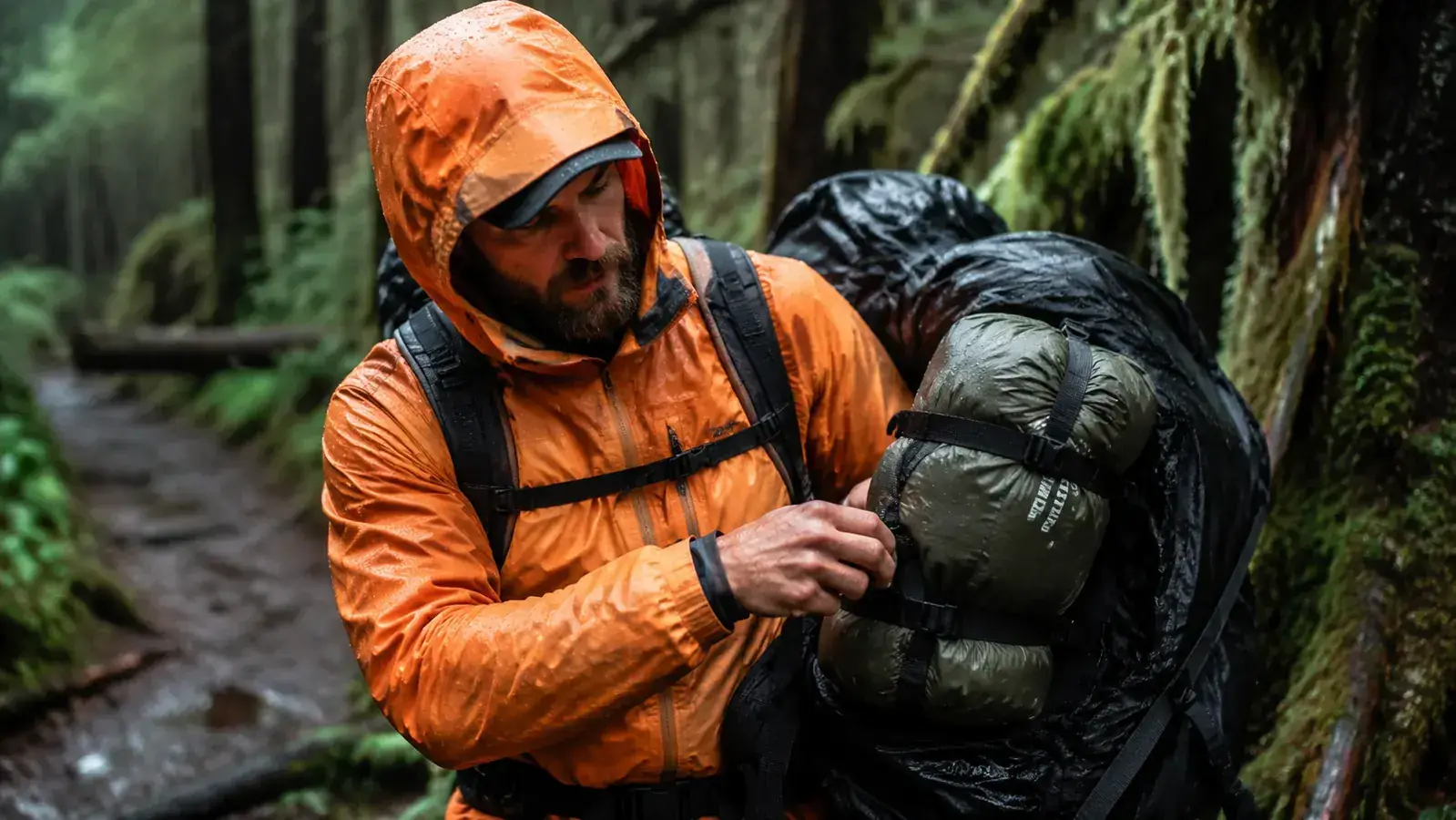
I've carried it on backpacking trips and it's manageable, but it takes up most of the bottom third of a 55-liter pack and leaves less room for everything else. On shorter trips I strap it to the outside of my pack with compression straps, and in wet PNW weather that's not ideal. For car camping and truck camping, none of this matters. The bag fits in a milk crate, drives to the campsite, and keeps you warm. For that use case it's exactly the right tool.
Compression: the included stuff sack gets the bag down to about the size of a volleyball if you really pack it tight. Not as tight as a down bag of the same weight, but fine for car camping where space isn't the constraint. If you're a dedicated backpacker looking for a sub-3 lb synthetic option at this temperature rating, you'll want to look at the Kelty Cosmic 20 or spend more for a premium brand. I cover that comparison in detail in my piece on the TETON Tracker vs Kelty Cosmic 20.
Moisture Management in PNW Conditions
This is where the TETON Tracker earns points that the spec sheet doesn't capture. Camping in Washington from October through March means dealing with condensation every night and sometimes actual water intrusion through a rain fly seam or a tent wall that gets pressed against brush. On two trips the inside of my tent got noticeably damp overnight. Both times the TETON Tracker slept acceptably warm even with moderate surface moisture. I toweled it off in the morning, hung it on a branch for 20 minutes in moving air, and by evening it was dryer than a down bag would have been after the same exposure.
That's the core reason I keep reaching for a synthetic bag for Washington shoulder-season camping. Down has better warmth-to-weight, but wet down is a liability. A synthetic bag at this price that keeps you warm when damp is doing its most important job. If you want to go deeper on the system for staying warm in a cold wet tent, read my guide on how to sleep warm in a cold wet tent.
What I Liked
- Holds its loft consistently after 23 trips and 4 machine washes
- Mummy hood two-drawcord system is genuinely functional and well-designed
- Insulates adequately when moderately damp, a real advantage in PNW conditions
- Practical comfort down to about 20F for average cold sleepers, 15F with a midlayer
- Synthetic fill won't permanently degrade from compression the way untreated down can
- Available in multiple sizes including long versions for tall sleepers
Where It Falls Short
- 5 lbs 11 oz is heavy for backpacking; this is a car camping or base camp bag
- Zipper has snagged on the draft tube twice in two years, fix with beeswax lubrication
- No EN/ISO tested comfort and lower-limit ratings published, so the +5F number is a survival estimate
- Stuff sack compression is modest; the bag is large even packed
- Interior liner shows cosmetic pilling after heavy use with rough base layers
Who This Bag Is For
The TETON Sports Tracker is the right bag if you car camp, truck camp, or do base-camp-style trips where weight isn't the primary constraint and cold, damp Pacific Northwest conditions are a real possibility. It's a reliable three-season-plus bag that handles shoulder season honestly, keeps you warm in damp conditions, and doesn't require you to baby it the way a down bag does. If you're outfitting a family for fall camping or building a vehicle emergency kit, this bag makes a lot of sense at its price point.
Who Should Skip It
If you're a backpacker who counts every ounce, skip this bag. At 5 lbs 11 oz it's going to punish your back on a multi-day trip in a way that a 2-lb synthetic alternative won't. Similarly, if your trips regularly hit below 15F and you sleep cold, you'll want either a warmer bag or this bag supplemented with a liner, which starts to blur the cost comparison. And if your plan is ultralight through-hiking, this bag simply isn't in that category. It's built for durability and warmth at an accessible price, not for minimum-weight performance.
The TETON Tracker is a dependable cold-weather bag for car campers and base camp use. See current availability and sizing.
Multiple sizes and zip orientations available. Worth confirming your size before the trip rather than after.
Amazon Check Today's Price on Amazon →