
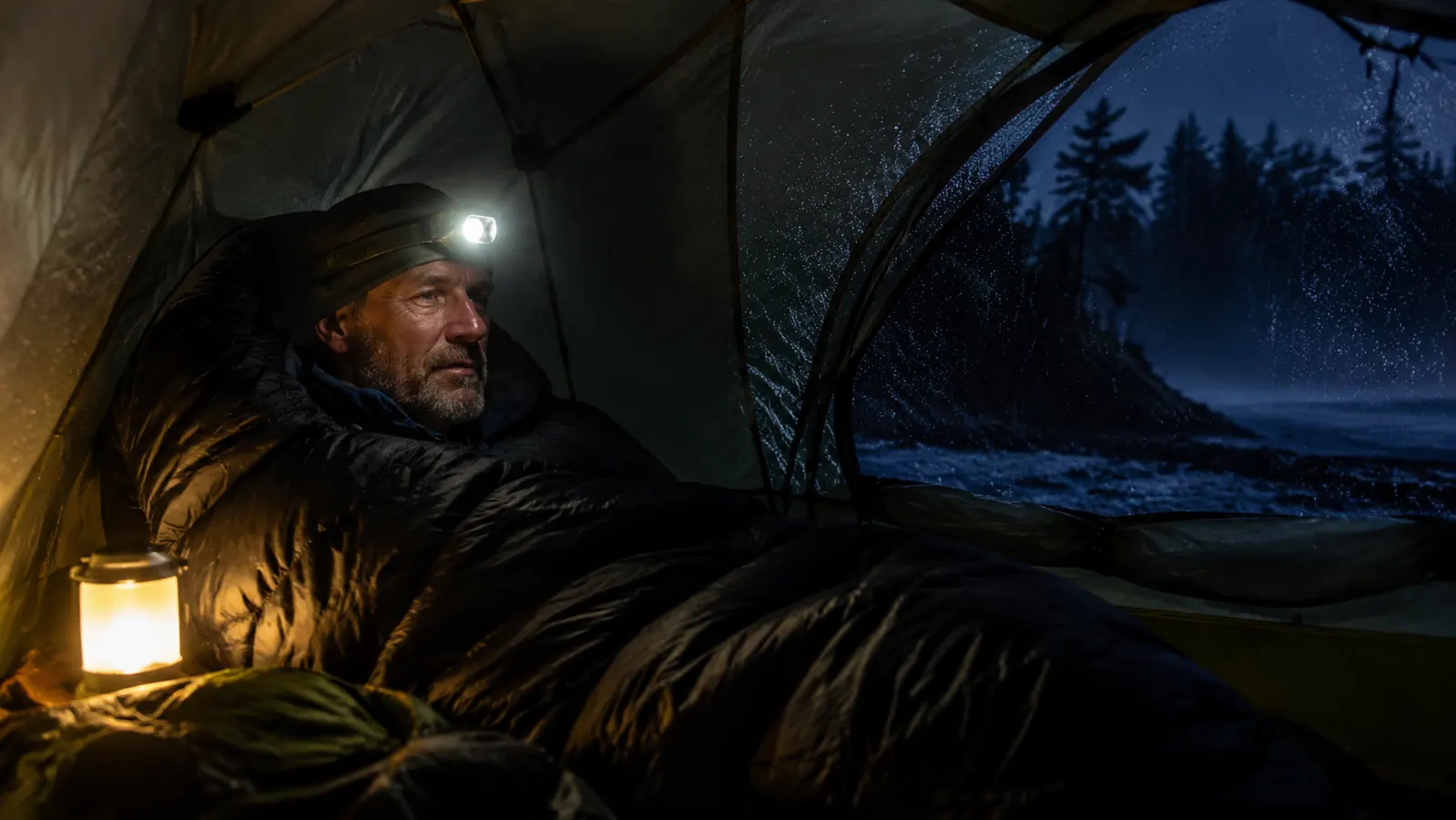
I have been hauling a TETON Sports Tracker +5F mummy bag around Washington state for most of my adult life and I can count on one hand the number of fall or winter trips where my tent was completely dry inside by morning. Condensation is just part of the deal when you are breathing humid air into an enclosed nylon shell in 35-degree weather. The question is not how to keep the tent bone-dry. The question is how to sleep warm anyway. After too many shivering nights learning the hard way, I built a system that works even when the rain fly is dripping and my boots are soaked.
The good news is that none of this requires expensive gear upgrades. Most of it is sequencing and a few decisions you make before you crawl into the bag. The one piece of gear that does matter significantly is your sleeping bag, and I will get into why a rated mummy bag changes the equation completely in Step 3. But first, let's talk about the two problems that actually kill your warmth: cold coming up from the ground and moisture getting into your insulation.
If your current bag is a rectangular flannel-lined thing from a garage sale, the rest of this guide won't save you.
The TETON Sports Tracker +5F is the mummy bag I recommend for cold, wet PNW camping. Rated to 5F, 4.5 stars from over 1,700 campers, and built to handle serious shoulder-season weather without a serious price tag.
Amazon Check Today's Price on Amazon →Step 1: Pick the Right Campsite Before Dark
Site selection sounds obvious but most people get this wrong because they are tired when they arrive and they just stop wherever looks flat. In wet PNW conditions, where you pitch matters as much as what you sleep in. Avoid low spots and valley floors where cold air pools overnight. A site 20 or 30 vertical feet up a hillside can be five to eight degrees warmer than the hollow below it. I learned this camping above the Hoh River one October when the group that camped in the flat meadow woke up to frost on their rain flies. We were fine up the slope.
Look for natural windbreaks: a boulder, a stand of dense firs, a ridge. Wind is a cold multiplier even inside a tent. Also check the ground itself before you stake anything. Press your palm flat on the dirt for five seconds. If it feels cold within two seconds, that ground is going to pull heat out of you all night regardless of your sleeping bag rating. In that case, you need a better ground layer, which is what Step 2 covers.
One more thing on site selection: avoid camping directly under trees in heavy rain. Drip points from branches will hammer your tent all night and the sound alone will disrupt your sleep. Find a spot with canopy overhead but not directly in the drip zone.
Step 2: Build a Real Ground Insulation Layer
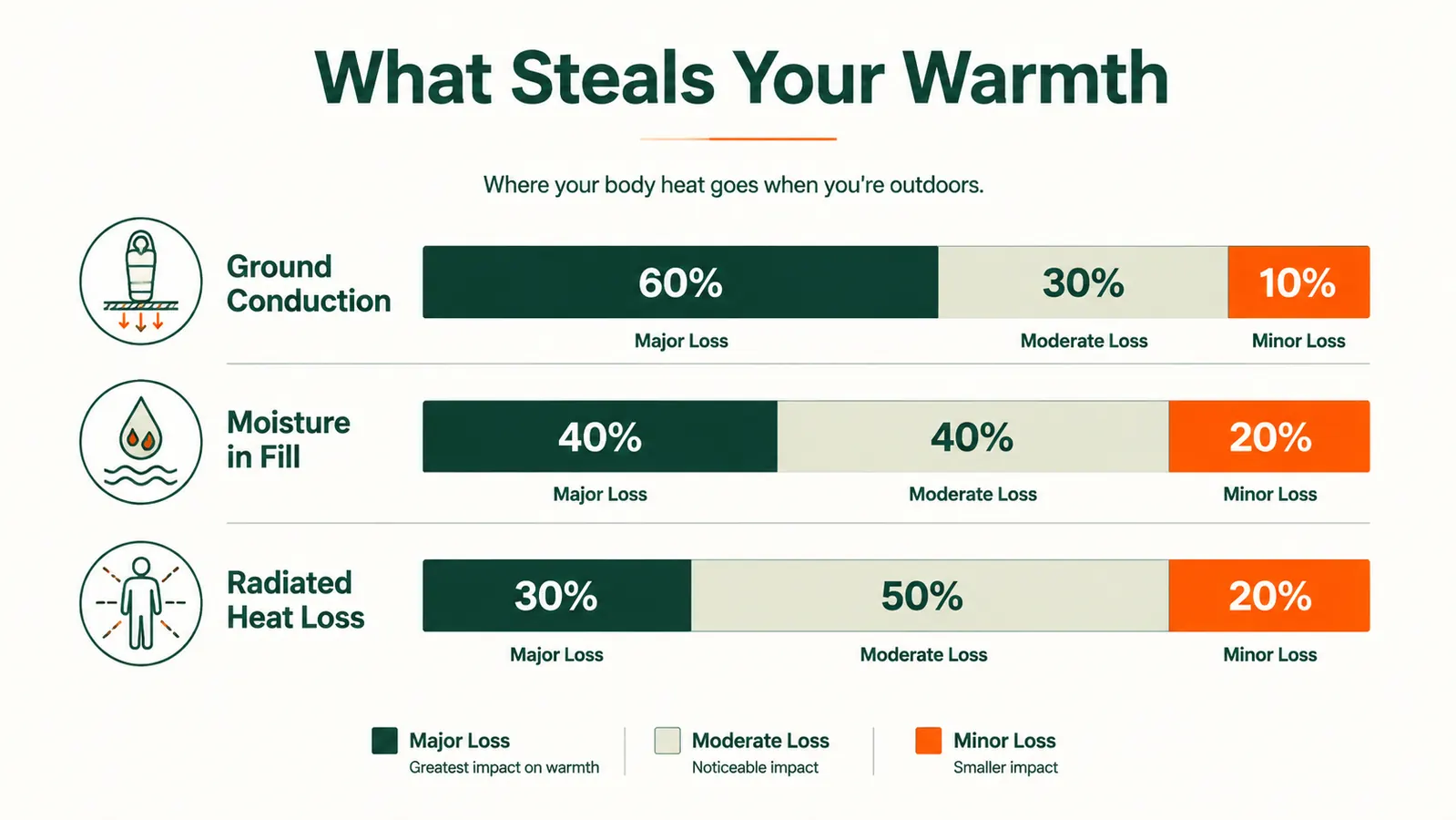
The ground steals heat faster than cold air does. Conduction pulls warmth directly through the floor of your tent, through your sleeping pad, and out of your body. A basic foam camping pad with an R-value around 1.5 is not enough for temperatures below 40 degrees on wet ground. I carry a closed-cell foam pad as a base layer and put my inflatable on top. Total R-value ends up around 5 to 6 and I have never been cold from below using this setup.
If you do not want to carry two pads, at minimum use a foam sit pad under your hips and lower back. That is where your sleeping bag compresses the most and loses the most insulation value. A 10-ounce sit pad under your hips will make a 3-season bag perform more like a cold-weather bag on chilly nights.
In genuinely soaked conditions, I also lay a emergency mylar blanket under my foam pad, reflective side up. It adds almost no weight, costs about two dollars, and cuts radiant heat loss to the ground significantly. I keep one in the bottom of my pack permanently.
Step 3: Use a Rated Mummy Bag, Not a Comfort Bag
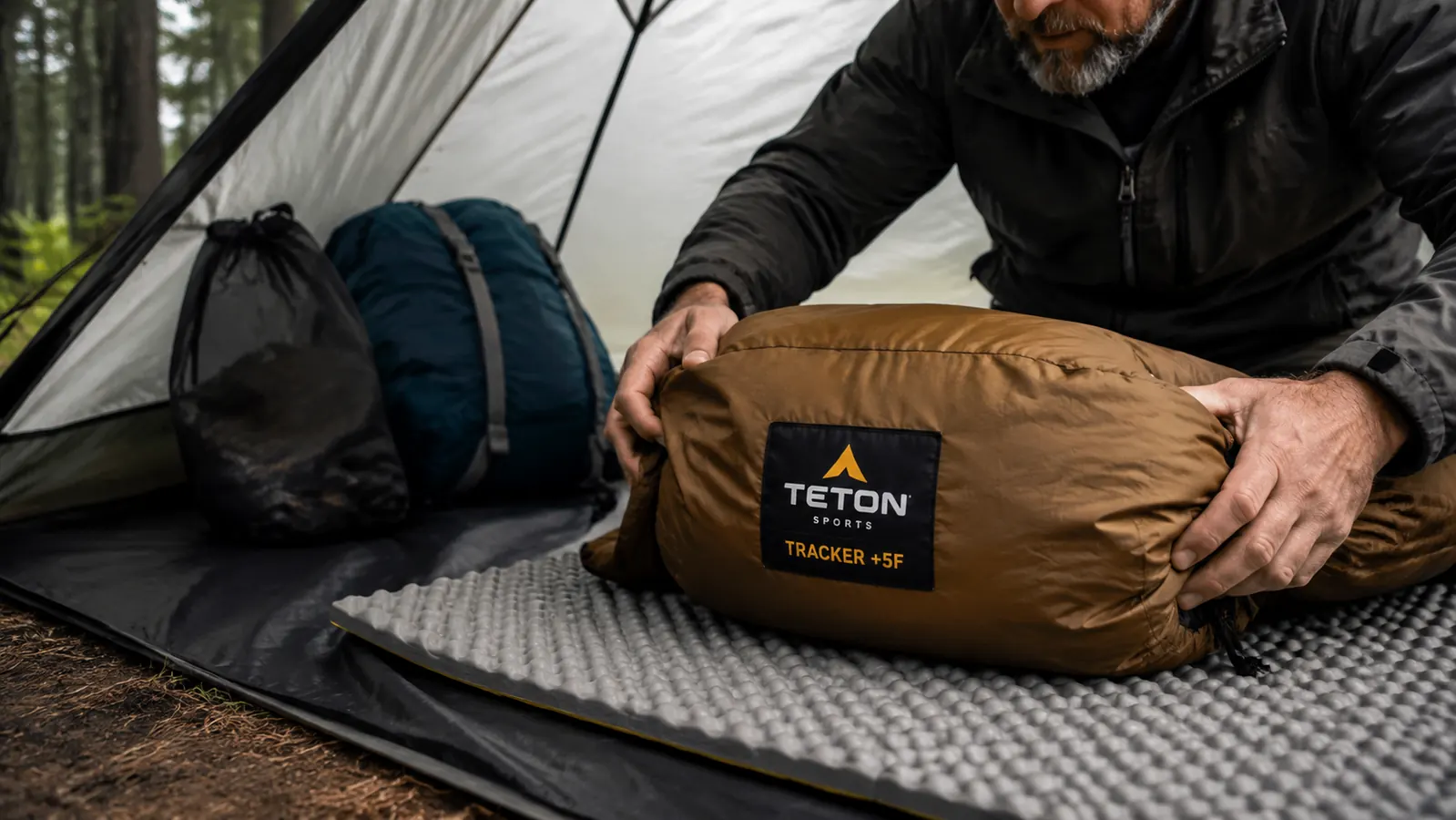
This is the one gear item that matters most. If you are sleeping in a rectangular sleeping bag, a semi-rectangular bag, or a bag labeled with only a comfort temperature rather than a survival or lower-limit rating, you are working against yourself in cold wet weather. Mummy bags are designed to trap heat around your body geometry. The hood cinches down around your head, which is where most of your heat escapes. The tapered footbox concentrates warm air at your feet. A rectangular bag just cannot do this.
I have used the TETON Sports Tracker +5F for two full seasons of cold-weather camping in the Cascades and Olympics. It is a synthetic fill bag, which is critical in wet conditions. Synthetic insulation continues to provide meaningful warmth even when slightly damp. Down is a better insulator at low weight but it collapses when it gets wet and you can go from warm to dangerously cold fast. In PNW conditions where moisture gets into everything, synthetic fill is the smarter choice unless you have a high-end hydrophobic down bag.
The Tracker is rated to +5F. For most three-season PNW camping that rating gives you real margin. I have slept comfortably in it at 28 degrees on Mt. Rainier's lower flanks in October. At 4.5 stars from over 1,700 campers, it is not just good for the price. It is a genuinely competent cold-weather bag. If you want the full breakdown of how it performs over time, I wrote a detailed long-term review you can read here.
One note on bag ratings: always assume you will be 10 to 15 degrees above the survival rating before you are genuinely comfortable. A bag rated to +5F will keep most people alive at 5 degrees but comfortable sleep usually starts around 20 to 25 degrees. Factor that gap into your planning.
Step 4: Get Into the Bag Dry, Not Damp
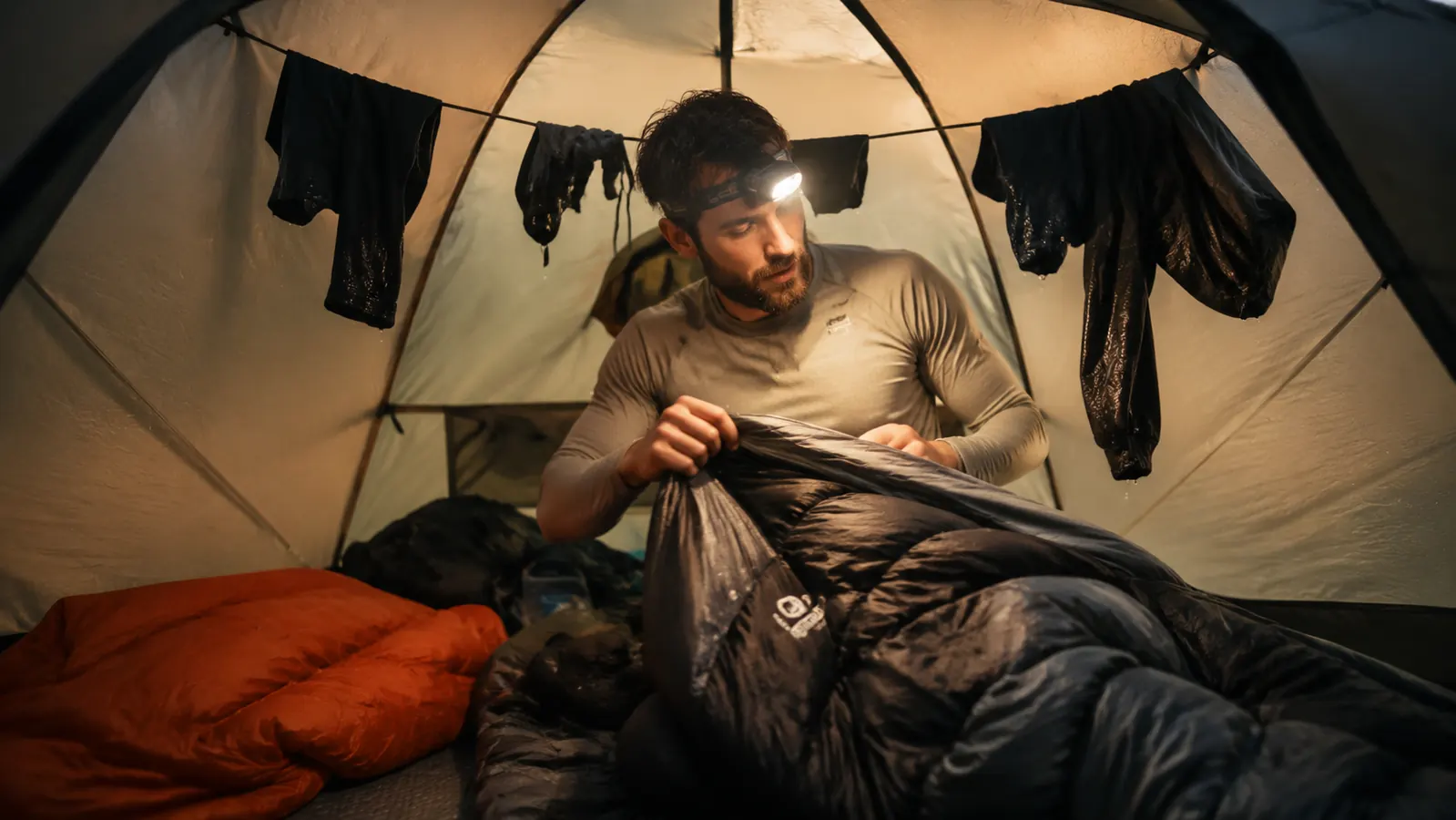
This is the step most people skip and it costs them a full night of warmth. If you climb into your sleeping bag in damp base layers, those layers will wick moisture into the bag fill and reduce its insulating capacity. Over the course of a multi-night trip, you can permanently damp out a synthetic fill bag if you sleep in wet clothes every night.
My protocol when everything outside is wet: change into dry base layers before getting into the bag. I keep a dedicated dry bag with my sleep clothes sealed inside. Merino wool base layers are ideal because they resist odor and manage moisture better than synthetics if you sweat in the night. Before I change, I shake out the tent to remove any standing water droplets from the interior walls. Then I hang my wet rain gear on a piece of paracord strung across the top of the tent poles rather than laying it on the floor where moisture will migrate to my bedding.
If your base layers are soaked and you have no dry set, turn them inside out. The inside of a synthetic layer is almost always drier than the outside face. It is not perfect but it is meaningfully better than wet-side-in.
Step 5: Manage Condensation Through the Night
Condensation is not just annoying. It actively makes you colder. Every time you breathe out warm humid air into the tent interior, that moisture has to go somewhere. In a properly ventilated tent it escapes through the mesh inner wall and out through the rain fly before it can condense on your bag. In an improperly ventilated tent it pools on the inner walls and eventually drips onto your gear and into your bag fill.
The fix is counterintuitive: open your tent vents even in the rain. Almost every quality backpacking tent has low vents on the inner wall and high vents near the peak. Keep both open. The stack effect pulls humid air up and out. A tent with all vents closed can accumulate enough condensation overnight to actually wet your bag more than rain coming through an open door would. I would rather have a small draft than a bag soaked from the inside.
Also, never cook inside the tent. A camp stove boiling a cup of water releases significant moisture into the air. One cup of water boiled inside a closed tent can add enough humidity to noticeably increase condensation on all surfaces. Cook in the vestibule with the door cracked or fully outside.
The tent was dripping and my boots were soaked but inside my Tracker bag I slept through until 6am without waking up cold once. The system works if you follow it.
What Else Helps
A few smaller things that add up over a cold, wet night: eat a substantial meal within an hour of going to sleep. Your body generates heat by digesting food and that thermogenic effect can add meaningful warmth in the first few hours of the night when the temperature is dropping fastest. Complex carbohydrates work better than pure protein for this. A bowl of rice or oatmeal with some fat in it will keep your internal furnace running longer than a protein bar alone.
A hot water bottle placed near your feet in the bottom of the sleeping bag is an old trick that genuinely works. Fill a Nalgene or a Hydroflask with near-boiling water, cap it tight, and drop it into the foot of the bag before you get in. I have done this on 25-degree nights in the North Cascades and it is noticeably different from nights I forgot to do it. The warmth lasts two to three hours, which covers the hardest part of the night.
Finally, wear a hat to bed. Up to 30 percent of your body heat can escape through your head even inside a mummy bag that is not fully cinched. A lightweight wool beanie weighs almost nothing and keeps that heat where you need it. If your bag has a draft collar, use it. Pull it up snug around your shoulders. Most people leave that feature loose and then wonder why they are cold.
If you want to compare your bag options before buying, I also put together a head-to-head look at the TETON Tracker versus the Kelty Cosmic 20 that covers how the two bags perform in similar conditions at different price points.
You already know how to pick the site, layer the ground, and manage moisture. Now make sure your bag can hold up its end of the deal.
The TETON Sports Tracker +5F mummy bag is the bag I trust on cold, wet nights in the Cascades. Synthetic fill holds warmth even damp, the hood seals down tight, and it is rated to +5F for real cold-weather margin. Over 1,700 campers give it 4.5 stars.
Amazon Check Today's Price on Amazon →