
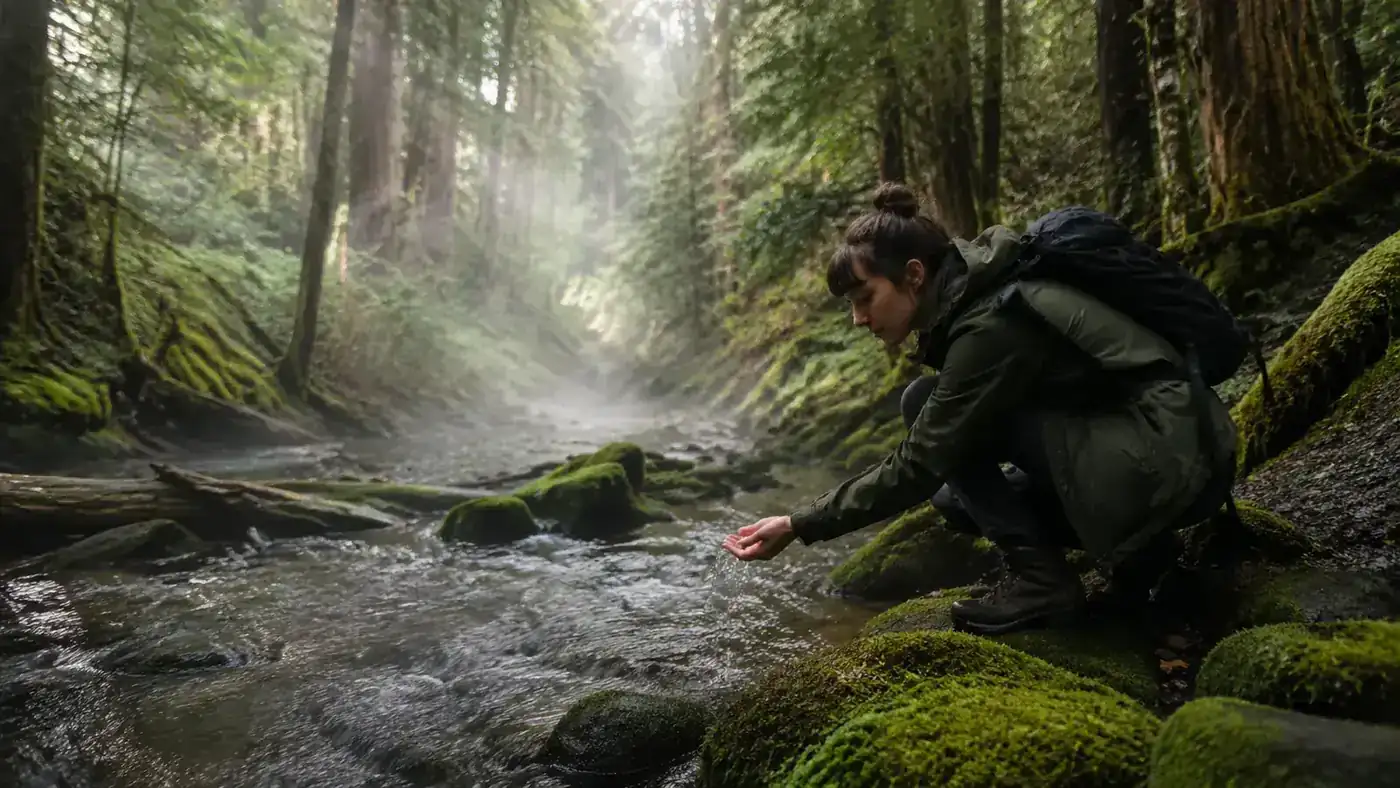
Last September I did a two-night solo loop in the Okanogan-Wenatchee with my Sawyer Squeeze clipped to my hip belt, a stretch of the Cascades I'd been meaning to revisit since a trip in 2021 got cut short by smoke. The trail takes you along a creek drainage for the first eight miles before it climbs to a high bench. Easy water access the whole way in, which is exactly why I almost didn't think twice about it.
What I didn't account for was that September in a dry year can leave even reliable Cascades drainages looking different. The first creek I hit around mile four ran fine, clear and cold, the way you expect mountain water to run. But by mile seven, where the trail crosses a logged section on private land, the creek had turned the color of weak tea. There was a cattle operation visible on the ridge to the east. I could see the chewed-up bank where something had been through recently.
I stood there for a minute. I still had maybe 600ml in my bottle, enough to reach camp but not enough to cook dinner and be comfortable overnight. I had two choices: push on thirsty and hope the water improved past the logged section, or filter what was in front of me and move on. The Sawyer Squeeze was already clipped to the outside of my pack.
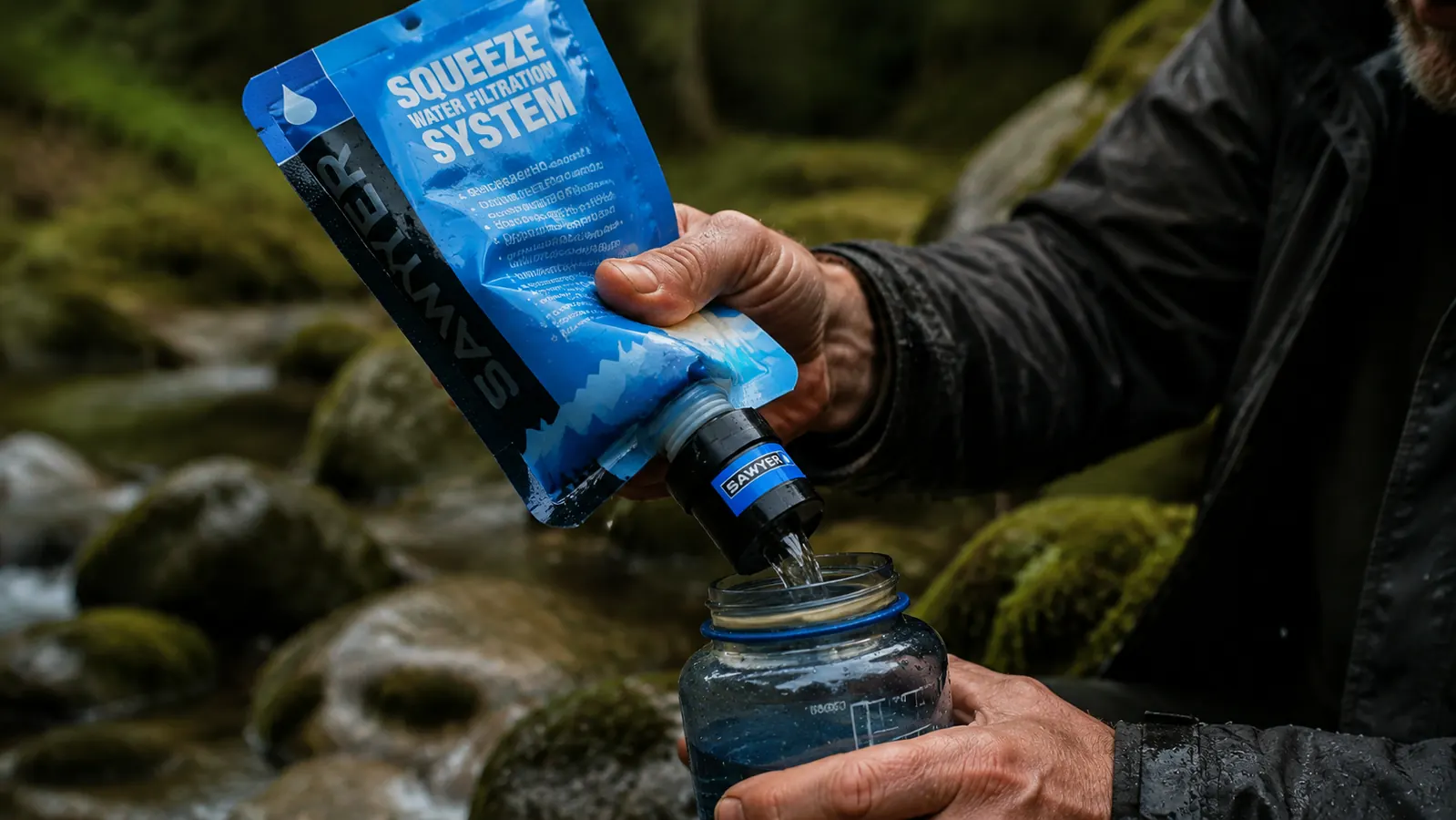
I filled both pouches from the murky creek, screwed on the filter, and squeezed. The water that came out was clean, clear, and had no detectable smell. That is what a filter is supposed to do.
I filled both of the 32-ounce pouches, screwed the filter on the first one, and started squeezing into my bottle. Took maybe three minutes to run through a full pouch. The water that came out was clear. No color, no smell. I stood there looking at it and felt a little stupid for having second-guessed my kit. That is exactly what a filter is supposed to do.
I've been carrying the Sawyer Squeeze for about three years now. Bought it after a trip where I relied on purification tablets and spent two hours waiting for water to taste like pool chemicals. The Squeeze doesn't ask you to wait. You fill the pouch, attach the filter, squeeze. Done. The hollow-fiber membrane filters down to 0.1 micron, which covers Giardia, Cryptosporidium, and most bacteria. It won't pull out heavy metals or chemicals, and it won't help you if the source is contaminated with fuel runoff or industrial waste, but for everything a backcountry creek throws at you in the Cascades, it is more than enough.
If you're drinking from any creek without a filter, you're taking a risk that isn't worth it.
The Sawyer Squeeze SP131 comes with two 32-oz pouches and filters up to 100,000 gallons before needing replacement. It weighs 3 ounces. Check today's price on Amazon.
Amazon Check Today's Price on Amazon →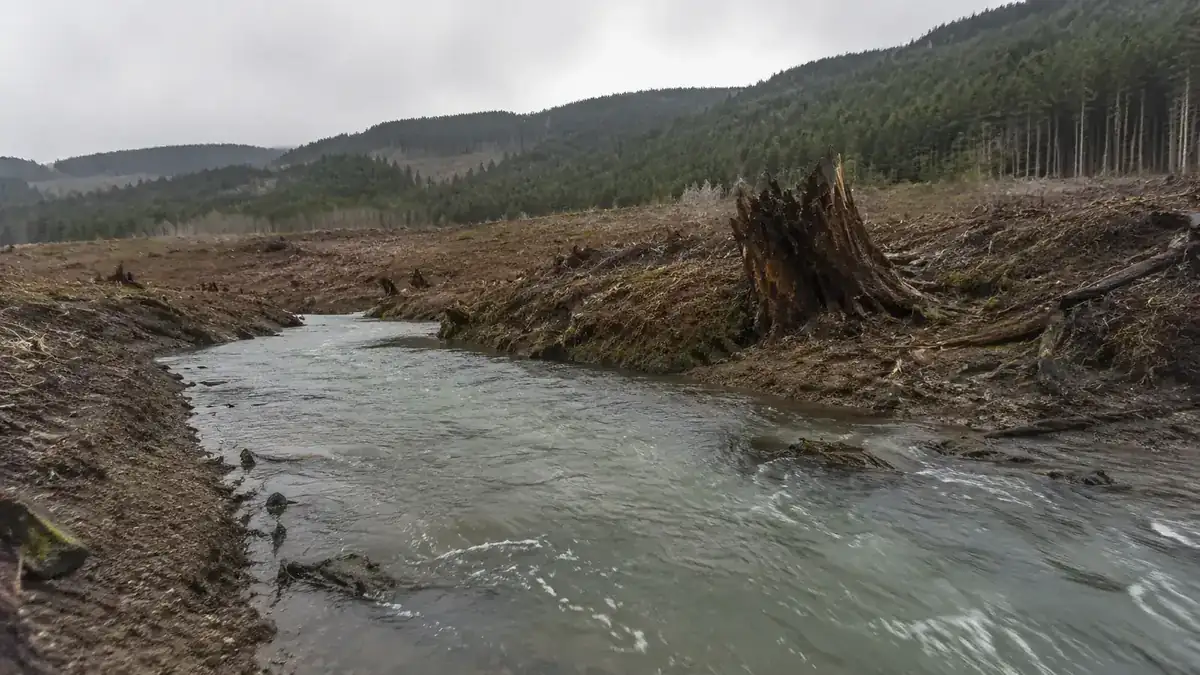
Here's the honest thing I'll tell you: I made a mistake on this trip. I knew the logged section was coming and I still let my water supply get low. That's a planning error, not a gear problem. If I hadn't been carrying the filter, that mistake would have had real consequences. I would have either pushed through the night dehydrated or drunk untreated water from a source I had visible reason not to trust. Neither of those is a good option. The filter gave me a third choice that wasn't available to the version of me who used to just grab a Nalgene full of whatever looked clear enough.
The thing I respect about the Squeeze is that it doesn't add much to your pack. Three ounces for the filter itself. The pouches are your water carry, so you're not duplicating weight the way you do with some pump systems. I ditch the included pouch caps after the first trip because they're fiddly plastic nubs that fall into the dirt, but that's a minor gripe. A small piece of tape over the threads does the same job. You backflush it with the included syringe after a trip and it is ready for next time.
The flow rate slows over time if you're pulling from silt-heavy sources and not backflushing consistently. I noticed this after about eighteen months of use. A proper backflush restored it almost completely. If you let it clog and dry without clearing it, you'll have a much harder time recovering the flow. That's the one maintenance step you don't want to skip.
What I'd Tell You If We Were Sitting at My Kitchen Table
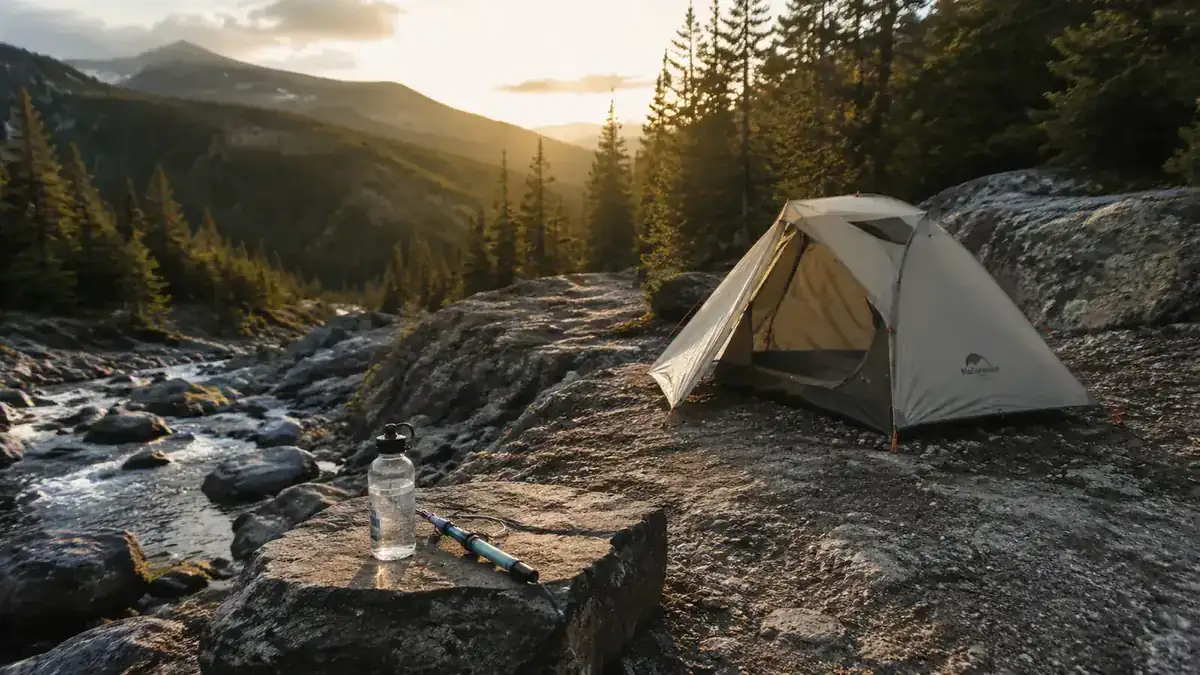
If you're day hiking on a maintained trail with a parking lot at the trailhead, you can probably get by on whatever you carry in. But if you're overnight camping anywhere in the backcountry, especially in the Cascades or Olympics where cattle grazing, logging operations, and other users share drainage basins with your campsite, you want a filter. Not iodine tablets. Not a UV pen that depends on batteries. A mechanical filter you can use the second you need it.
The Sawyer Squeeze is the one I'd hand you if you asked me what to buy. It's not the fastest filter on the market and it's not the most rugged. But it's light, it works on water that looks genuinely bad, and at this price it costs less than a bad night of GI problems would cost you in terms of a ruined trip. I've used mine on the Olympic Peninsula, in the North Cascades, and on four trips in the Okanogan. Not once has the filtered water made me sick. That is the only metric that matters.
If you want the full breakdown, including how it compares to the LifeStraw and what I think about its long-term durability, I wrote a full long-term Sawyer Squeeze review that goes into more detail. And if you're building a kit from scratch, my piece on 10 reasons I carry a water filter on every trip covers the cases where filters matter most.
Three ounces, three years of clean water. That's the whole case.
The Sawyer Squeeze SP131 with two 32-oz squeeze pouches is the filter I'd pack for any overnight trip in the PNW. Check current pricing and availability on Amazon.
Amazon Check Today's Price on Amazon →