
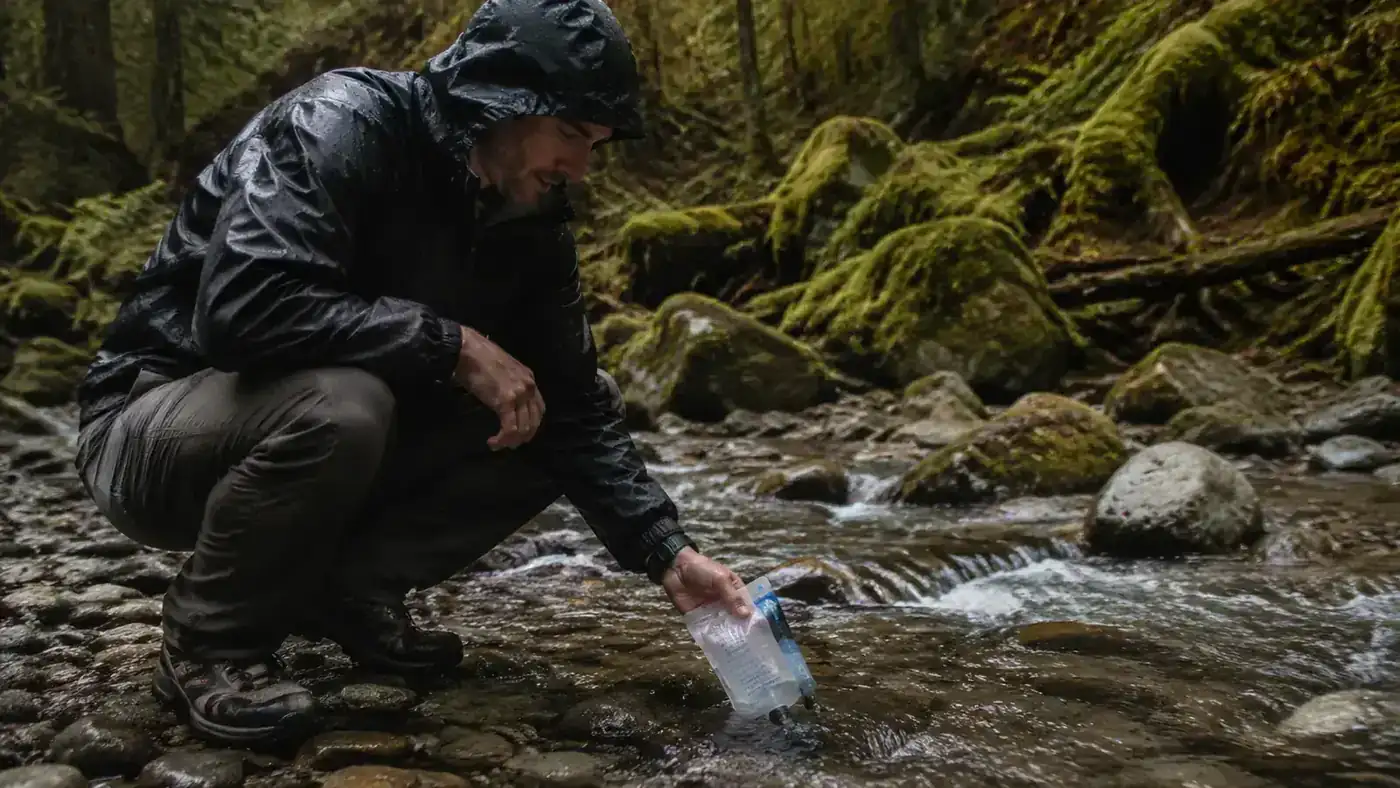
My buddy Dave learned about Giardia the hard way last September. Three days into a week-long loop in the Enchantments, he drank from what looked like a perfectly clear trickle off a snowfield. By day five he was out of commission, and it took six weeks of Flagyl after the trip to sort him out. He thought he did not need to filter snowmelt. He was wrong.
I have filtered my water on every trip for the past three years, mostly through the Sawyer Squeeze. It weighs 3 ounces, fits in my hip-belt pocket, and handles everything from silty glacial runoff to stagnant horse-trough water I found on a solo loop above the Hoh. I am not going to tell you it is perfect. It has quirks. But these 10 reasons are why it stays in my pack every single time.
If you drink from any natural water source, you need one of these in your pack.
The Sawyer Squeeze has 4.7 stars across more than 10,000 reviews. It filters down to 0.1 micron, backflushes, and lasts a lifetime with basic care. Check today's price before you head out.
Amazon Check Today's Price on Amazon →Giardia and Cryptosporidium are in almost every natural water source in Washington
Even crystal-clear snowmelt can carry Giardia cysts shed by marmots, deer, and other hikers camping upstream. The Olympic Peninsula has some of the cleanest-looking streams in the country, and it still tests positive for protozoa. A 0.1-micron filter like the Sawyer Squeeze physically blocks both pathogens. No treatment time, no chemicals, no waiting.
It weighs 3 ounces, so there is no weight argument against carrying it
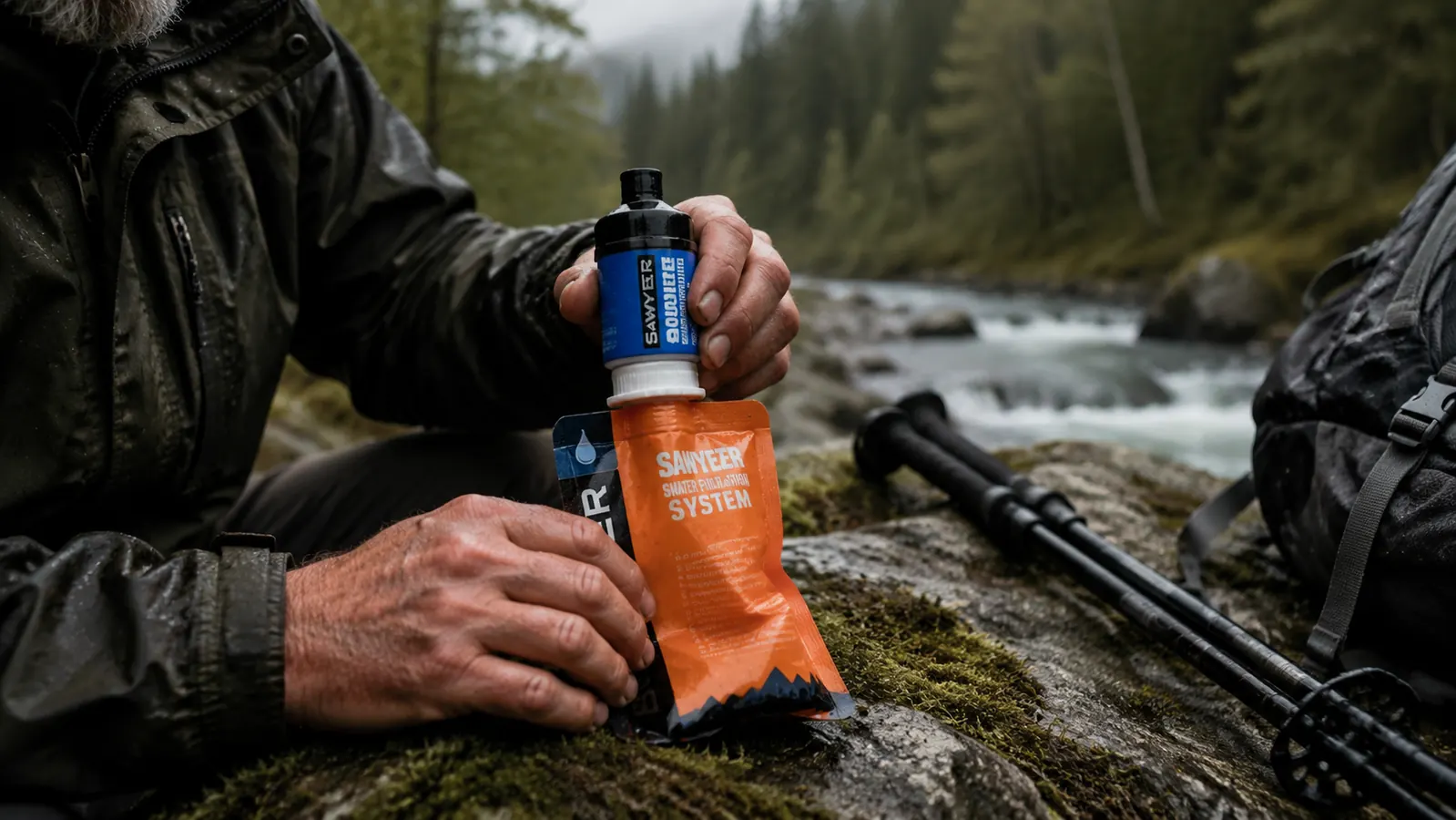
The Sawyer Squeeze SP131 package, filter plus two 32-ounce pouches, weighs 3 ounces total. That is less than a full Nalgene lid. I have heard people say they skip a filter to save weight. That math does not work when you factor in the weight of a week-long antibiotic course and the backpack you cannot use while you recover.
The squeeze pouches double as a hydration reservoir and a cooking water vessel
The two 32-ounce pouches that come with the SP131 are soft-sided and screw onto standard water bottle threads. I fill one from the source, squeeze filtered water directly into my pot or my other bottle, and keep the whole system moving without stopping. On long dry stretches I have used both pouches as a 64-ounce reservoir clipped to the outside of my pack.
You can backflush it in the field with the included syringe
When flow slows down, which happens after filtering silty glacial water, a few backflush pulses with the included cleaning syringe restores most of the original flow rate in under two minutes. I keep the syringe clipped to a shoulder strap. No replacement cartridges, no proprietary tools, no waiting for a UPS box to show up before your next trip.
The filter screws onto standard-thread bottles, so it integrates with gear you already own
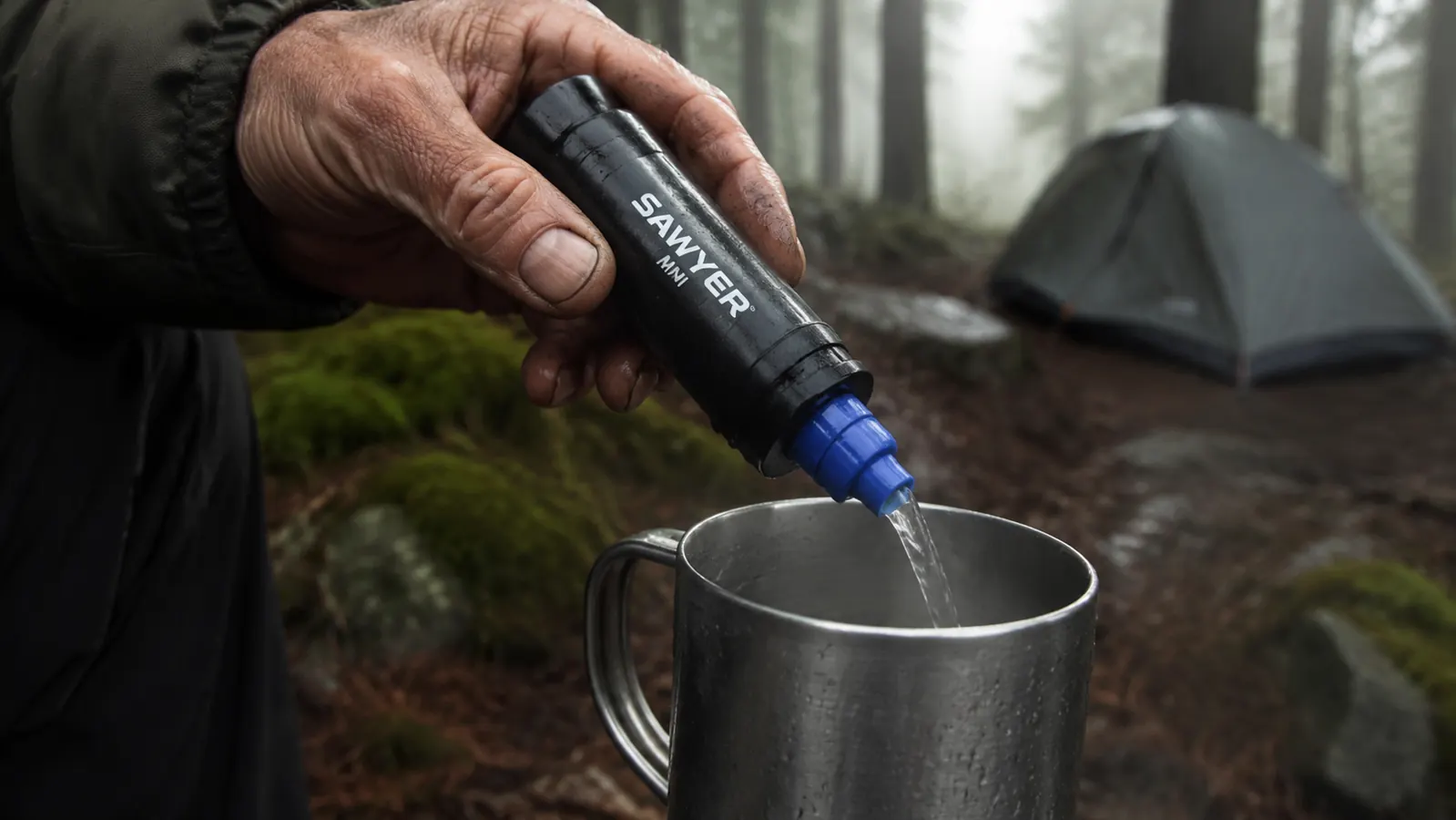
The Sawyer Squeeze threads onto any standard 28mm bottle, which covers Smartwater bottles, Platypus soft flasks, and most hydration bladder adapters. I use a 1-liter Smartwater bottle as my dirty-side vessel at home because it is lighter than the included pouches and still gives me all the threading compatibility. No proprietary adapter kit required.
Three ounces. That is what stands between a clean trip and six weeks of Flagyl. I stopped debating whether to carry a filter after I watched what Giardia did to Dave.
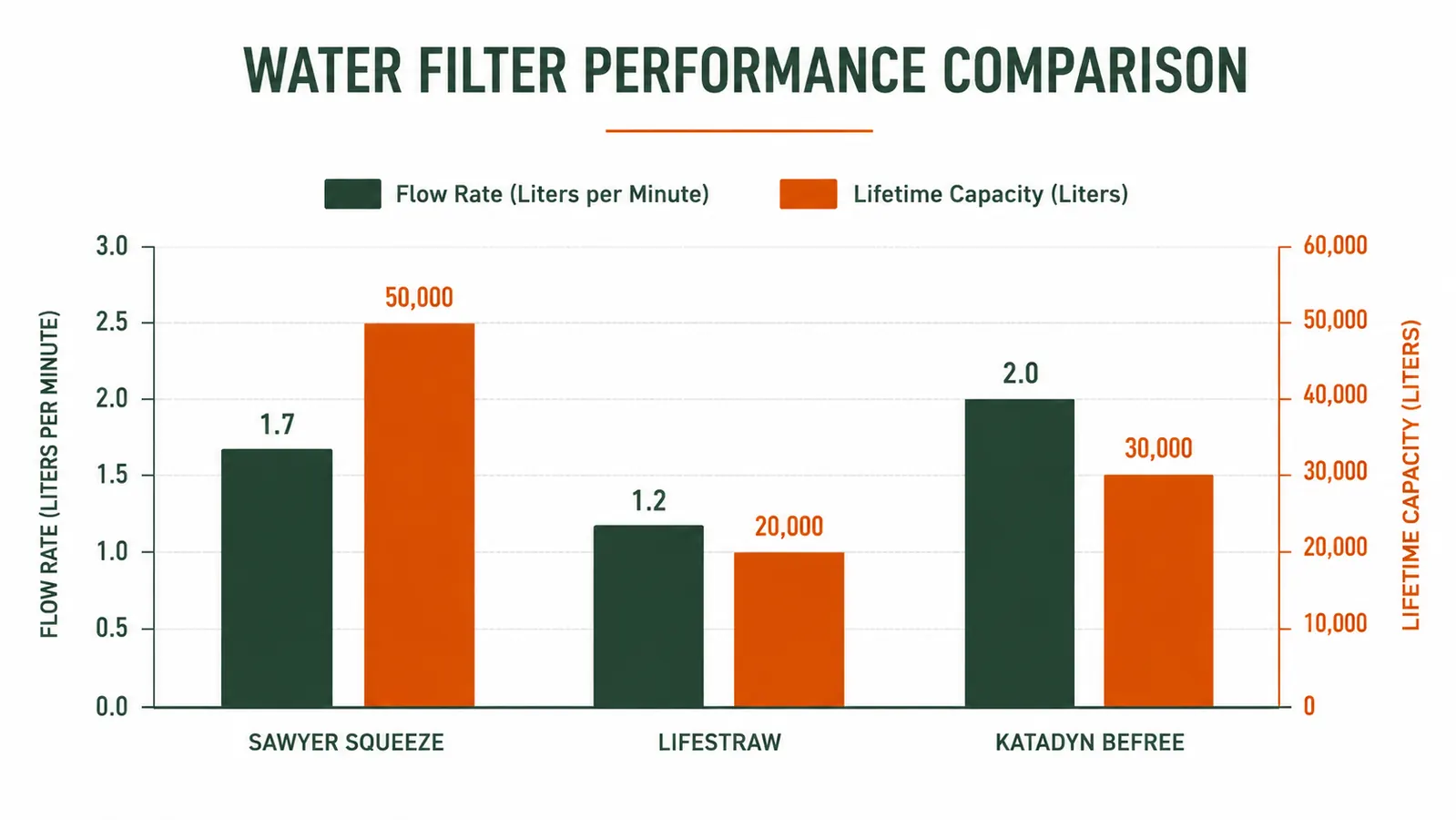
It has a rated lifetime of 100,000 gallons with proper care
Sawyer rates the Squeeze at 100,000 gallons of lifetime filtration when you backflush regularly and store it wet-free. In practical terms, that is one filter for the rest of your hiking life. I have had mine three years and it still flows close to the original rate. Compare that to pump filters that need replacement cartridges every 750 liters.
It works inline with a hydration reservoir hose if you use one
The Sawyer Squeeze threads inline between a hydration bladder and your drinking tube, which means you can fill your bladder from any water source and let the filter do the work as you sip. I set this up for long runs in the Mt. Rainier foothills where I do not want to stop and manually squeeze every few miles. One adapter connection and it just works.
It handles high-volume filtering for group camps without a pump
On group trips, I have filtered 4 to 5 liters in about 10 minutes by passing the squeeze pouch between two people. There is no pump mechanism to wear out and no hose to prime. You just fill, attach, squeeze. For a group of four doing a three-night trip, the throughput is more than sufficient even at slower-than-ideal flow rates on the third day.
It fits into a bug-out bag or 72-hour kit without taking up meaningful space
Prepper use case: a water filter is the one piece of emergency kit that does not depend on cached resources or pre-positioned gear. If I have to leave my house fast, the Sawyer Squeeze is already in my bag. It handles any surface water source within walking distance of my house in King County, including the green belt creeks two blocks away. No batteries, no fuel, no expiration date.
The cost-per-liter over its lifetime is effectively zero
At current pricing, the Sawyer Squeeze SP131 costs less than a six-pack of bottled water per hundred liters when you spread it across its rated 100,000-gallon lifespan. Even in the first year, at a conservative 500 liters filtered, the economics are clear. It is the single highest-ROI piece of backcountry gear I own, and it has been the same design for a decade, which means no firmware updates and no compatibility problems with next year's gear.
What I Would Skip
Tablets. Iodine and chlorine dioxide tablets work, but they take 30 minutes to four hours depending on water temperature, they leave a chemical taste, and Cryptosporidium can survive standard iodine treatment at normal doses. I carry a small bottle of Aquatabs as a true backup, but I have never had to use them since I started carrying the Sawyer. Boiling is reliable, but it burns fuel and time. For anything longer than a single overnight, neither substitute is worth it.
The one genuine weak point on the Sawyer Squeeze is that the included soft pouches wear out before the filter does. The seams fatigue after heavy use and occasional dropping on rocks. I replaced mine with a Smartwater bottle setup around month 14. That is a small fix for a filter you will carry for years, but worth knowing before you count on the original pouches for a long expedition.
The filter that costs less than a dinner out and outlasts every pump filter I have owned.
Three years, thousands of liters, zero stomach incidents. The Sawyer Squeeze SP131 is the water filter I recommend to every person I know who spends time in the backcountry. Check today's price and see if it is in stock.
Amazon Check Today's Price on Amazon →