
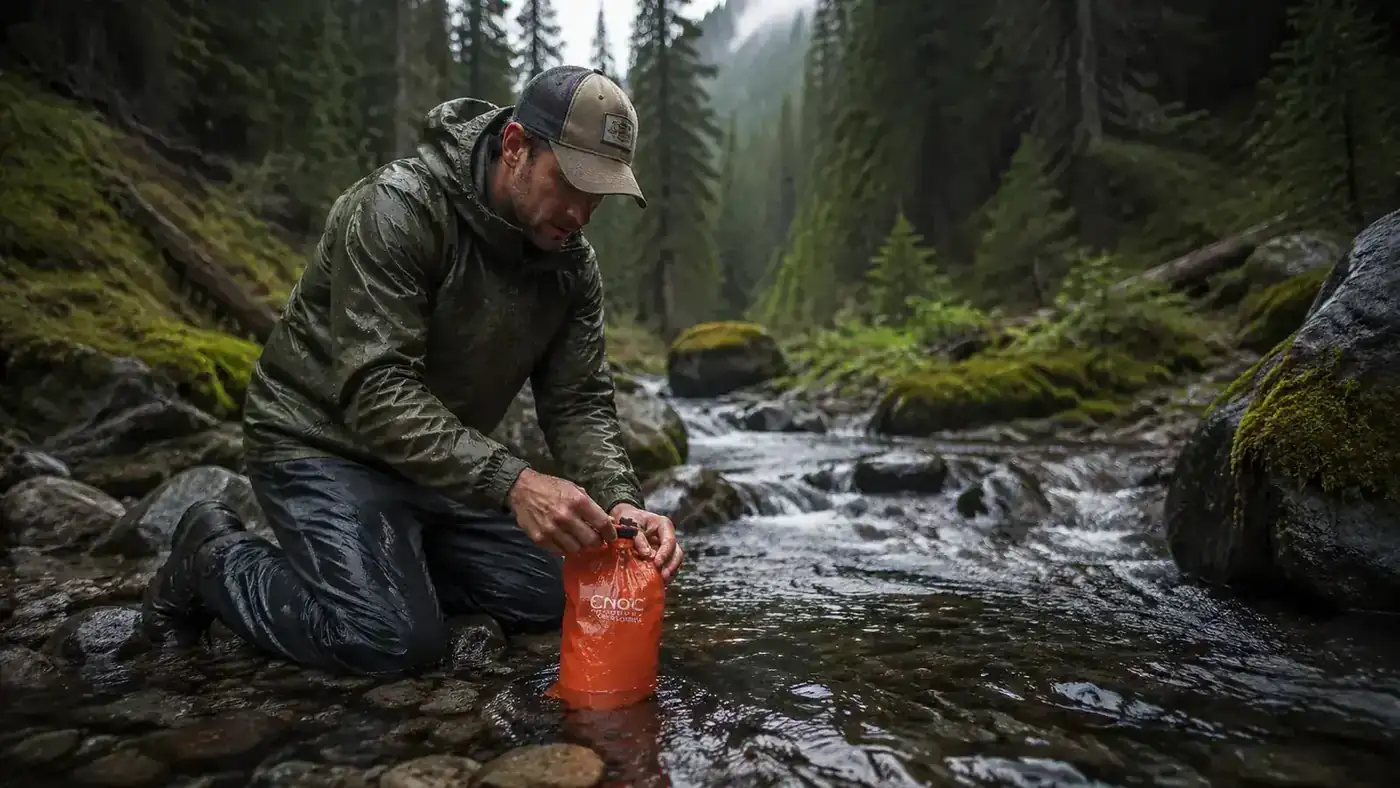
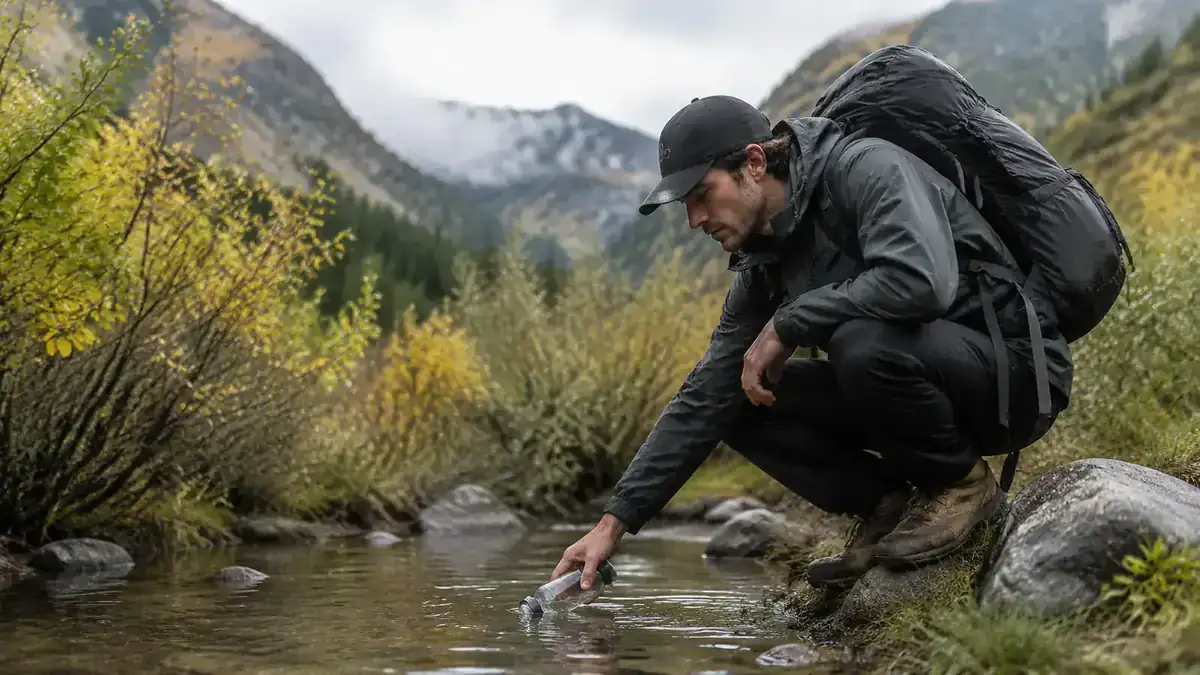
In September 2022 I pulled water from a creek on the Enchantments route that had a dead marmot decomposing about thirty feet upstream. I did not know about the marmot until I had already filled my pouch. My Sawyer Squeeze filtered that water, and I had no gastrointestinal issues. That is either a testament to 0.1-micron hollow fiber filtration or blind luck. I choose to believe it is the former. I have been carrying the Sawyer Products SP131 Squeeze Water Filtration System on every backcountry trip I have taken in Washington state since spring 2022, which adds up to around 34 nights out, somewhere between 2,800 and 3,200 liters filtered, and more close calls with sketchy water sources than I want to count.
This is the long-term review. Not the weekend test, not the first-impressions writeup. Three full seasons, two replacement squeeze pouches, one cracked clip I had to epoxy, and a lot of data about what this filter does and does not do reliably at 4,000 to 6,500 feet in Pacific Northwest conditions.
The Quick Verdict
The Sawyer Squeeze is the best field-verifiable water filter at this price point. The 0.1-micron hollow fiber removes protozoa and bacteria reliably across thousands of liters. Main caveats: the included squeeze pouches crack at the threads after 6-8 months of hard use, flow rate drops noticeably past 200 liters without backflushing, and it does not remove viruses, which matters if you are traveling internationally or in areas with high human-waste contamination.
Amazon Check Today's Price →Still researching? The Sawyer Squeeze SP131 is in stock on Amazon right now, and it includes two 32-oz pouches.
At 3.0 oz for the filter and rated to 100,000 gallons (378,500 liters), this is the filter I would hand to anyone heading into the backcountry for the first time.
Amazon Check Today's Price on Amazon →How I Have Used It
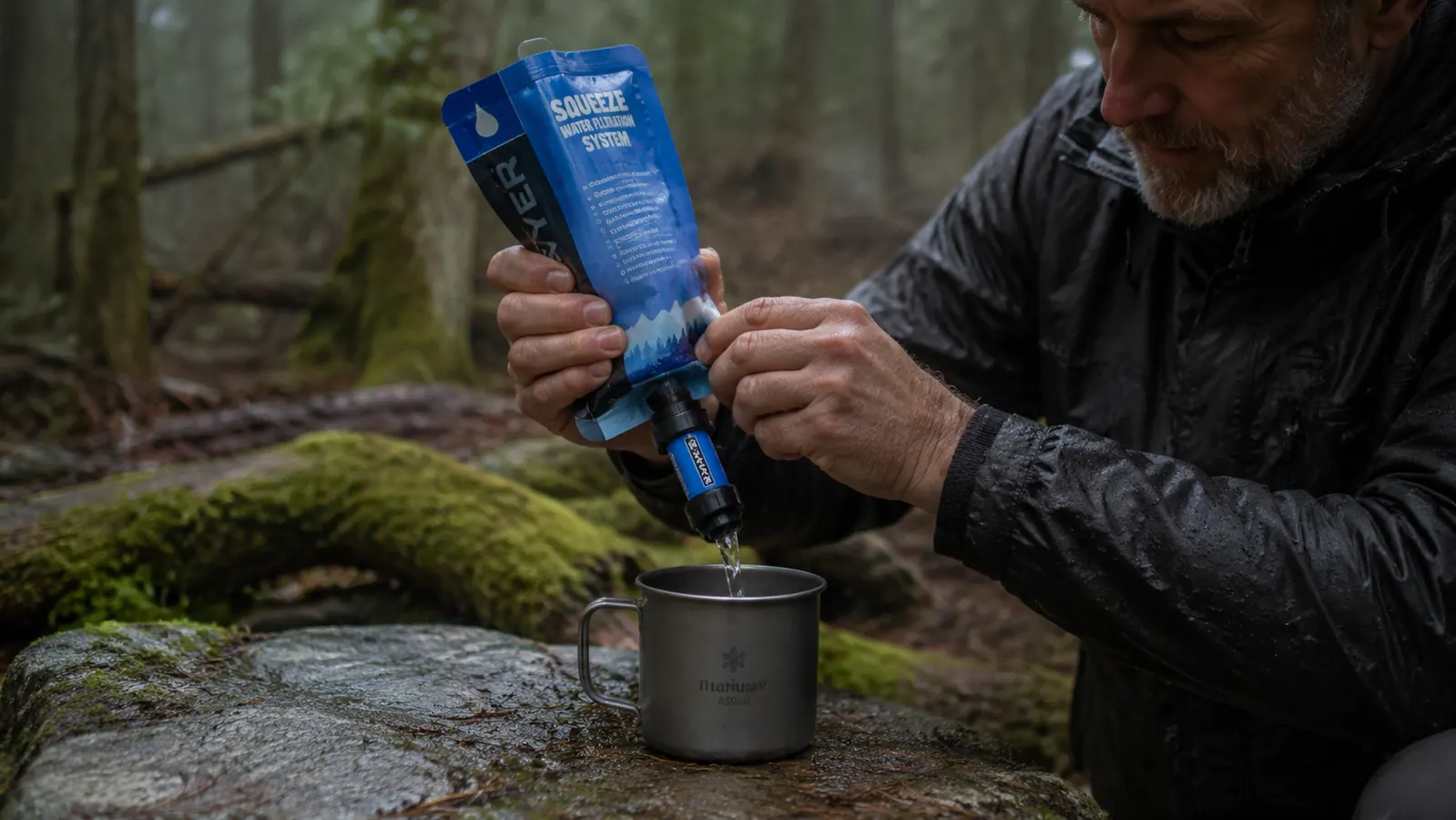
My usual setup is the Sawyer Squeeze inline on the drink tube of a 2-liter soft reservoir, or directly screwed onto one of the included squeeze pouches when I need to fill bottles at camp. I use it on solo overnight trips in the Mount Baker-Snoqualmie National Forest, on longer 4-6 day routes in the North Cascades, and twice on the Olympic Peninsula where the water sources are silty and high-volume. My go-to source collection is a dromedary bag that I dip, then squeeze through the Sawyer into my Nalgene or straight into my cook pot. I backflush it with the included syringe at the end of every trip and let it fully air-dry before putting it away.
I have not babied this filter. It has lived in an outer pocket of my Gregory Baltoro 65 for two full seasons, gone through multiple compression cycles in stuff sacks, and gotten dropped on gravel twice. The filter element itself is still going. The accessories are a different story, which I will get to.
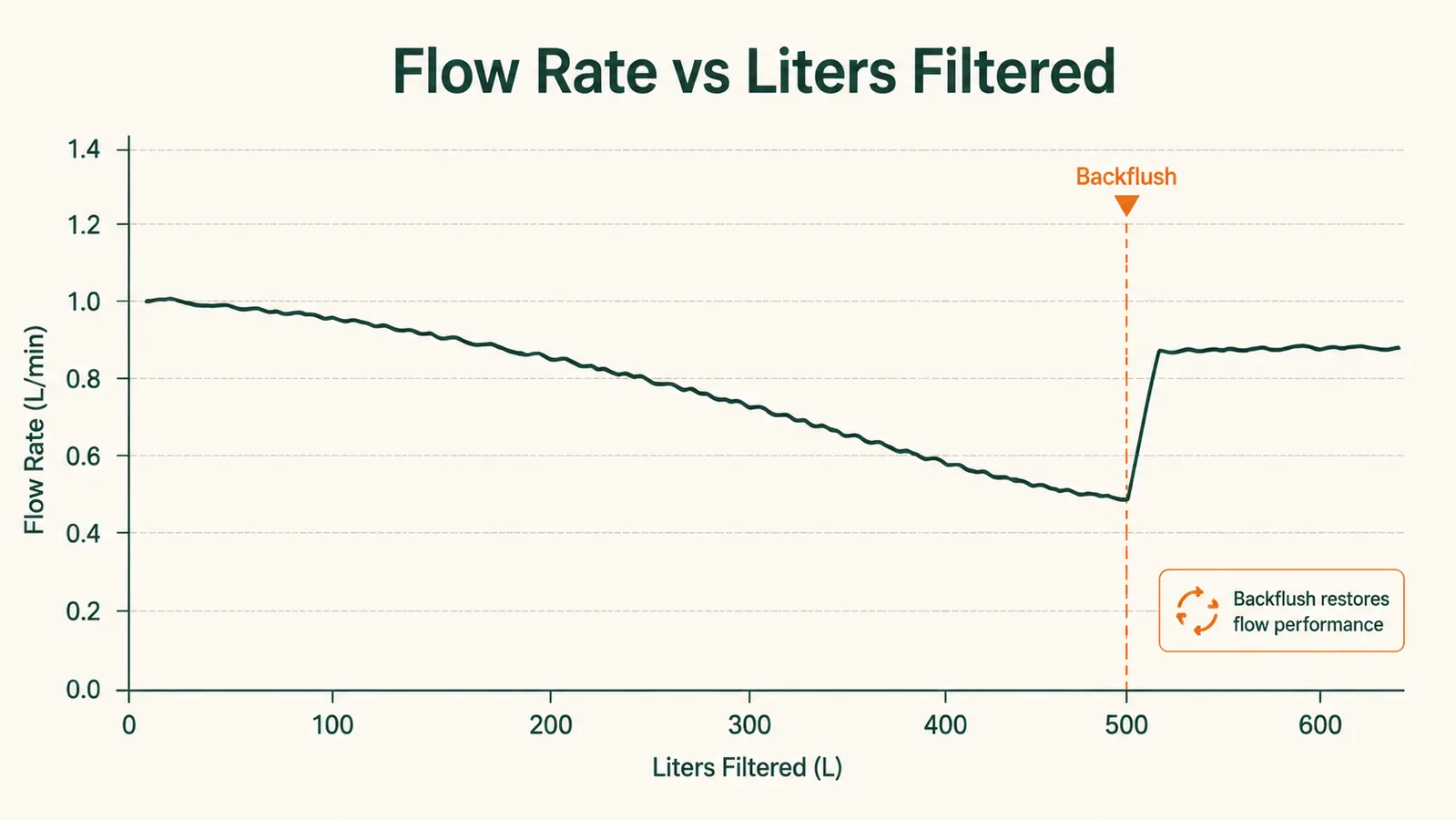
On two trips I tested flow rate manually: filling a 1-liter bottle and timing it from a full 32-oz pouch with a consistent squeeze. At the start of the second season, after a proper backflush, I measured 0.9 to 1.1 liters per minute. Mid-trip on a 5-day route, without a mid-trip backflush, I was down to 0.55 to 0.6 liters per minute. That is a 40% drop from clogging over roughly 15 to 20 liters of field use between flushes. Once I backflushed back at the trailhead, flow came back to 0.85 liters per minute. The lesson: backflush more often than you think you need to, especially in turbid water.
The Filter Element Itself: What the 0.1-Micron Rating Actually Means
The Sawyer Squeeze uses a hollow fiber membrane rated at 0.1 absolute microns. That number matters because the two main biological threats in North American backcountry water are protozoa (Giardia lamblia at roughly 8 to 12 microns, Cryptosporidium at roughly 4 to 6 microns) and bacteria (E. coli at roughly 1 to 2 microns, Salmonella similar). A 0.1-micron absolute filter removes all of those with a high margin of safety. EPA protocols classify this as a water purifier for protozoa and bacteria, which is a meaningful distinction from basic filtration. I trust it for every water source I have encountered in Washington state.
What it does not remove: viruses (Hepatitis A, Norovirus, and Rotavirus are all 0.02 to 0.1 microns, right at or below the membrane limit). In Washington's backcountry, viral contamination of water sources is genuinely low risk. I do not add chemical treatment on domestic trips. If I were traveling internationally in areas with poor sanitation, or filtering from sources close to heavy human use, I would add either Aquatabs or Sawyer's own Permypur tablets to the squeeze-filtered water. The filter alone is not enough for high-risk viral environments.
The other thing the filter does not address is chemical contamination, heavy metals, or agricultural runoff. Hollow fiber cannot do that. No portable field filter can without activated carbon stages. I mention this not to scare people away from the Sawyer Squeeze but because I have seen reviewers claim any hollow fiber filter makes creek water in mining country safe to drink. It does not. For the vast majority of backcountry use in the Cascades and Olympics, none of that is relevant. Know your watershed.
At 0.9 to 1.1 liters per minute when properly backflushed, the Sawyer Squeeze is fast enough that I rarely stand at a creek for more than 90 seconds to fill a 1-liter bottle. That is good enough for me.
Three-Year Wear Report: What Held Up, What Did Not
The filter element itself has shown no measurable degradation over three seasons and approximately 3,000 liters. I cannot test this in the field beyond flow rate and absence of illness, but Sawyer's stated lifespan is 100,000 gallons (378,500 liters), which means I am about 0.8% of the way through its rated life. That figure is theoretical, but the filter's performance has not dropped off in ways I can detect. I consider it essentially lifetime for personal use.
The included squeeze pouches are a different story. Sawyer includes two 32-oz pouches in the SP131 kit. I burned through both original pouches within the first eight months. The threads at the top where the filter screws on are the failure point: the plastic gets brittle, micro-cracks develop, and eventually you get a slow leak at the connection, then a faster one. I switched to CNOC Vecto 2-liter soft bags, which have a wider mouth and much more durable thread construction. The Vecto cost me about $22 and has outlasted both original pouches combined. The Sawyer pouches are not a dealbreaker at the system level, but treating them as consumables and budgeting for a third-party replacement bag is the right call.
The plastic clip that attaches the filter to a pack strap developed a hairline crack after the second season. I filled it with JB Weld and it has held since. That said, I now just thread the filter through a carabiner rather than relying on that clip. The filter housing itself, the orange-capped cylinder at the heart of the system, has never cracked, never warped, and shows no signs of failure. It is the component that matters most and it has performed well.
Freezing is the main catastrophic failure risk for any hollow fiber filter, and it is a real concern in the Cascades at elevation in October. The membrane fibers can crack if water in the filter freezes. I keep the filter in my sleeping bag on any trip where temperatures will drop below 28 degrees Fahrenheit. On day hikes in fall, I keep it in an interior jacket pocket. Two nights in October on the Ptarmigan Ridge, temperatures dropped to 24 degrees and my filter survived because it was in my sleeping bag. If you let it freeze, you may not be able to tell the membrane is damaged just by looking at it, and drinking through a compromised filter is worse than drinking unfiltered water.
Alternatives I Considered and Why I Stuck with the Squeeze
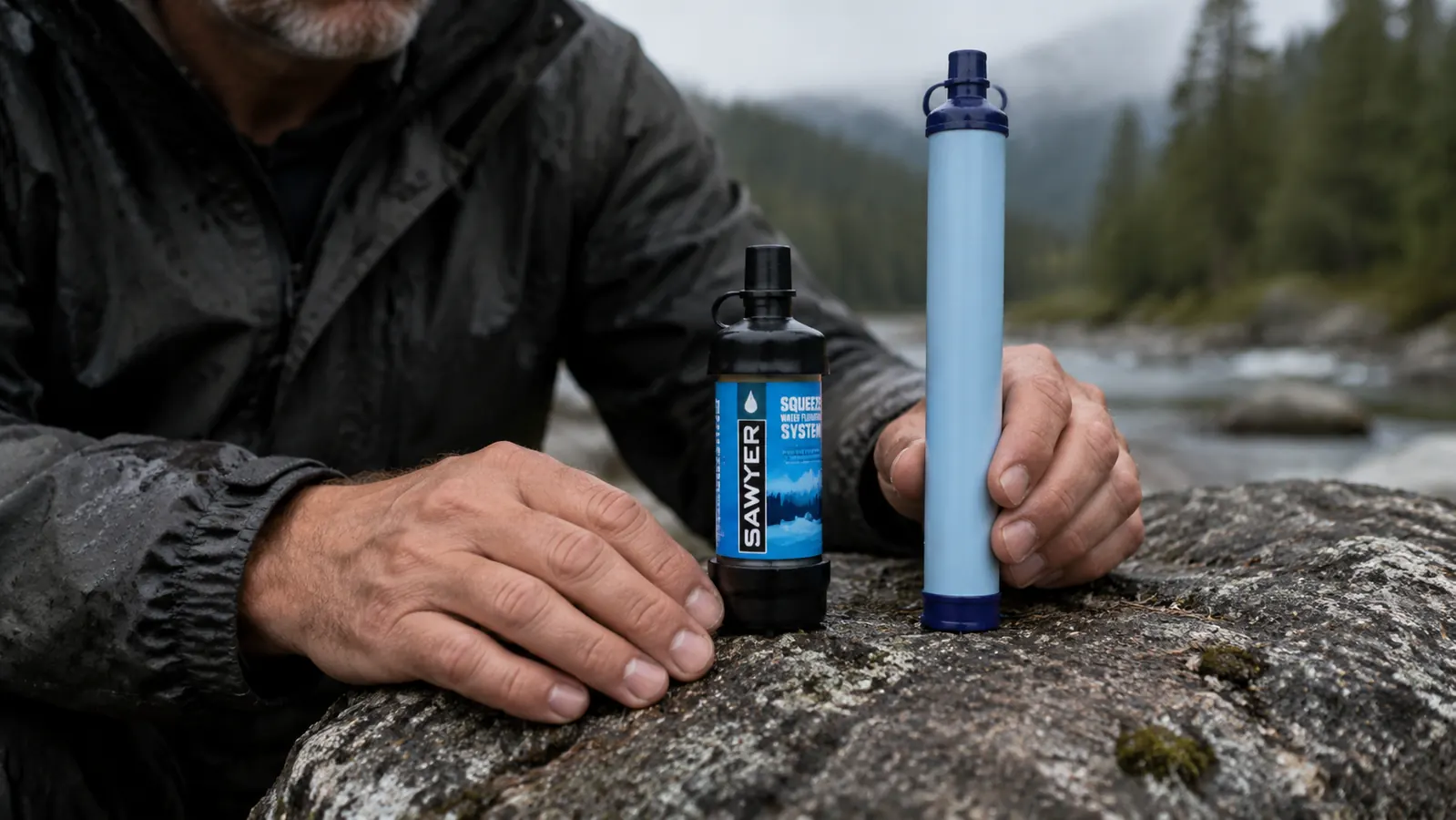
I have used a LifeStraw on two day hikes and borrowed a Katadyn BeFree from a trip partner on a North Cascades route. The LifeStraw is simpler but single-use in the sense that you drink directly through it, which makes camp water prep slower and awkward for cooking. It also has a lower lifespan rating (1,000 liters vs the Sawyer's theoretical 378,500). For a day hike emergency kit, the LifeStraw makes sense. For multi-day backpacking where I need to fill a cook pot and a bottle without contorting my neck over a creek, it does not work as well as the Squeeze.
The Katadyn BeFree is faster (2 liters per minute when new) and has a better integrated soft flask design than the Sawyer pouches. It costs about the same as the Sawyer Squeeze, sometimes more. What steered me back to the Sawyer: the BeFree's hollow fiber is rated at 0.1 microns for protozoa and bacteria, same as Sawyer, and the replacement flask costs around $25-30 when it wears out. The Sawyer still has a longer stated membrane lifespan and is compatible with a wider range of third-party soft bags. If Sawyer stopped making the Squeeze tomorrow and the BeFree was my only option, I would use it without hesitation. But the Sawyer is what I know, and after 3,000 liters I have no reason to switch.
What I Liked
- 0.1-micron absolute hollow fiber removes protozoa and bacteria with a genuine safety margin
- 3.0 oz for the filter alone, easily packed in any pouch or sleeve
- Compatible with standard 28mm threaded bottles, hydration reservoirs, and third-party soft bags
- Rated to 100,000 gallons (378,500 liters), essentially lifetime for personal backcountry use
- Measured 0.9 to 1.1 liters per minute when properly backflushed
- Backflushable in the field with the included syringe, which actually restores flow rate
- Inline use on a hydration tube is genuinely hands-free while moving
Where It Falls Short
- Does not remove viruses, which matters in high-risk or international settings
- Included squeeze pouches develop thread cracks within 6-8 months of regular use; budget for CNOC Vecto or similar third-party replacement
- Flow rate drops to 0.5-0.6 liters per minute without backflushing after 15-20 liters of turbid-water use
- Freeze damage is irreversible and visually undetectable; requires consistent temperature management in cold weather
- Plastic attachment clip is fragile; use a carabiner instead
Who This Is For
The Sawyer Squeeze is the right filter for backpackers and car campers who want a reliable, lightweight system for North American backcountry water sources and do not want to think hard about it. If you are planning trips in the Cascades, Olympics, Rockies, Appalachians, or Sierra Nevada, and your water sources are creeks, lakes, and snowmelt with no upstream mining or industrial activity, this filter handles the actual threats you face, which are protozoa and bacteria. It is also a reasonable choice for preparedness kits: at 3.0 oz it adds almost nothing to a bug-out bag, and the 100,000-gallon rating means one filter covers years of emergency use. Backpackers who want a hydration-tube setup should pick up a CNOC Vecto or similar compatible bag and skip the included pouches from day one.
Who Should Skip It
If you are doing international travel in areas with poor sanitation infrastructure, where viral contamination of water sources is a real risk, the Sawyer Squeeze alone is not enough. You need a system that adds chemical treatment (iodine or chlorine dioxide tablets) after hollow fiber filtration, or you need a SteriPen UV purifier as a second stage. Similarly, if you camp frequently in shoulder season or winter at elevation and cannot guarantee the filter stays above freezing overnight, you may want a chemical backup (Aquatabs weigh almost nothing and do not freeze). The Sawyer Squeeze is the best tool for the most common use case, but it is not the only tool for every situation.
Three years in, I would buy this filter again without hesitation. The filter element has never let me down.
The Sawyer Squeeze SP131 includes two 32-oz squeeze pouches and a backflush syringe. Check the current price on Amazon before you head out, and pick up a CNOC Vecto bag while you are at it.
Amazon Check Today's Price on Amazon →