
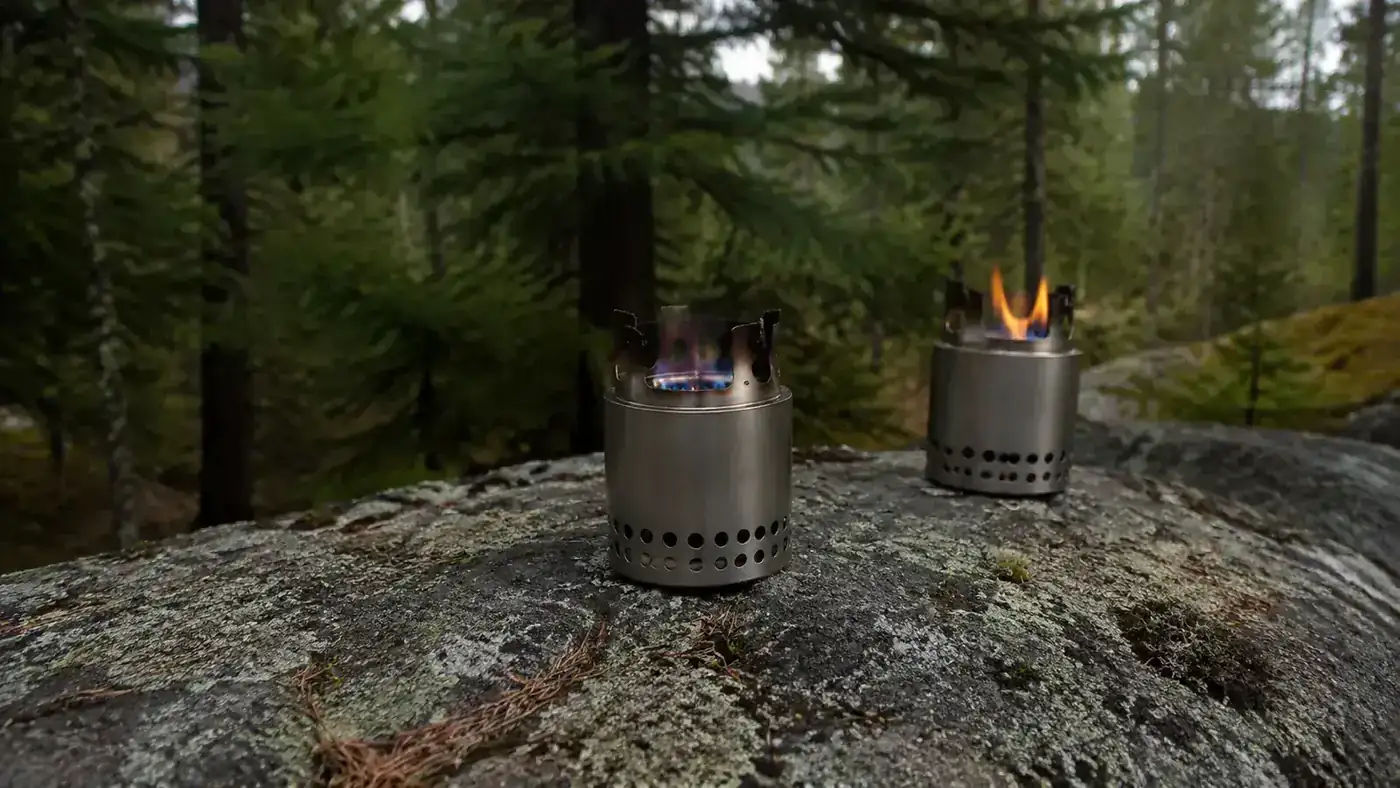
Last October I did two back-to-back loops in the Cascades. On the first trip I brought the MSR Pocket Rocket 2. On the second, three weeks later on the same circuit out of the Icicle Creek trailhead, I brought the BRS-3000T. Same canister size, same pot, same coffee routine, same lousy weather. The only thing that changed was the stove.
People ask me constantly whether the BRS-3000T is actually worth trusting or whether it's a piece of junk that will let you down at 5,000 feet when you're wet and hungry. I had the same question before I tested it. After two years of carrying it and now a direct side-by-side comparison with one of the most respected ultralight stoves on the market, I have a real answer.
| Spec | BRS-3000T | MSR Pocket Rocket 2 |
|---|---|---|
| Weight | 25g (0.9 oz) | 73g (2.6 oz) |
| Current Price | Under $20 | Around $55 |
| Boil Time, 1 liter | ~3.5 min (calm air) | ~3.5 min (calm air) |
| Flame Control | Fair: coarse adjustment | Excellent: precise simmer |
| Wind Performance | Poor: needs a windscreen | Good: built-in push igniter helps |
| Pot Stability | Adequate for pots under 1L | Better for larger or heavier pots |
| Igniter | None: bring a lighter | None: bring a lighter |
| Material | Titanium alloy | Stainless steel + aluminum |
| Packaged Size | Coin-sized, fits in a film canister | Golf-ball sized |
| Warranty | No stated warranty | Limited lifetime warranty |
Where the BRS-3000T Wins
The weight difference is the lead. The BRS-3000T comes in at 25 grams. The Pocket Rocket 2 is 73 grams. That is 48 grams, which sounds trivial until you are on day four of a Cascades traverse and every gram you trimmed on the front end is one less gram nagging at your shoulders. For ultralighters and fast-and-light backpackers, the BRS is not a close call on weight.
The price gap is even harder to argue against for most buyers. At under $20, the BRS-3000T is essentially a free accessory when you are already spending money on a pack, tent, and sleeping bag. You could buy three of them for what the MSR costs. I know people who keep a BRS in their car kit, one in their bug-out bag, and one in their regular backpacking kit just because replacing it if one fails costs nothing. That kind of redundancy is genuinely valuable in a preparedness context, and the MSR just doesn't make that math work.
Packaged size also goes to the BRS. It folds down to roughly the size of a large coin and weighs less than a AA battery. It fits in an Altoids tin with room to spare. The Pocket Rocket 2, while compact by most standards, is noticeably larger and heavier when you are building a truly ultralight kit or filling a 72-hour bug-out bag where space is already tight.
Where the MSR Pocket Rocket 2 Wins
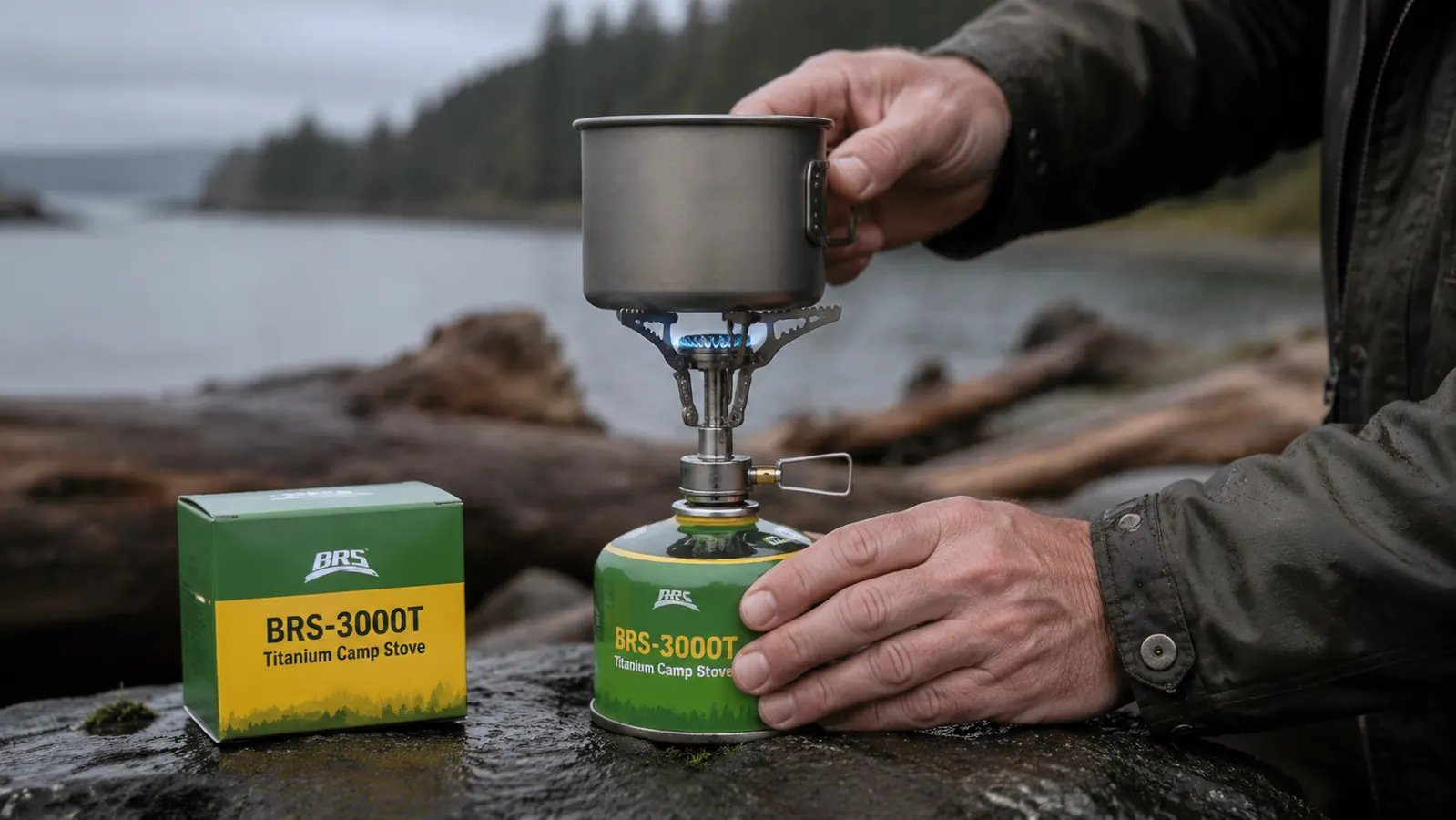
Wind is where the Pocket Rocket 2 earns its price. The October morning I am thinking of was the third day of my BRS trip. I was camped at 4,800 feet above the Icicle drainage, 28 degrees, and sideways gusts off the ridge. I cupped my hands around the BRS and it still kept blowing out. I got water boiling but it took twice as long as it should have and burned through half a canister doing it. In those conditions the Pocket Rocket 2, with its lower-profile burner head and more protected flame geometry, holds a flame meaningfully better. If you camp above treeline in October in Washington, that difference is real.
Flame control is the other honest win for MSR. The BRS has a valve, but the adjustment range is coarse. You get high flame and low flame, and the transition between them is not precise. If you are doing anything more than boiling water, that limitation shows up. The Pocket Rocket 2 has a notably smoother valve that lets you actually simmer. I made oatmeal on both stoves on consecutive mornings. On the BRS it scorched. On the MSR it didn't. For car campers or anyone cooking real food rather than just rehydrating, the simmer control is a legitimate advantage.
Pot stability also tips to the MSR for larger cookware. The BRS arms are designed for compact 700-900ml pots and they hold those fine, but put a wider 1.5-liter pot on a BRS and it feels slightly precarious. The Pocket Rocket 2 has a wider arm spread and handles bigger cookware more confidently. If you are cooking for two people or using a larger base camp pot, that stability matters.
You need a stove that won't cost you a weekend over 48 grams
The BRS-3000T is the stove I reach for on solo backpacking trips where every gram is accounted for. At under $20 it is also the easiest call in the kit. Check today's price on Amazon and see if it's still this reasonable.
Amazon Check Today's Price on Amazon →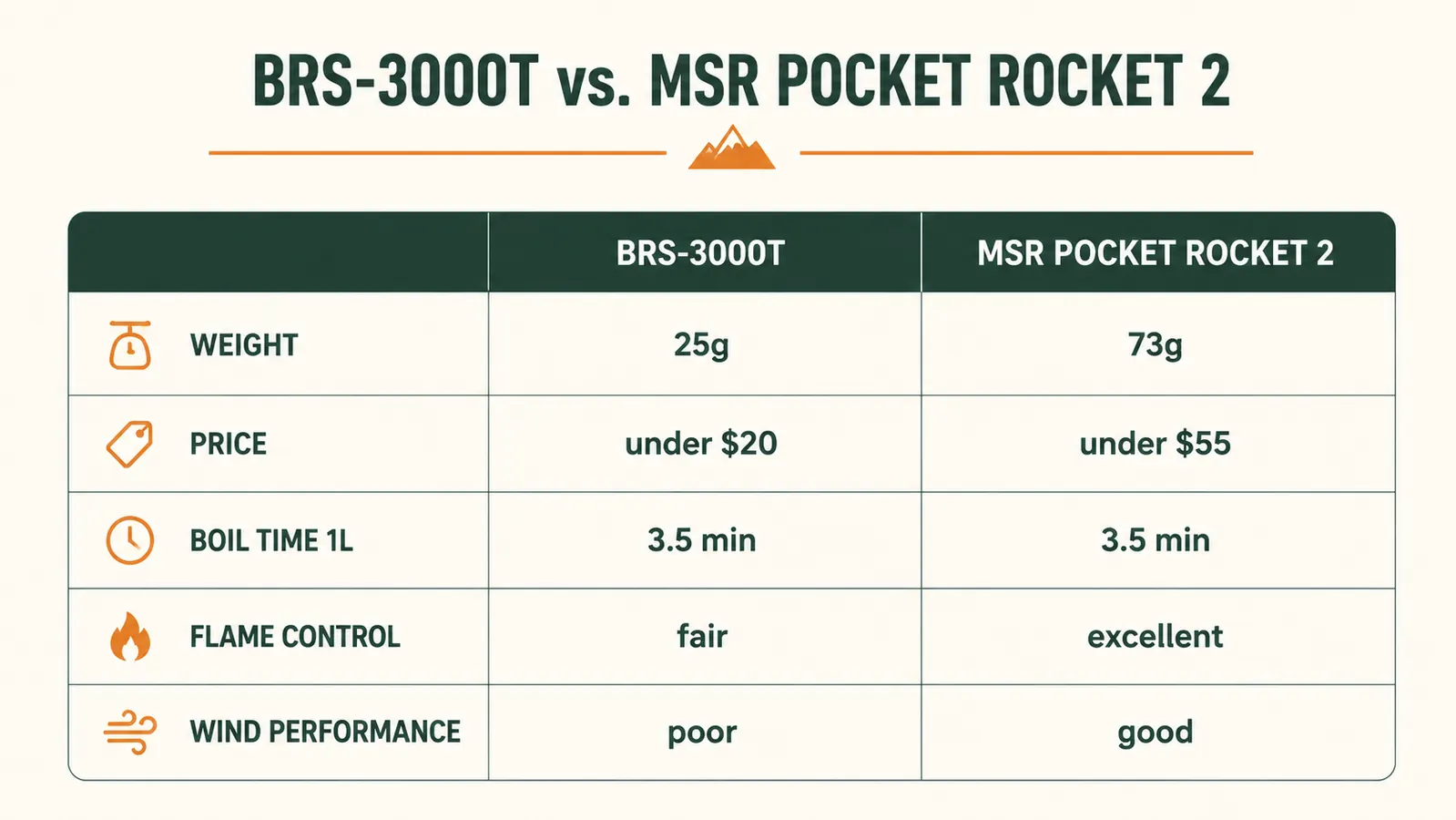
Boil Time: The Tie Nobody Expected
Here is the thing that surprised me most when I started comparing notes between the two trips. In calm, sheltered conditions, the boil times were nearly identical. Both stoves brought a liter of 45-degree water from the Icicle Creek to a rolling boil in roughly three and a half minutes when I kept them out of wind. I measured this six times across both trips using the same pot and the same canister brand. The BRS at 25 grams moves nearly the same amount of water in nearly the same time as the MSR at 73 grams.
That matters because the most common knock on budget stoves is that they are slow. This one is not slow, at least not in calm conditions. The difference in real-world cook times comes down to wind exposure, not burner output. If your campsites are sheltered by trees or terrain, you will not notice a meaningful difference in boil times between the two stoves.
In six side-by-side boil tests in calm conditions, the BRS-3000T and the MSR Pocket Rocket 2 finished within ten seconds of each other. The $85 price gap does not buy you a faster boil at the treeline.
Durability: The Honest Concern About the BRS
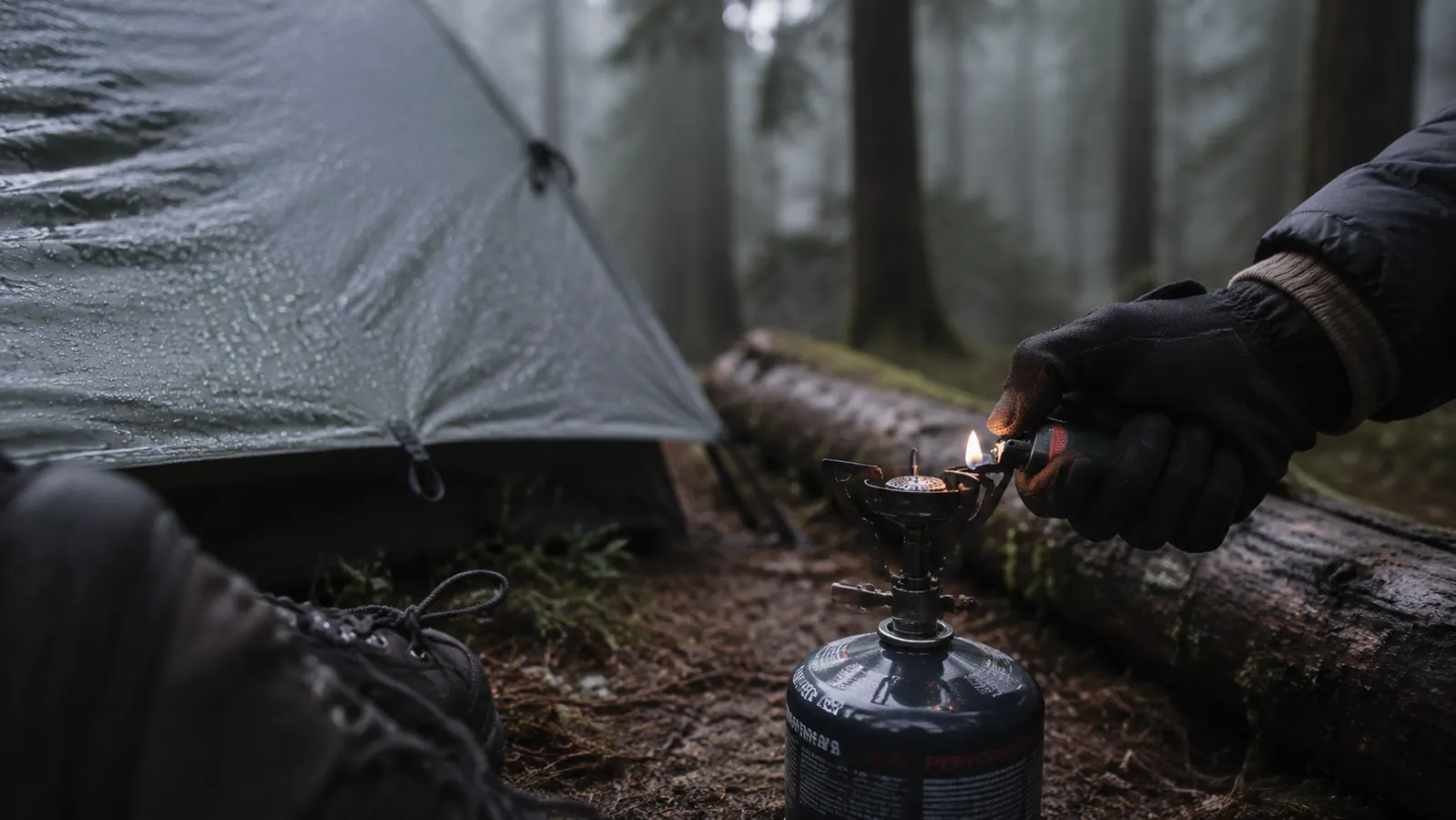
I have to be straight with you here. The BRS-3000T is a precision titanium stove and it is well-made for its price, but it is also a fragile piece of kit in ways the Pocket Rocket 2 is not. The burner arms are thin. If you drop it onto a boulder or pack it carelessly against hard metal in your bag, you can bend them. I have bent mine once in two years, and I was able to straighten it with pliers, but I will not pretend the concern is imaginary. Keep it in a small stuff sack or a hard case inside your pack and this is a non-issue. Throw it loose into a pack alongside a full cookset and a headlamp and you may have a problem.
The Pocket Rocket 2 is built with thicker metal and a more confident overall construction. It does not feel like something you need to baby. That peace of mind has real value on a long trip where you do not want to wonder whether your stove is still functional when you pull it out after a 12-mile day. For high-use guides, military preppers, and anyone who genuinely brutalizes their kit, the sturdier construction is worth factoring in.
Who Should Buy Which
Buy the BRS-3000T if you are a solo backpacker watching pack weight, a budget-conscious camper who does not want to spend $55 on a stove, a prepper building a 72-hour kit where price and size matter more than simmer control, or anyone who camps mostly at treeline or below where wind is not a daily battle. It is also the right call as a backup stove, a car-camp emergency kit, or a second stove for a trip where redundancy matters. At under $20 the risk is extremely low and the performance for basic water boiling is genuinely solid.
Choose the MSR Pocket Rocket 2 if you camp regularly above treeline in exposed conditions, if you cook actual food rather than just rehydrating, if you want a stove you can drop and not worry about, or if you are outfitting a group that genuinely needs the wider pot arms and simmer control. It is also the better choice for shoulder-season basecamp cooking where you may be making multiple meals a day in variable weather. The longer warranty and better wind performance are genuine benefits for people who push into tougher conditions consistently.
If you are somewhere in the middle, trying to make your first real ultralight kit or just want something reliable that won't drain your gear budget, start with the BRS. You can always upgrade later, and the skills you build around managing a finicky stove in wind will make you a better camp cook regardless of what you eventually graduate to.
Start with the BRS. Upgrade if wind is a real problem. Save $85 today.
After two years of consistent field use and one head-to-head season against the MSR, the BRS-3000T earns its place in a serious kit. Check the current price before you decide.
Amazon Check Today's Price on Amazon →