
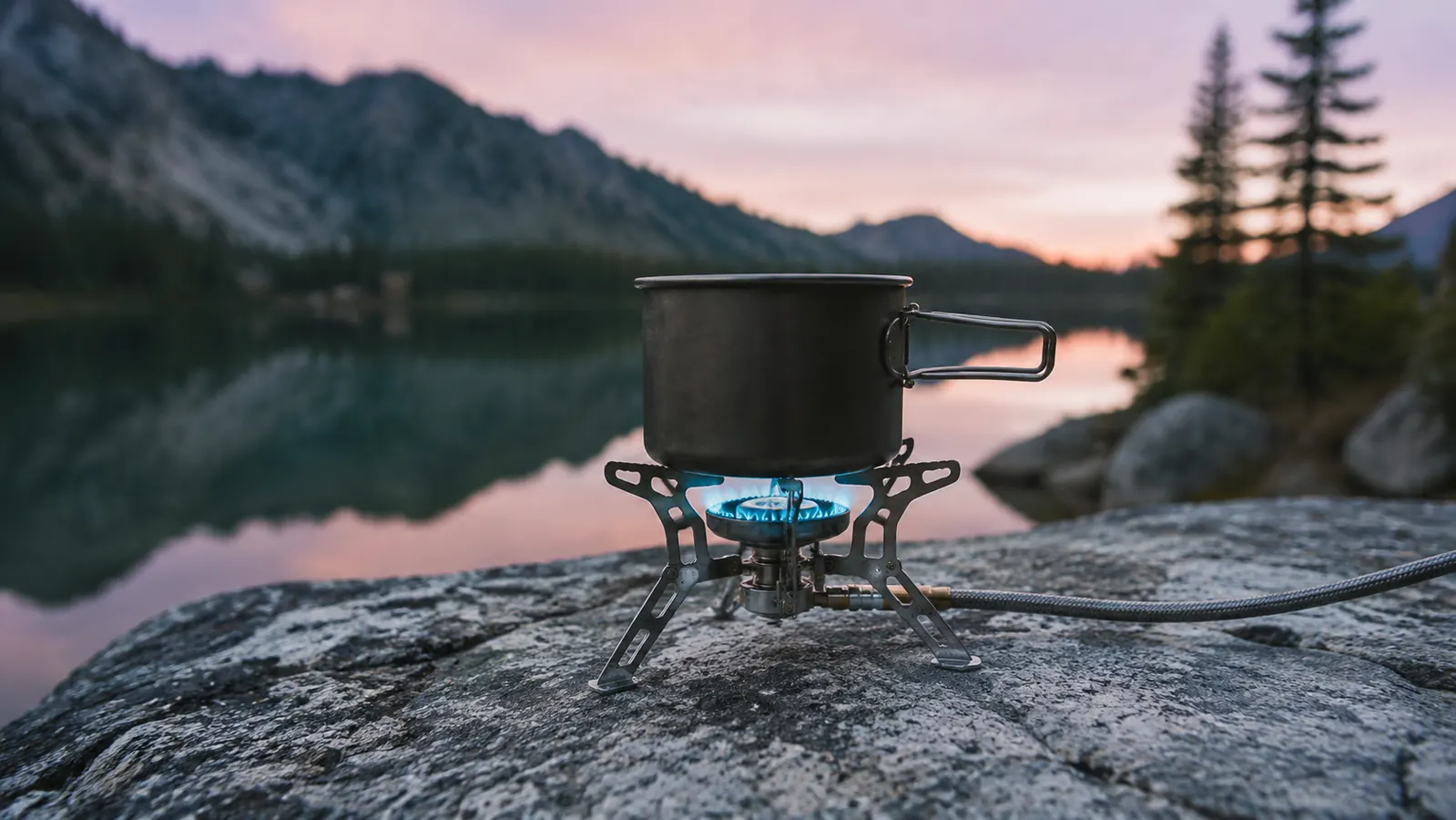
I bought the BRS-3000T two summers ago after my previous canister stove developed a bent valve stem on a three-day loop in the Enchantments. The replacement cost me $16.89 and weighed 25 grams, which is lighter than a AA battery. I expected it to feel flimsy and last one season. Two years later, after roughly 180 boils across trips ranging from Hoh Rainforest car-camp weekends to a six-night traverse of the Ptarmigan Ridge, it is still the stove in my pack.
This is the review I wish existed before I bought it. Not the spec sheet, not the first-trip impressions, but the two-year picture: what held, what I worry about, where it falls short, and what kind of camper should and should not rely on it.
The Quick Verdict
An honest ultralight for the solo camper who controls wind exposure and accepts the tradeoffs of a no-frills valve and tiny pot supports.
Amazon Check Today's Price →If you want a stove that weighs nothing and actually works, this is where I would start.
At 25 grams and under $20, the BRS-3000T is the most weight I have ever saved for the least money spent. Check current availability on Amazon.
Amazon Check Today's Price on Amazon →How I Have Used It Over Two Years
My baseline use case is solo backpacking in Washington state, primarily the North Cascades and the Olympic backcountry. I am a one-cup-of-coffee-and-rehydrated-dinner cook. I am not doing gourmet backcountry meals. I need to boil 500ml of water in the morning for instant coffee, and 500ml in the evening for freeze-dried food. That is my full stove workload on a typical overnight.
Over two years I have run this stove on 110g Jetboil canisters for solo weekenders and 230g MSR canisters for trips with a partner sharing fuel. At sea level in calm air I clock roughly 185 seconds to a rolling boil on 500ml. At 4,500 feet with no wind block that stretches to around 250 seconds. Add a real headwind and you are looking at four to five minutes, or a dead boil that never quite gets there, which is the stove's single biggest real-world limitation.
The BTU rating on the BRS-3000T is listed at 2,700 BTU. For comparison, an MSR Pocket Rocket 2 runs around 8,200 BTU, and you feel that difference in wind. On calm mornings the BRS is fast enough to not care. On exposed ridgelines it needs help.
Construction and the Titanium Question
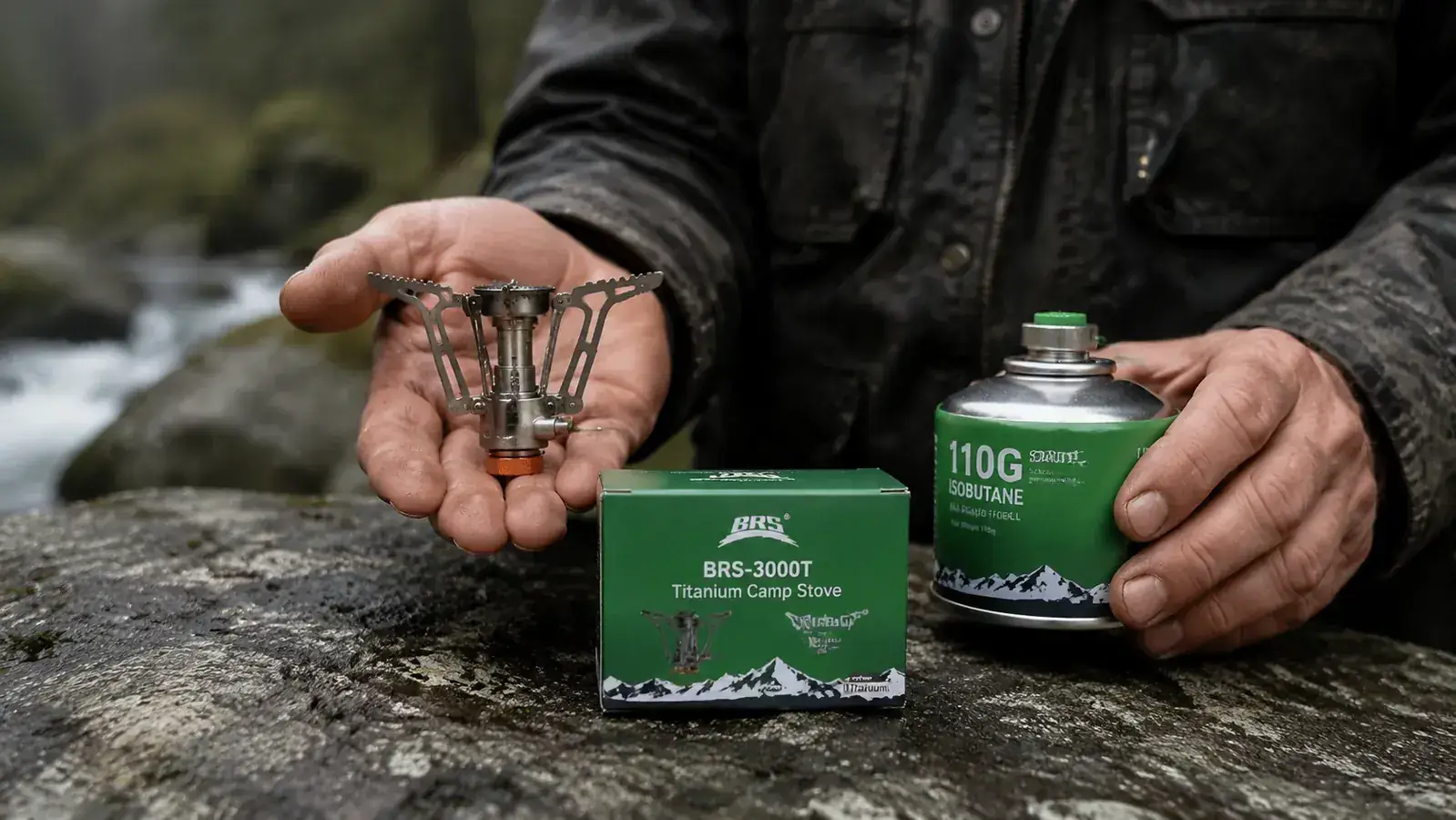
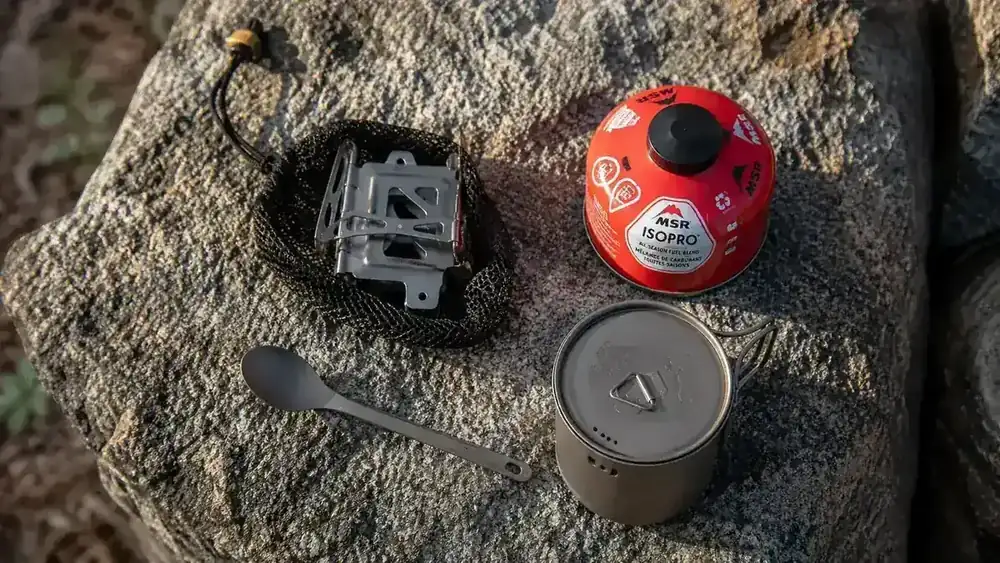
The stove body is a titanium alloy burner head mounted on four folding pot support arms. Those arms fold flat and lock with a satisfying click. The valve stem is made of brass. The ignition is push-and-twist only, no piezo. You bring your own lighter. The whole assembly folds down to roughly the size of a large walnut.
After two years the burner head shows heat discoloration but zero structural wear. The pot support arms open and lock as positively as they did new. The part I watch is the valve. It is small, it is not a heavy-duty machined piece, and at this price point that is expected. I have not had a leak, but I inspect the O-ring before every trip using a small drop of dish soap solution at home. One user review I read mentioned a sticky valve after a year of saltwater coastal use. I camp inland, so I cannot speak to corrosion from ocean air, but I take that report seriously.
The pot supports are the other thing I monitor. At 25 grams, they are thin. They handle a 550ml titanium mug without any wobble, but I would not put a wide two-liter pot on this stove in the backcountry. The supported pot diameter is roughly 140mm or smaller. Push wider than that and the stability drops off. I learned this the hard way on day two of the Ptarmigan traverse when I tried to use a 1.3L steel pot and had to hold it by hand for the full boil.
Wind Performance and the PNW Reality
Washington weather does not cooperate. I have cooked in October sideways rain on the Hoh, in 30-mph ridge gusts above Lake Ann, and in the kind of damp cold where everything takes longer than it should. The BRS-3000T struggles in all of those conditions without a wind screen.
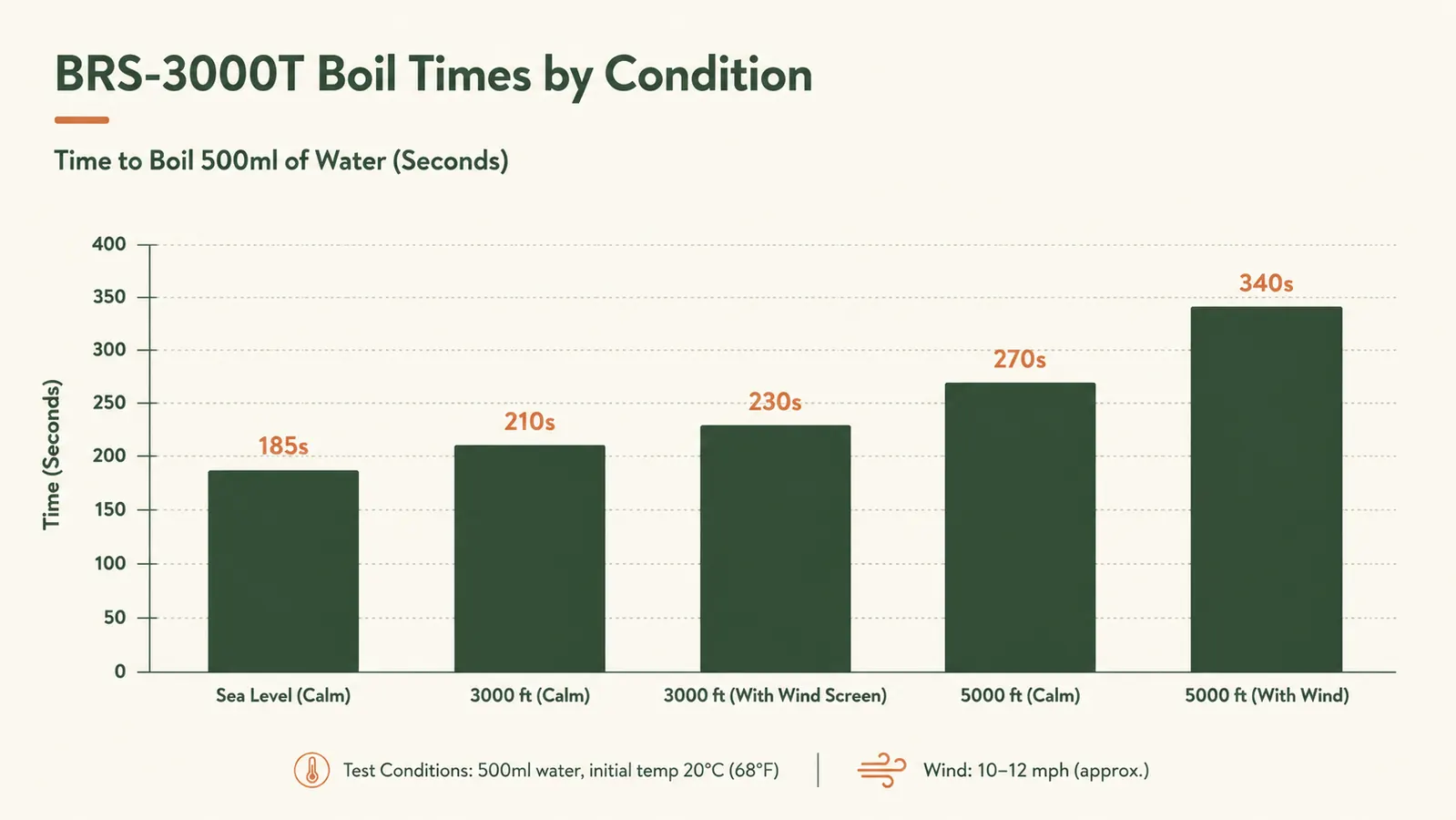
My solution is a folded rectangle of aluminum foil kept in the mesh sack with the stove. Four folds and it forms a C-shaped wind block that I wedge around the canister and stove. This setup cuts my high-wind boil time by about 70 seconds at 3,000 feet, based on back-to-back testing on a gusty September morning at the trailhead for the Maple Pass Loop. Not scientific, but consistent enough that I trust the number.
If you are a three-season camper who sets up in sheltered sites, a valley bottom, or a dense tree line, the wind issue is manageable. If you are an alpine hiker who regularly cooks above treeline on exposed terrain, the BRS needs a proper wind screen or you need a higher-BTU stove. The MSR Pocket Rocket 2 handles open ridge cooking noticeably better, and you pay for that. The comparison piece linked below gets into the specifics.
On calm mornings at 4,000 feet, the BRS-3000T boils 500ml in under four minutes. That is fast enough. That is all most solo campers need.
Fuel Efficiency Over a Full Season
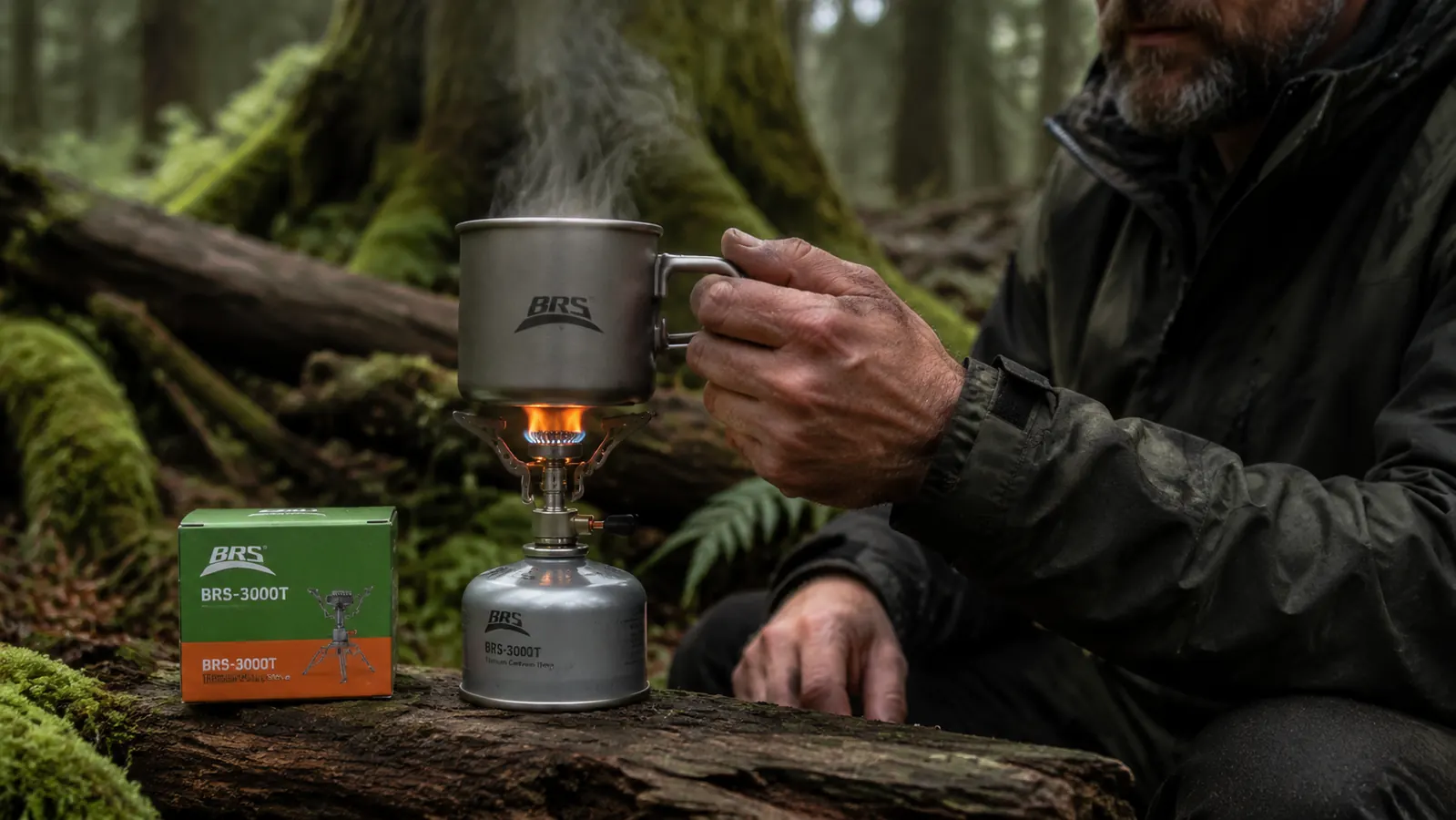
The BRS-3000T sips fuel. Over a weekend trip with two boils per day, I use roughly one 110g canister for three to four days of solo cooking. That tracks with its rated 2,700 BTU output. A lower BTU burner uses fuel more slowly than a high-output burner, which is the silver lining of the modest power spec. For a five-day solo trip I carry one 110g and one 230g canister as backup. The 230g is usually half-full when I get back to the car.
Cold temperatures affect all isobutane canisters, not just this stove. Below 40 degrees Fahrenheit, canister output drops as the propane burns off and you are left with the isobutane that vaporizes poorly at low temps. I warm the canister in my jacket pocket before morning use when I am camping in shoulder season temperatures. That single habit has eliminated cold-morning ignition problems for me over two seasons.
What Two Years of Hard Use Has Taught Me
Year one I used the BRS as my primary stove on every trip, including two multi-day routes in the Cascades with full basecamp cooking. Year two I added a second stove to my kit, a Snow Peak LiteMax, for trips where weight was secondary and I wanted more cooking surface stability. The BRS moved into the role it is best suited for: ultralight solo weekenders where I need speed and simplicity.
What surprised me most was the valve durability. This is the piece I expected to fail first. Two years in, with maybe 180 cycles of threading and unthreading from a canister, the valve threads smoothly and seals completely. I keep it stored in the small mesh bag it ships with and I do not toss it loose in a pocket. That probably helps.
What I watch more carefully now is the O-ring condition. At this price point, BRS is not using a premium seal. I keep a spare O-ring in my kit alongside the stove. You can source replacements cheaply. It is the kind of two-minute maintenance habit that can prevent a frustrating morning when you are 12 miles from the trailhead.
What I Liked
- 25 grams makes it essentially weightless in a pack
- Fuel-efficient 2,700 BTU output stretches a 110g canister across four days of solo cooking
- Titanium construction shows no corrosion or structural wear after two seasons
- Folds flat and stores in a mesh sack smaller than a golf ball
- Works cleanly with both 110g and 230g canisters
- Valve threads have remained smooth and leak-free for 180-plus boil cycles
Where It Falls Short
- 2,700 BTU struggles in wind without a windscreen
- Pot support arms are too narrow for pots wider than roughly 140mm
- No piezo igniter, you must carry a separate lighter
- Valve and O-ring quality reflects the price point, requires periodic inspection
- Not the right stove for cold-weather canister cooking without canister-warming technique
Who This Is For
The BRS-3000T is the right stove for the solo backpacker who cooks simple meals in sheltered conditions, cares about grams, and does not need high-output cooking on exposed alpine terrain. That describes most solo weekend hikers in the PNW from May through September, when sites are typically below or within treeline and weather windows are reasonable. If you have a 550ml titanium mug and you are making one cup of coffee and one freeze-dried dinner per day, this stove handles the full job on a 110g canister for three to four nights.
It is also the right choice if you are building an emergency kit or bug-out bag where stove weight is a constraint. At 25 grams it adds essentially nothing to pack weight, and a 110g canister provides enough fuel for multiple emergency cook sessions. Pair it with a reflective windscreen and you have a workable emergency cook system for under $25 total.
Who Should Skip It
Skip the BRS-3000T if you regularly cook in exposed, above-treeline conditions where wind control is not possible. Skip it if you cook for two or more people with a wide pot. Skip it if you do a lot of cold-weather winter camping and need reliable output at sub-freezing temperatures without the canister-warming workaround. And skip it if you are the kind of person who wants a stove they can thread on, light, and not think about. The BRS asks you to bring your own ignition, manage wind with a separate screen, and pay attention to the O-ring. That is a fair ask for $17, but it is an ask.
For solo campers doing three-season Washington trips with standard freeze-dried meal prep, though, this stove has done everything I needed for two full seasons without a single failure. That is a harder thing to say about gear at any price, let alone $17.
After two seasons and 180-plus boils, this is still the stove I reach for on solo weekenders.
If you are a solo hiker who wants to cut stove weight without cutting reliability, the BRS-3000T is worth checking out. View current price and availability on Amazon.
Amazon Check Today's Price on Amazon →