
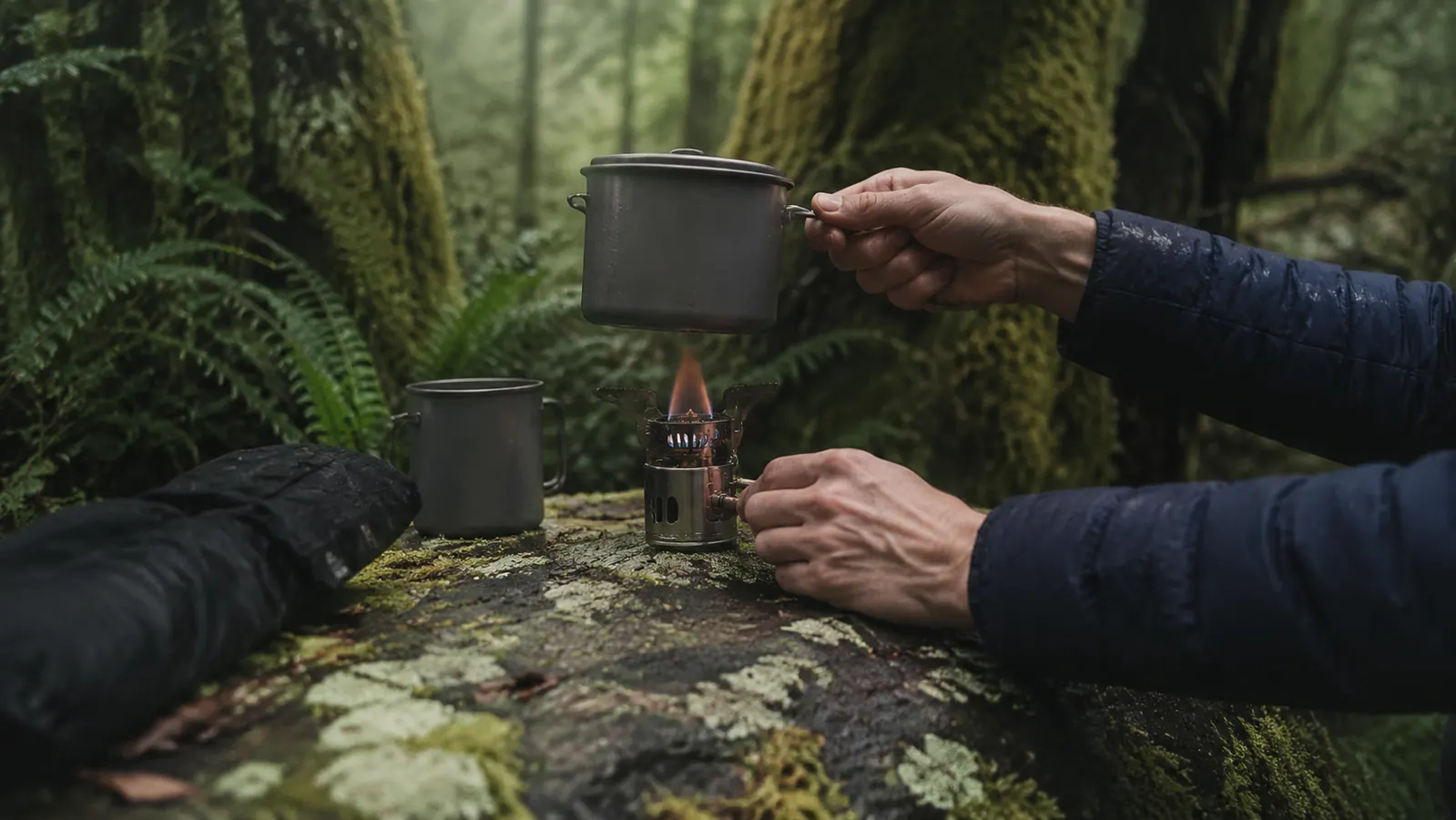
Let me start with the thing that bothered me before I even lit this stove the first time. I had read three threads on Backpacking Light and a long Reddit post on r/ultralight about counterfeit BRS-3000T units showing up on Amazon from third-party sellers. The complaints were specific: the valve stem was brass instead of titanium alloy, the burner head finish was slightly different, and the box printing was blurry. This is a real problem on Amazon for any product that sells well at a low price point, and the BRS-3000T sells very well. Before I trusted mine on a three-night loop in the Goat Rocks Wilderness last September, I spent 20 minutes figuring out whether what I had was real. That should not be a thing you have to do. But it is.
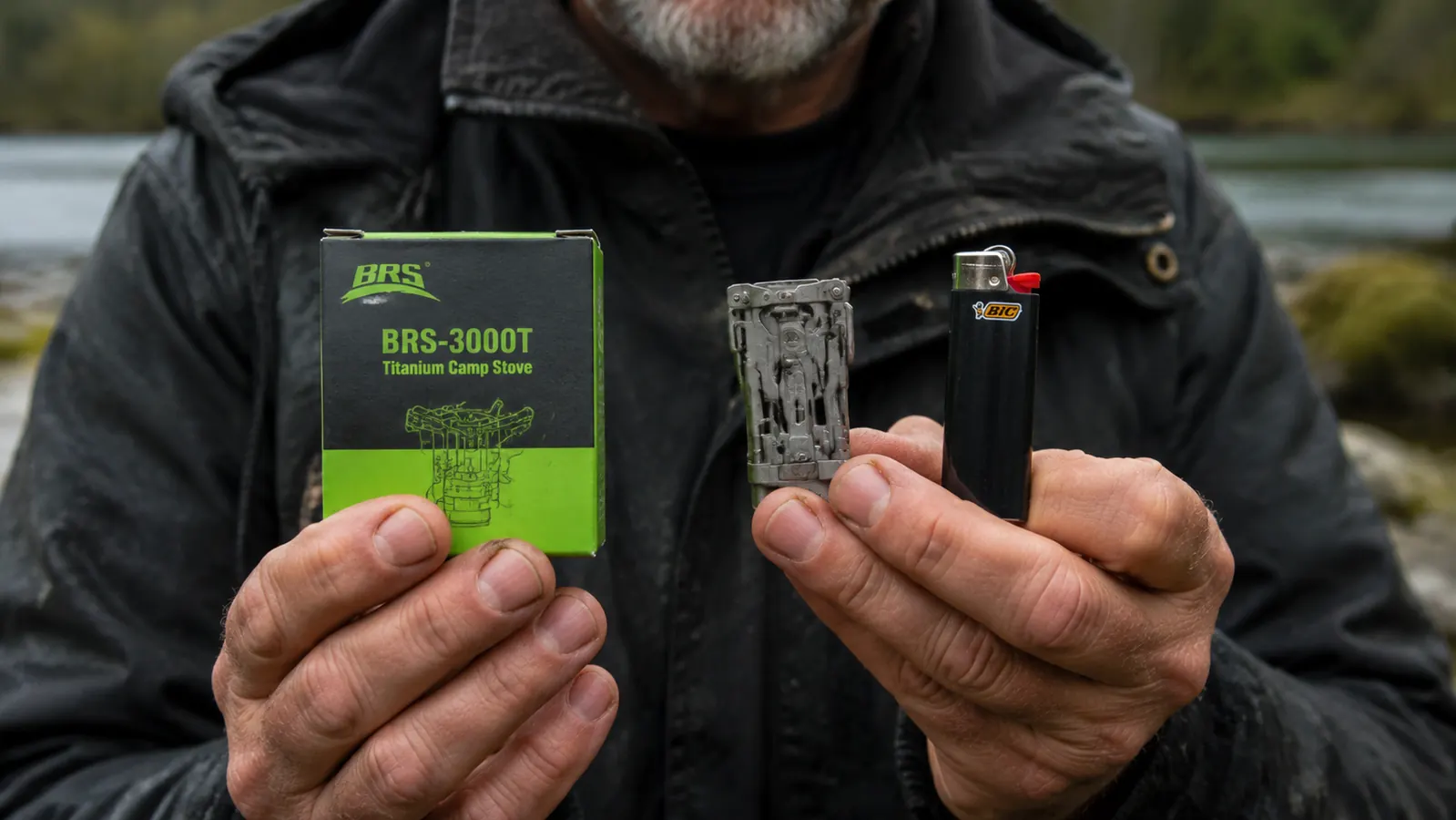
The BRS-3000T is a 25-gram titanium canister stove that costs under $20. It has been my primary backpacking stove for two full seasons, and I recommend it to solo hikers who understand its real limitations. But nobody writing about this stove is leading with the counterfeit problem, the arm-bending issue, the coarse flame valve, or the fact that simmering on this thing is essentially fiction. I am going to lead with all of those. Then I will tell you why I still carry it.
The Quick Verdict
A genuinely capable ultralight stove for boiling water, with real documented weaknesses around heavy pots, flame control, and a counterfeit market problem you need to understand before you buy.
Amazon Check Today's Price →Before you order, verify you are buying from BRS directly or a seller with strong authenticity feedback.
The BRS-3000T is worth buying when you get a real one. Check current pricing and seller details on Amazon before adding to cart.
Amazon Check Today's Price on Amazon →The Counterfeit Brass Problem and How to Spot It
The BRS-3000T is a titanium alloy stove. The genuine unit has a dark gray titanium burner head, a silver-gray valve stem, and pot support arms that are noticeably light when you pick them up. Counterfeits replace the valve stem and sometimes the burner with brass, which is cheaper to machine, heavier, and yellower in color. Brass is not dangerous in this application, but it is heavier, it is not what you paid for, and the sellers pushing brass-valve units often have worse quality control on the O-ring seats and valve tolerances.
Here is what I do when a unit arrives. First, I look at the valve stem color. Genuine titanium alloy is a cool silver-gray, sometimes with a very slight blue tint from heat treatment. Brass is unmistakably yellow-gold. Second, I check the box printing. Genuine BRS packaging has sharp, clean black text. Counterfeit boxes often have printing that looks slightly washed out or off-register. Third, I weigh it. A genuine BRS-3000T is 25 grams on a food scale. If yours is 27 or 28 grams, something is heavier than it should be. Fourth, the price. If the stove is listed at $11 or $12 from a seller with 40 reviews, that should raise your antenna.
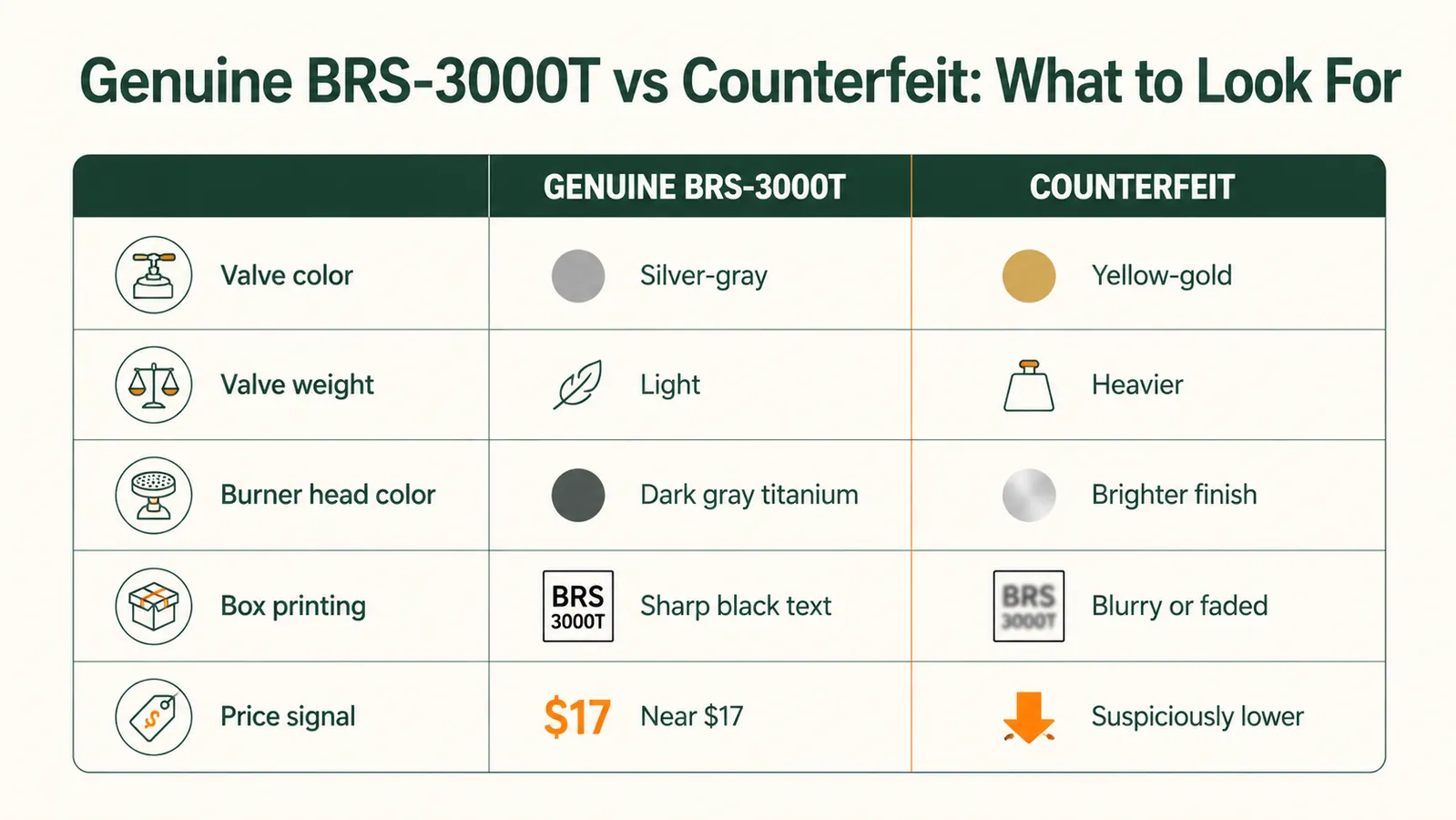
My recommendation: buy from BRS's own Amazon storefront or from a seller that has explicit positive feedback about authenticity. Avoid the cheapest third-party listings. The price difference between a real BRS-3000T and a suspicious one might be $3. That is not a trade worth making when you are using the stove 12 miles from the car.
The Pot Arm Problem: What Bends, Why, and How Wide Is Too Wide
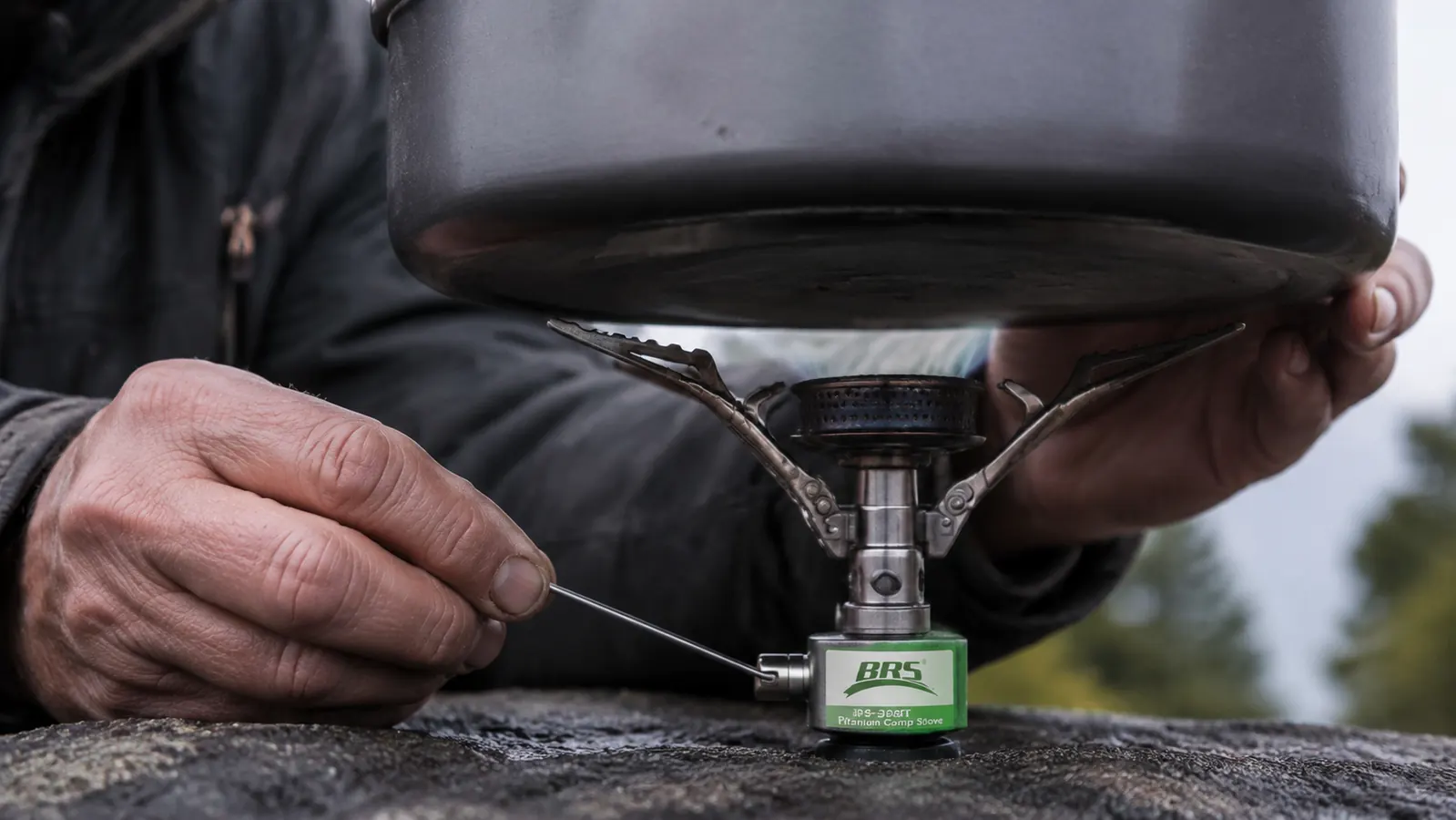
The four pot support arms on the BRS-3000T are thin titanium tines that fold out from the burner body and lock flat. When they are supporting a small pot, they are fine. When you push past their design intent, they bend. I found this out on a car-camping trip to Takhlakh Lake, when I borrowed my camp neighbor's wide two-liter aluminum pot to make oatmeal for both of us. After about 90 seconds on the flame, I watched two of the four arms bow outward by a visible amount. The pot slid. I caught it. Nothing spilled. But that moment told me something important about the stove's limits.
The BRS-3000T is designed for pots up to about 130 to 140 millimeters in base diameter. A standard 550ml titanium mug is around 95mm at the base. A 900ml pot is around 115mm. You have some room. But a wide-base two-liter pot or a large flat pan will stress the arms and eventually deform them. Once a tine bends, it does not spring back fully. The locking geometry changes slightly and the arm no longer locks as positively. It is still functional, but it is a sign the stove has been pushed past its range.
The fix is simple: match the stove to a narrow-base cook system. I use a 650ml titanium cup with a flat base around 105mm, and the arms have never shown any stress in two seasons. But if you are expecting to cook for two people from a wide pot, this is not your stove.
Flame Control: Coarse, Binary, and Why Simmering Is a Myth
The BRS-3000T has a push-and-twist valve. You push to release gas, twist counterclockwise to open, clockwise to close. The range of adjustment from fully open to fully closed is about a quarter turn of the valve. That is not much arc to work with. In practice, what you get is full blast, half-blast, and off. There is a narrow band in the lower range where you can get something close to a low flame, but it is hard to hold consistently. The valve has a slightly notchy feel and tends to jump between positions rather than glide smoothly.
For boiling water, this does not matter. Full blast until the water rolls, then turn it off. That is the whole task. But if you want to simmer a sauce, melt chocolate, or cook eggs without scrambling them on one side, this stove will frustrate you. I tried making a simple egg scramble on a warm July morning at a car-camp site in the Okanogan-Wenatchee National Forest. I turned the valve to what felt like low. The flame was still hot enough to burn the edges of the egg while the center was raw. I ended up finishing the cook by lifting the pan off the stove every 15 seconds. That works, but it is not what simmering means.
If your backcountry cooking is: boil water, pour into freeze-dried pouch, wait four minutes, eat, then the coarse flame control will never bother you. If you are a backcountry chef who wants to actually cook food, look at stoves with more refined valve control. The MSR Windburner and the Snow Peak GigaPower both offer finer adjustment. You pay significantly more, but the valve is a different level of precision.
Wind and High BTU: Why This Combination Specifically Hurts the BRS
A common misconception is that low-BTU stoves handle wind better than high-BTU stoves. The opposite is closer to the truth. A higher-BTU flame is harder to blow out because it is producing more heat and moving more gas. The BRS-3000T's 2,700 BTU output is at the low end of the canister stove range. In dead calm, that is adequate. In real wind, the flame deflects, drops output dramatically, or extinguishes.
On a windless morning the BRS gets water boiling fast enough. Put it on an exposed ridge in an October northeast wind and it will make you wish you had spent $85 more on a stove.
I tested this back to back on the same ridge near Artist Point in late September, first with the BRS running open to air, then with a three-sided windscreen made from folded heavy-duty aluminum foil. Open to a steady 20-mph wind, the BRS took 7 minutes and 40 seconds to bring 500ml to a rolling boil, and twice the flame dropped so low I was not sure it was still lit. With the windscreen in place, the same boil took 4 minutes and 10 seconds. The windscreen is not optional in PNW shoulder-season conditions. It is load-bearing equipment for this stove.
The windscreen issue connects back to the coarse valve control problem. When you are fighting wind, you want to run the stove at full blast to maintain heat output. Full blast on the BRS is also the setting that makes the flame most prone to lifting off the burner in a strong crosswind. You are managing two problems at once. A higher-BTU stove with a more protected burner geometry handles this better. The BRS is not that stove.
What Actually Holds Up Well After Two Seasons
I have been leading with the problems, so let me be clear about what this stove does well, because the list is real. The titanium burner head and arms have shown no corrosion and no structural fatigue after two seasons of solo backpacking in wet Pacific Northwest conditions. I have packed this stove in the rain, stored it damp, and cooked in sub-40 temperatures. The metal has not failed in any way.
The weight is 25 grams. My wallet weighs more than this stove. When you are counting grams on a six-night trip, putting 25 grams in the cook kit column is essentially free. That is not nothing. The Pocket Rocket 2 is 73 grams, which sounds trivial until you are shaving grams from every category and suddenly a 48-gram difference in stoves equals a lighter pack over a mountain pass.
Fuel efficiency is also genuinely good. Because the BRS runs at 2,700 BTU rather than 8,000-plus, it burns through a 110g canister slowly. On a four-day solo trip with two boils per day, I have finished with gas left in the canister. Compare that to a high-BTU stove where you might burn through a 110g canister in two and a half days at the same boil frequency. For ultralighters who count fuel weight as carefully as food weight, this matters.
The fold-flat profile is also legitimately useful. The stove packs into a mesh sack smaller than a large walnut. I keep mine tucked inside my cook cup, which itself fits inside the fuel canister in my pack. The whole cook system, including stove, canister, and cup, takes less space than a 16-ounce water bottle. That is a real advantage on trips where pack volume is as constrained as weight.
What I Liked
- 25 grams is genuinely weightless in a pack, less than most lighters
- Fuel-efficient 2,700 BTU output makes a 110g canister last four days of solo cooking
- Titanium construction shows no corrosion after two wet PNW seasons
- Fold-flat profile fits inside a cook cup, total cook system is extremely compact
- Boil performance in calm conditions is adequate and consistent for freeze-dried meal prep
- Affordable enough to carry a backup on longer trips without guilt
Where It Falls Short
- Counterfeit units with brass valves circulate on Amazon, requires seller verification
- Pot support arms bend under wide pots, limit is roughly 130 to 140mm base diameter
- Coarse quarter-turn valve makes simmering impossible and low-heat cooking unreliable
- 2,700 BTU output is weak in wind, a windscreen is effectively required in PNW conditions
- No piezo igniter, must carry a separate lighter
- Not suitable for group cooking with large or wide-base pots
Who This Is For
The BRS-3000T makes the most sense for solo backpackers who cook simple meals from narrow-base pots or cups, value grams above all other variables, and understand that wind management is part of using this stove. If you are doing three-season trips in Washington where you can find a sheltered cook spot, your meals are freeze-dried or instant, and you have a food scale and a gram-counting mindset, this stove fits your use case well. It also works for emergency kit builders who want a functional boil stove that adds almost no weight to a 72-hour bag, as long as the bag also contains a windscreen and a lighter.
Who Should Skip It
Skip the BRS-3000T if you cook real food over a stove rather than rehydrating freeze-dried meals. Skip it if you regularly camp above treeline on exposed ridges where wind control is not possible. Skip it if you are cooking for two or more people and need a wide pot. Skip it if you are buying from a seller you cannot verify, because getting a brass-valve unit defeats the weight and quality argument entirely. And skip it if you want a push-button stove that you hand to a kid or a beginner without explaining windscreen technique, canister warming in cold weather, and valve maintenance. The BRS-3000T rewards attentive users and punishes careless ones.
None of those limitations make it a bad stove. They make it a specific stove. I still carry mine on solo weekenders in the Cascades where I know the terrain, I plan my cook spots, and my cook kit is matched to what the stove can handle. Under those conditions, in two full seasons, it has not let me down once. That is an honest endorsement, and it comes with all the caveats you just read.
If the limitations I described do not apply to your use case, this stove earns its place in your pack.
Verify the seller, match a narrow-base pot to the stove, pack a windscreen, and bring a lighter. Under those conditions the BRS-3000T is a serious piece of ultralight kit at a price that is hard to argue with. Check current pricing and availability on Amazon.
Amazon Check Today's Price on Amazon →