
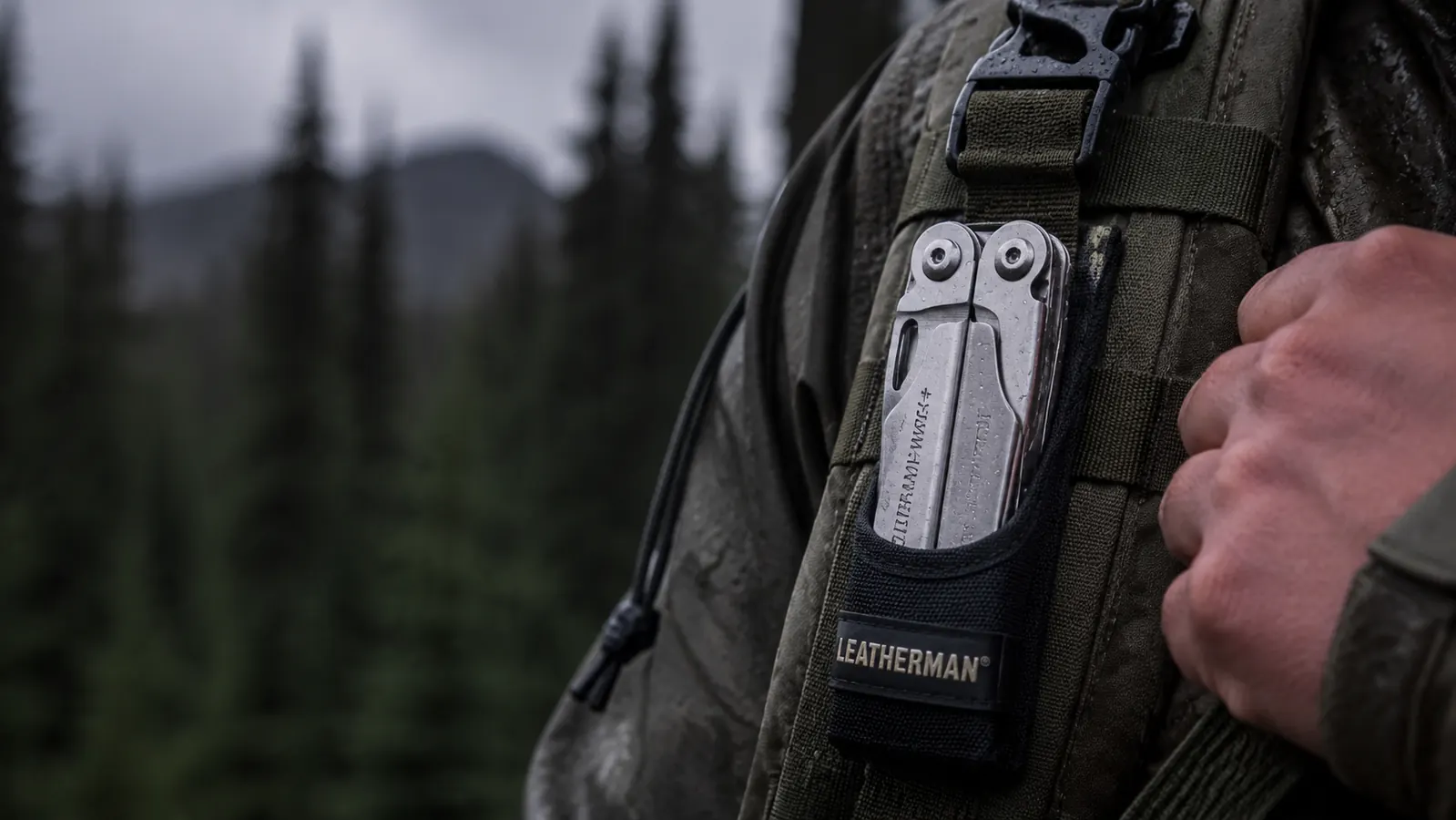
The Leatherman Wave+ has nearly 4,500 Amazon reviews and a 4.7-star average. That kind of consensus usually means one of two things: the product genuinely earns it, or the reviews are being written by people who have only had the tool for six weeks. I have had mine for four years. I carry it on my belt six days a week, bring it on every backcountry trip I take in Washington state, and use it at work as a finish carpenter. What I want to tell you in this review is what the short-term reviews skip over, the parts that only show up after real sustained use, because those are the parts that actually determine whether the Wave+ is right for you.
The short answer is that I still recommend it. But the recommendation comes with a clearer picture than most reviews give you, so read this before you hand over $130 based on someone's 90-day impressions.
The Quick Verdict
Still the best general-purpose multi-tool for trail and EDC use, but the weight adds up on long days, the stock sheath is a known weak point, and the one-hand opening has real quirks worth knowing about before you buy.
Amazon Check Today's Price →You have been comparing specs long enough. Here is what the Wave+ actually costs right now.
Four years in, this is still the tool on my hip. The Leatherman Wave+ carries a 25-year warranty and 18 tools in a 4-inch frame. See today's price on Amazon before you decide.
Amazon Check Today's Price on Amazon →Let's Start With the Weight, Because Nobody Warns You Properly
The Wave+ weighs 8.5 oz. You have probably read that number a dozen times and thought, fine, that is less than a cup of coffee. What that number does not convey is what 8.5 oz feels like on your hip at mile 14 of a ridge loop in the Cascades. Or what it does to the waistband of lightweight trail pants when you are not wearing a belt. Or how noticeable it becomes when you have been hiking since 6 a.m. and your hips are starting to complain about your pack.
I am not saying 8.5 oz is a dealbreaker. I am saying the product listing presents it as a neutral data point when it is actually a real tradeoff that deserves honest thought. Ultralight-oriented hikers who run a 15-pound base weight are going to feel this tool. Car campers who do not care about pack weight are not. Preppers building a bug-out bag where redundancy matters more than grams are going to shrug. Know which camp you are in before you buy. The Leatherman Skeletool is 5 oz and covers the most-used tools for trail use if weight is a bigger priority. The Skeletool trades away the saw, the scissors, and two screwdriver options. Whether that trade is worth 3.5 oz is your decision to make.
One-Hand Opening: Useful, But Not What the Marketing Implies
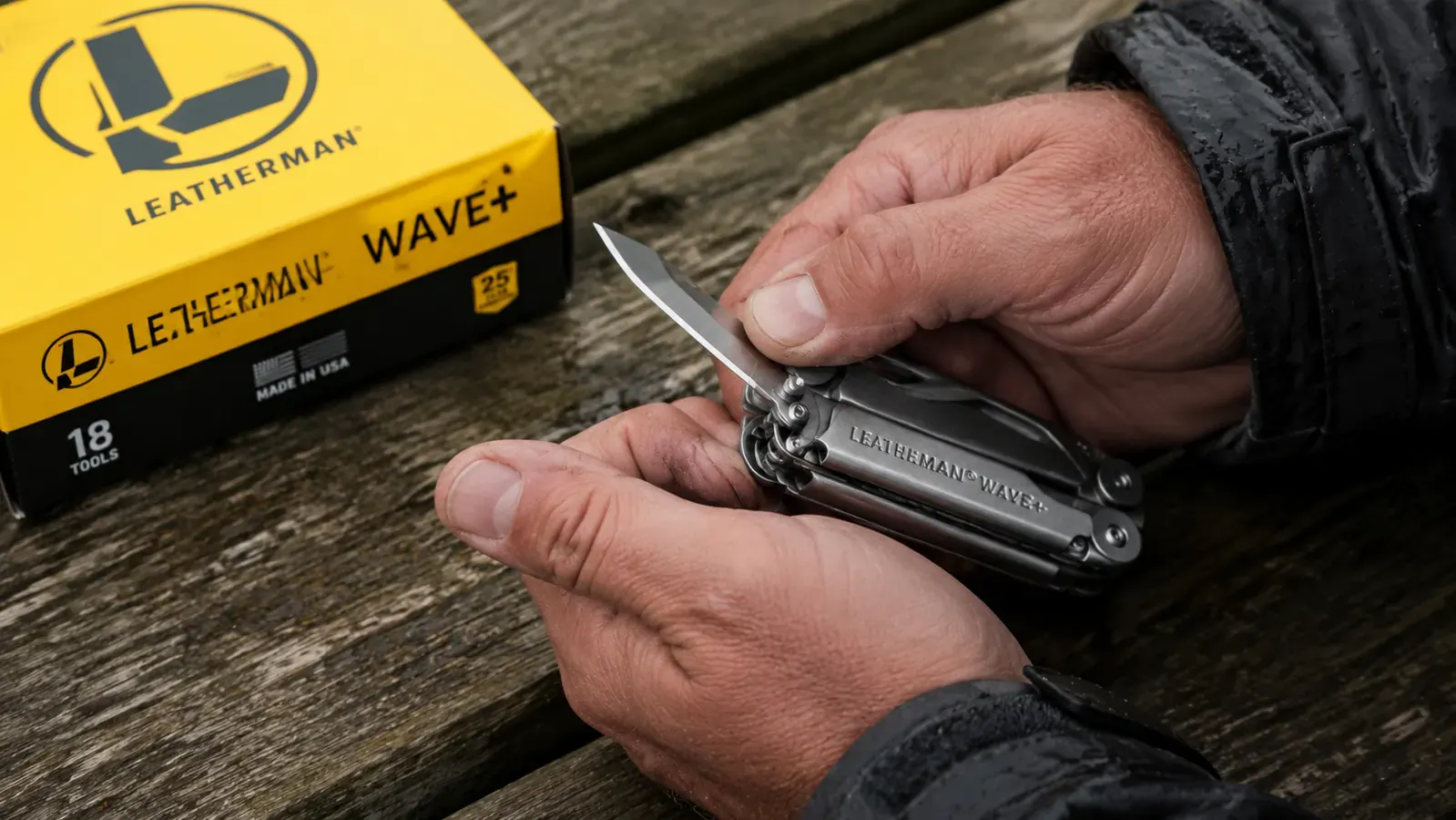
The Wave+ is marketed as having one-hand blade access, and it does. Both the main blade and the serrated blade deploy from outside the handle without opening the pliers first. That is a genuine advantage over multi-tools that require two hands to access the blade. What the marketing does not mention is the learning curve on the thumb-stud deployment.
The thumb stud on the Wave+ requires a specific flick motion, not the smooth thumb-roll you get on a quality EDC folder. The blade does not freewheel open the way a Spyderco or Benchmade does. You push the stud and then give the blade a deliberate flip to get it seated and locked. When the tool is new, that motion feels slightly awkward. After a few hundred reps, your muscle memory catches up. But if you have been carrying a premium folder for years and expect the same deployment speed, the Wave+ will feel slow and deliberate by comparison, at least for the first few months.
The other thing worth knowing: every tool that lives inside the handle (Phillips driver, file, saw, bit driver) requires opening the pliers first. You cannot access the saw one-handed. You cannot access the file one-handed. The one-hand opening applies to the two outer blades only. Most users figure this out quickly, but some reviewers describe the tool as if everything is one-hand-accessible, which it is not.
The one-hand blade feature is real and useful. What nobody tells you: it takes a deliberate flick, not a smooth roll, and every inside-handle tool still requires opening the pliers first.
The Scissors: Good Performance, History Worth Knowing
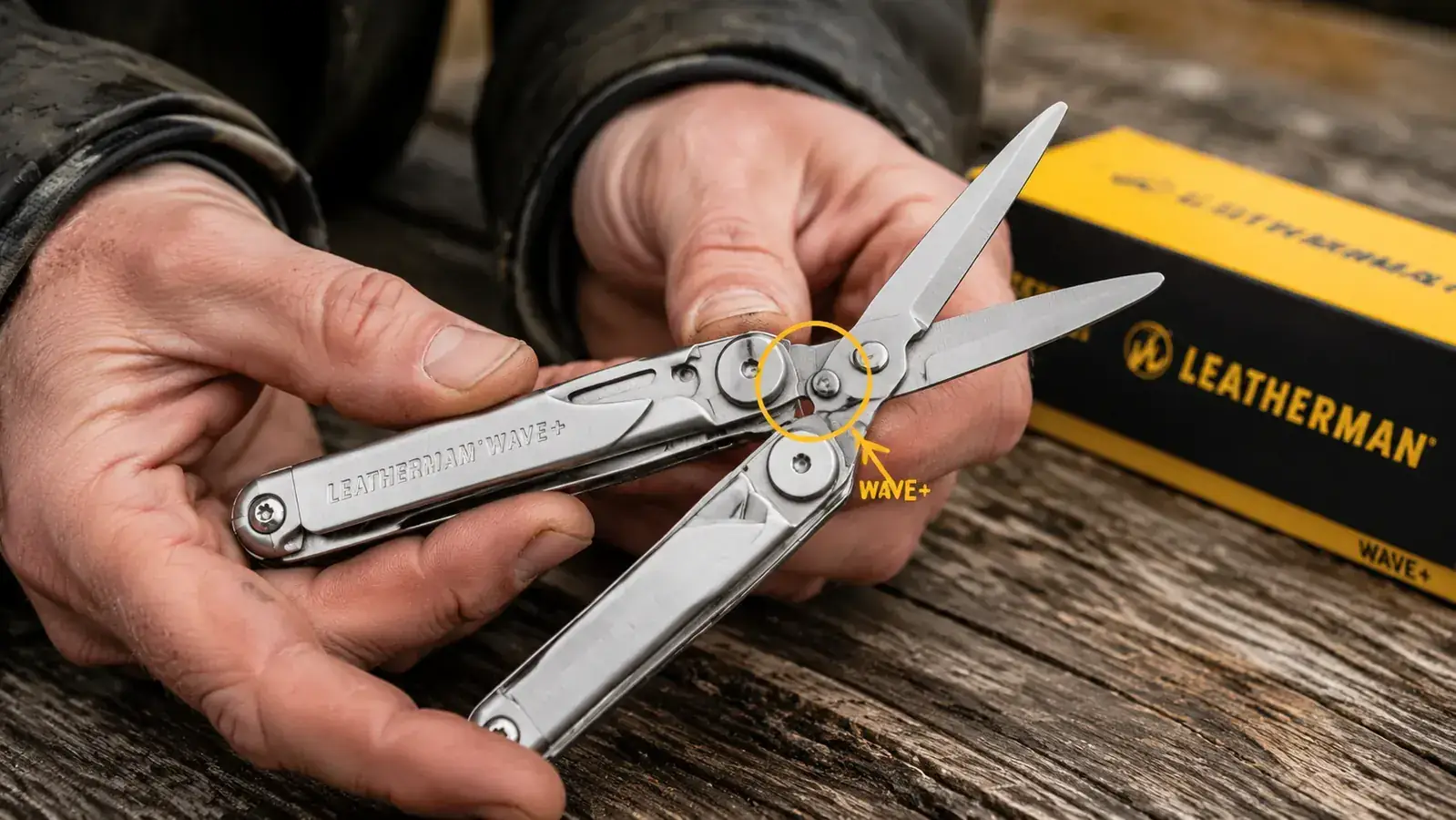
The scissors on the Wave+ are legitimately good. Spring-loaded, full-size relative to the tool, sharp enough to cut medical tape, thin cordage, and clothing without the fabric catching. I have used them for first aid field dressing, cutting paracord, and trimming a tarp corner that was catching too much wind. They are among the better scissors on any multi-tool I have used.
Here is the history worth knowing: Leatherman issued a scissors recall on a batch of Wave tools in the mid-2010s due to spring fatigue that caused the scissors to close unexpectedly during use. The recall affected specific production runs. Current Wave+ production uses an updated spring design and the recall-era units are largely off the market. However, if you are buying used from an eBay listing or a gear swap, verify the production date. Post-2018 units use the revised spring assembly.
Even with the updated design, scissor spring fatigue is still the most common wear complaint I see from long-term users. After sustained heavy use, the spring tension softens and the scissors lose their positive snap. Mine are still functional at four years, but the return spring is noticeably softer than when the tool was new. Leatherman will service this under the 25-year warranty. The process is straightforward: you ship the tool to Leatherman in Portland, they repair or replace it, and ship it back. I have not needed to do this yet, but I have heard from several users who have and they report the turnaround runs about two to three weeks.
The Sheath Problem: What Ships in the Box Is Not Good Enough
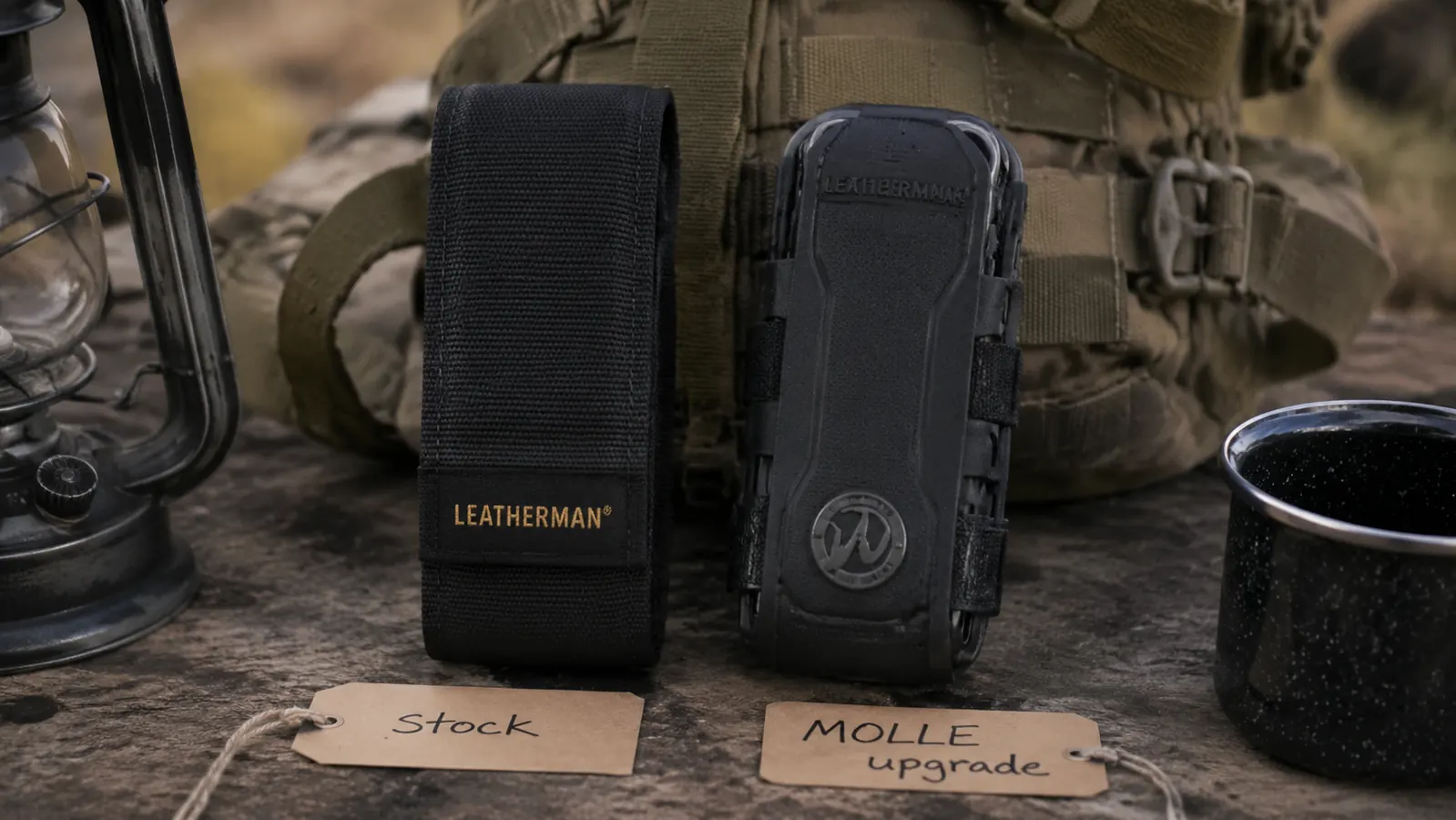
Let me be direct about the included nylon sheath: for a $130 tool, it is a disappointment. The velcro closure is serviceable when the tool is new. Under regular daily carry, the velcro starts to degrade within six to eighteen months depending on how often the sheath is exposed to grit, brush, and debris. The flap does not sit flush once the velcro loses its grip, which means the tool can work loose. I have not lost a tool because of it, but I know one guy who did, on a scramble approach to a ridge camp above Stevens Pass.
The clip attachment on the stock sheath is also weak. It is a basic snap-through loop that works on a belt or a D-ring, but it does not lock. On pack hip belts with narrower webbing, it sits at an angle and rotates when you pull the tool out. After a year of daily use, the plastic collar around the clip had developed a faint crack.
The solution is to replace the sheath. Leatherman makes a MOLLE-compatible nylon sheath that runs about $20 on Amazon. It has a positive snap closure instead of velcro, a rigid frame that keeps the tool accessible, and MOLLE attachment loops that work on pack webbing, chest rigs, and vest panels without rotating. If you are building a bug-out bag or using the tool on a loaded pack, this is not optional. Order it when you order the tool and just swap it immediately. The stock sheath can serve as a backup or shop-drawer tool holder.
Locking Mechanism Wear After Heavy Use
The blade lock on the Wave+ is a liner lock design on the outer blades and a backlock on the inner tools. Under normal use, both hold up well. After four years of frequent deployment, my main blade liner lock still seats cleanly and requires deliberate pressure on the release to disengage. I have no complaints there.
Where I have seen degradation on Wave+ units from other users: the inner tool locks, particularly on the saw and the file. These are used less frequently, which means they sit in their open position for longer stretches during use, and the contact surfaces can develop slight play if the pivot screws loosen over time. Leatherman uses a proprietary Torx-style bit for the pivots. If you are the type to maintain your tools, pick up the correct bit size (T6 for most Wave+ pivots) and do a pivot tightness check every six months. Snug, do not overtighten. This keeps the play out and prolongs the lock engagement.
The blade lock wear I hear about most from longer-term users is not failure but softening, where the lock starts to require a bit more intentional pressure to fully engage. On a tool you are relying on in the field, that kind of creep matters. It has not been my experience, but I maintain my tool and some users do not.
The Clone Question: Is a $35 Alternative Worth Considering?
I get asked this regularly. The Ganzo G202 and a handful of similar Chinese-made multi-tools offer a Wave+-like feature set at $30 to $45. Some of them look nearly identical to the Wave+ in product photos. Here is my honest answer.
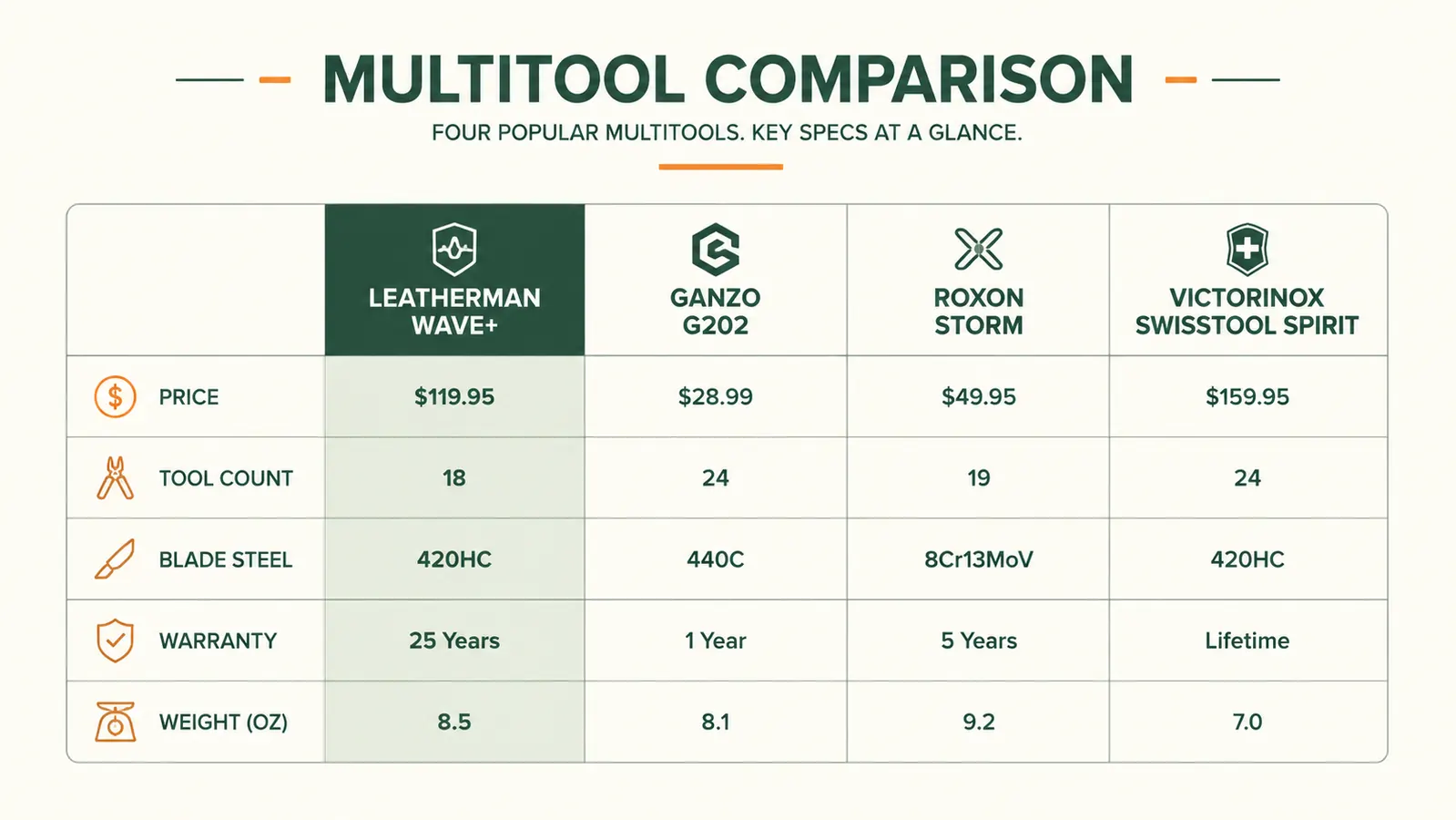
I tested a Ganzo G202 for about eight months a few years back. The blade steel is listed as 440C but behaves more like a lower-grade 440-series alloy in practice. It dulls faster, and more importantly, it is harder to sharpen to a fine edge with a ceramic rod. The scissors spring failed at around the four-month mark and the tool was not worth repairing. The pivot screws loosened after the first three months and two of the inner tool locks developed play that I could not fully correct by tightening.
If you buy a Ganzo, you are buying a short-term tool. Some people are fine with that. If you will use the tool lightly a few times a year on car camping trips, a $35 clone might serve you for three or four seasons before something gives out. But if you are building a kit for emergency preparedness, a bug-out bag, or serious backcountry use, the $130 gap between the Ganzo and the Wave+ is not a price difference. It is a reliability difference. The Wave+ comes with a 25-year warranty that Leatherman actually honors. The Ganzo has no meaningful warranty. That is the real comparison.
What I Liked
- Outer blades deploy one-handed without opening the tool, a genuine field advantage
- Spring-loaded scissors are the best on any multi-tool in this class
- 25-year Leatherman warranty is real and the company services tools in Portland
- Pivot tightness holds well with basic maintenance over multi-year use
- Replaceable wire cutter blades add longevity that cheaper tools cannot match
- Full-size needle-nose pliers with a positive spring action that stays reliable
Where It Falls Short
- 8.5 oz accumulates noticeable hip fatigue on long days if you are weight-conscious
- One-hand blade deployment has a deliberate flick motion, not the smooth roll of a quality folder
- Inside-handle tools (saw, file, drivers) all require opening the pliers first, not one-hand accessible
- Stock nylon sheath velcro and clip degrade under sustained daily carry, plan to replace it for around $20
- Scissor spring softens with heavy long-term use, serviceable under warranty but requires shipping the tool
- Pivot screws need periodic maintenance to prevent inner tool lock play, requires a T6 Torx bit
Who This Is For
The Wave+ makes the most sense for people who will actually use it regularly enough to justify the cost and who need real field reliability over time. That means serious backpackers, preppers building a bug-out bag where warranty and long-term function matter, hunters and anglers who need pliers, a blade, and a saw in one package, and tradespeople or outdoorspeople who want one tool on their hip for both work and trail. If you are going to reach for this tool several times a week, the Wave+ earns its price. If it will sit in a drawer between annual camping trips, a $50 mid-tier option will probably serve you just as well.
Who Should Skip It
Skip the Wave+ if you are running a truly ultralight kit and every ounce counts. The Leatherman Skeletool at 5 oz covers pliers, a blade, a screwdriver, and a carabiner clip if those are your main needs. Skip it if you primarily want a knife and happen to want a screwdriver as a backup. A dedicated folder and a keychain driver will weigh less, cost less, and do those two jobs better. And skip it if your primary budget concern is upfront cost only. The Wave+ has a lifetime cost advantage over clones when you factor in replacement cycles, but if $130 is genuinely out of reach right now, a quality mid-tier tool in the $50 to $65 range from Gerber or Buck will get you through seasons of use while you save toward something better.
All the drawbacks are real. So is the reason I still carry one every day.
The Wave+ is not perfect. But after four years and every field situation I have put it through in Washington state, I have not found anything in its price range that I trust more. Check today's price on Amazon and decide for yourself.
Amazon Check Today's Price on Amazon →